
• Home
  • Books
    • Beatrice and the Nightingale
    • Sharks Unhooked: The Adventures of Cristina Zenato, Underwater Ranger
    • Giant Rays of Hope: Protecting Manta Rays to Safeguard the Sea
    • A River’s Gifts: The Mighty Elwha River Reborn
    • Planet Ocean
    • Eavesdropping on Elephants
    • Neema’s Reason To Smile
    • Zoo Scientists to the Rescue
    • Sea Otter Heroes: The Predators That Saved an Ecosystem
    • Plastic, Ahoy! Investigating the Great Pacific Garbage Patch
    • Ebola: Fears and Facts
    • Jingle the Brass
    • Nugget on the Flight Deck
    • Surviving Animal Attacks
    • Elite Operations series
    • Energy Lab series
    • QuickReads Fluency Library
    • Books for English language-learners
    • Writers write all kinds of things
  • Author Visit Programs
    • FAQs
    • Calendar
  • Blog
  • Educator Resources
    • Teach the Hope
    • Earth Day Every Day newsletter archive
    • Teacher Guides
    • STEM + Literacy Activities
    • LitLinks
    • KidLit creators who make kids want to read
  • Writer Resources
    • Writing Classes
    • Manuscript or Proposal Critiques
    • How I got my start
  • Who is Patricia Newman?
  • Contact
    • Stay In Touch
    • Earth Day Every Day newsletter archive
Patricia NewmanPatricia Newman
Sibert Honor Children's Book Author & Environmentalist
  • Home
  • Books
    • Beatrice and the Nightingale
    • Sharks Unhooked: The Adventures of Cristina Zenato, Underwater Ranger
    • Giant Rays of Hope: Protecting Manta Rays to Safeguard the Sea
    • A River’s Gifts: The Mighty Elwha River Reborn
    • Planet Ocean
    • Eavesdropping on Elephants
    • Neema’s Reason To Smile
    • Zoo Scientists to the Rescue
    • Sea Otter Heroes: The Predators That Saved an Ecosystem
    • Plastic, Ahoy! Investigating the Great Pacific Garbage Patch
    • Ebola: Fears and Facts
    • Jingle the Brass
    • Nugget on the Flight Deck
    • Surviving Animal Attacks
    • Elite Operations series
    • Energy Lab series
    • QuickReads Fluency Library
    • Books for English language-learners
    • Writers write all kinds of things
  • Author Visit Programs
    • FAQs
    • Calendar
  • Blog
  • Educator Resources
    • Teach the Hope
    • Earth Day Every Day newsletter archive
    • Teacher Guides
    • STEM + Literacy Activities
    • LitLinks
    • KidLit creators who make kids want to read
  • Writer Resources
    • Writing Classes
    • Manuscript or Proposal Critiques
    • How I got my start
  • Who is Patricia Newman?
  • Contact
    • Stay In Touch
    • Earth Day Every Day newsletter archive
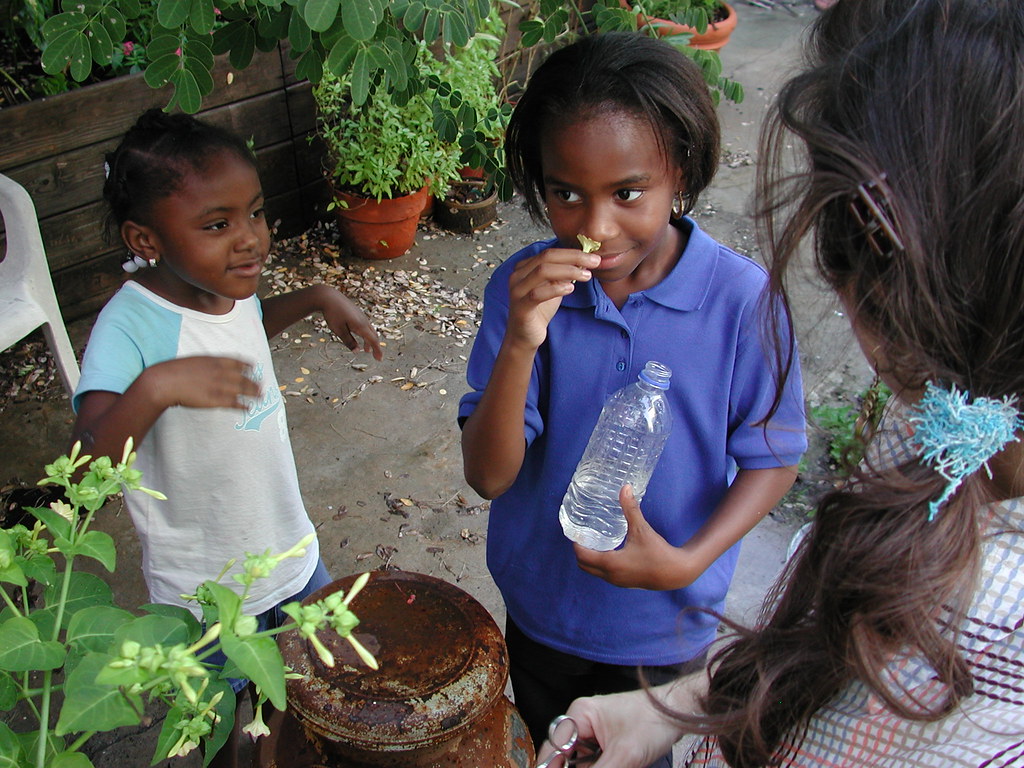
"Smelling-Flowers"-by-Editor-B-is-licensed-under-CC-BY-2.0.

LitLinks: A simple flower activity to help students develop their sense of smell and descriptive language

April 15, 2026 LitLinks, LitLinks-Grade 3-5, LitLinks-Grade K-2 No Comments
LitLinks Logo-2022

GUEST BLOGGER MÉLINA MANGAL

Flowers-Bloom-cover

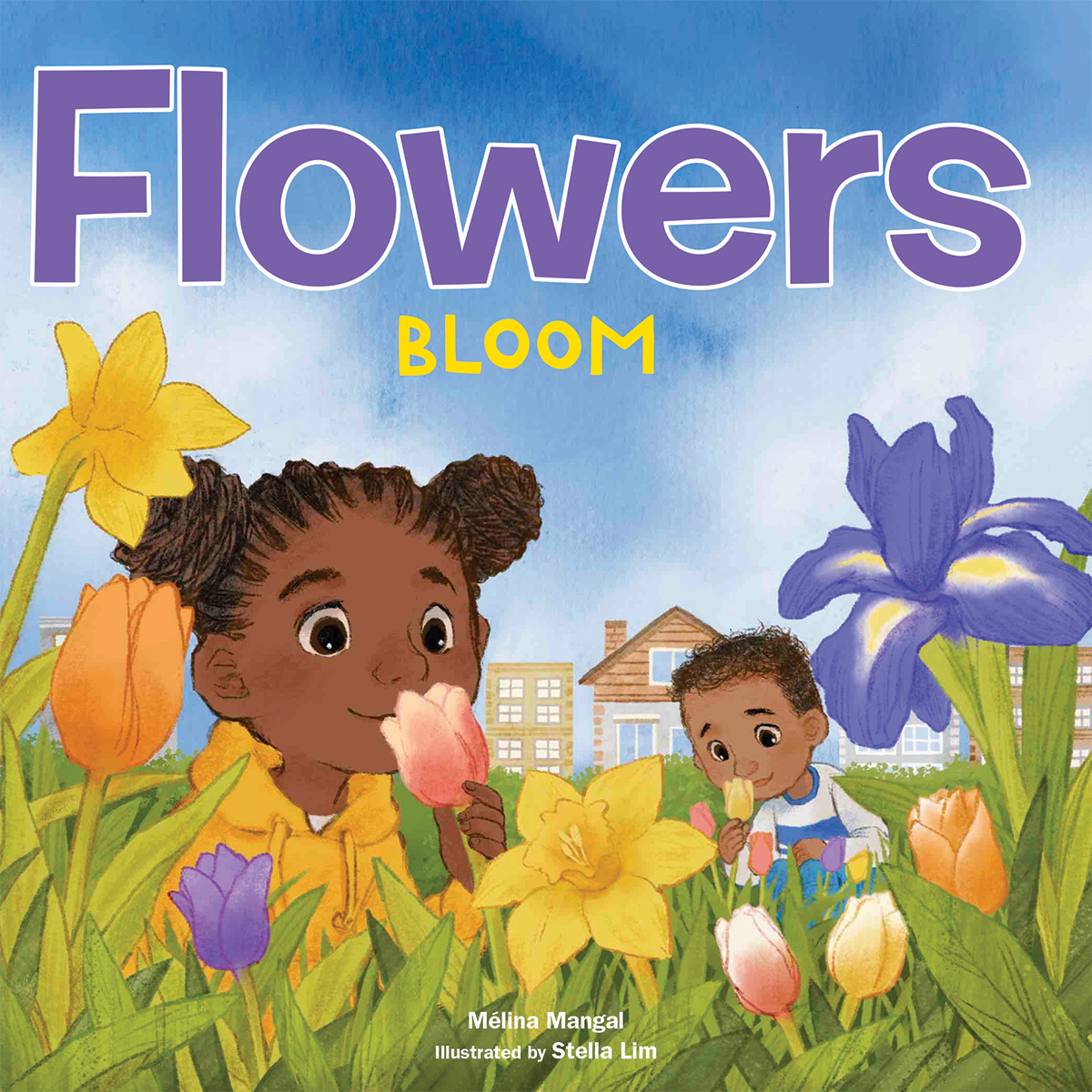
Flowers Bloom is the fifth book in the nature-based Outside Our Window series of board books.  Written for our youngest readers, the stories center around 4-year-old Kamali and her 3-year-old cousin Josiah as they explore the different elements of nature from their window and then out into their city neighborhood.  Many kids live in urban areas, where nature’s presence may not at first be obvious, Focusing on urban spaces, Flowers Bloom highlights the ways young readers can engage with nature in a positive way, no matter where one lives.  As readers will see, flowers bloom in a range of locations, from window boxes, to fields, and even sidewalk blocks. Appreciating their gifts of beauty and fragrance help connect us to nature.

Smell

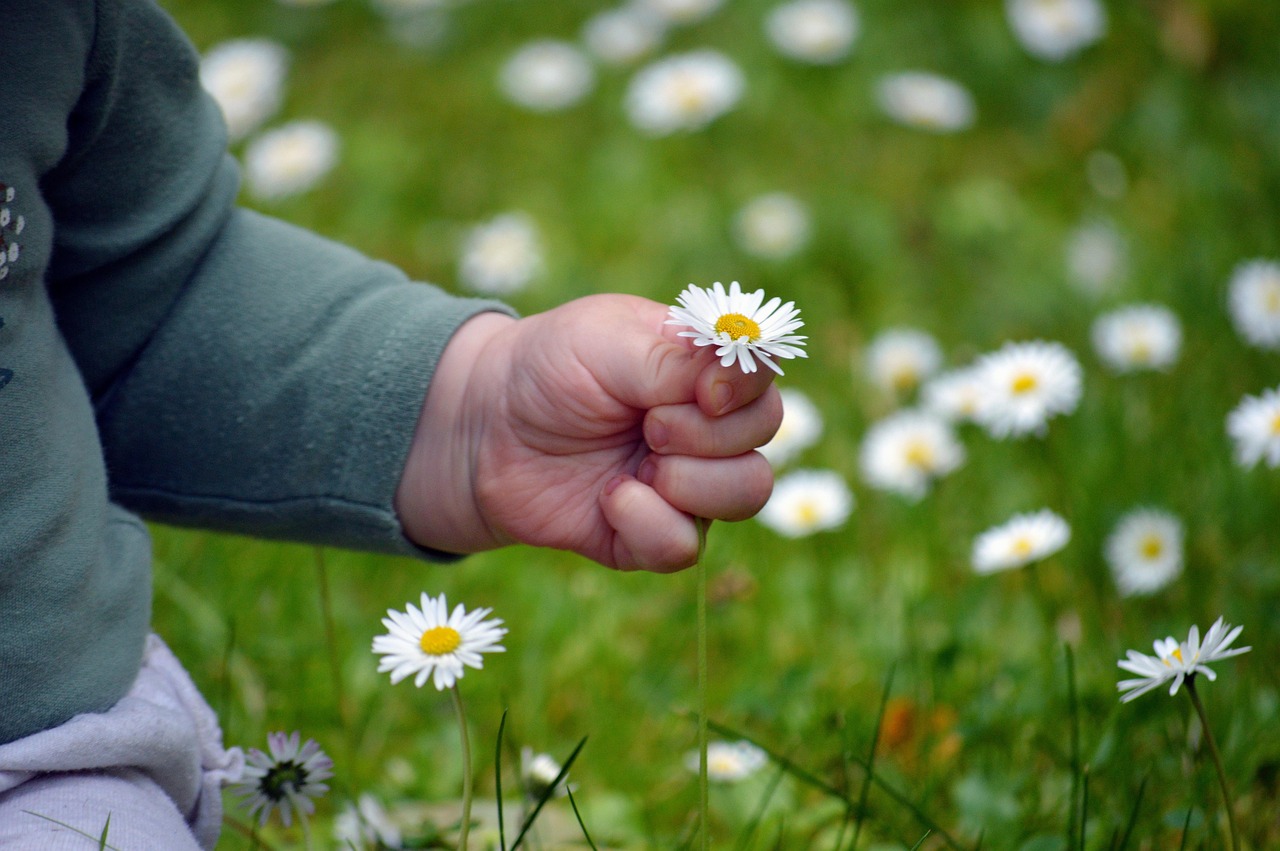
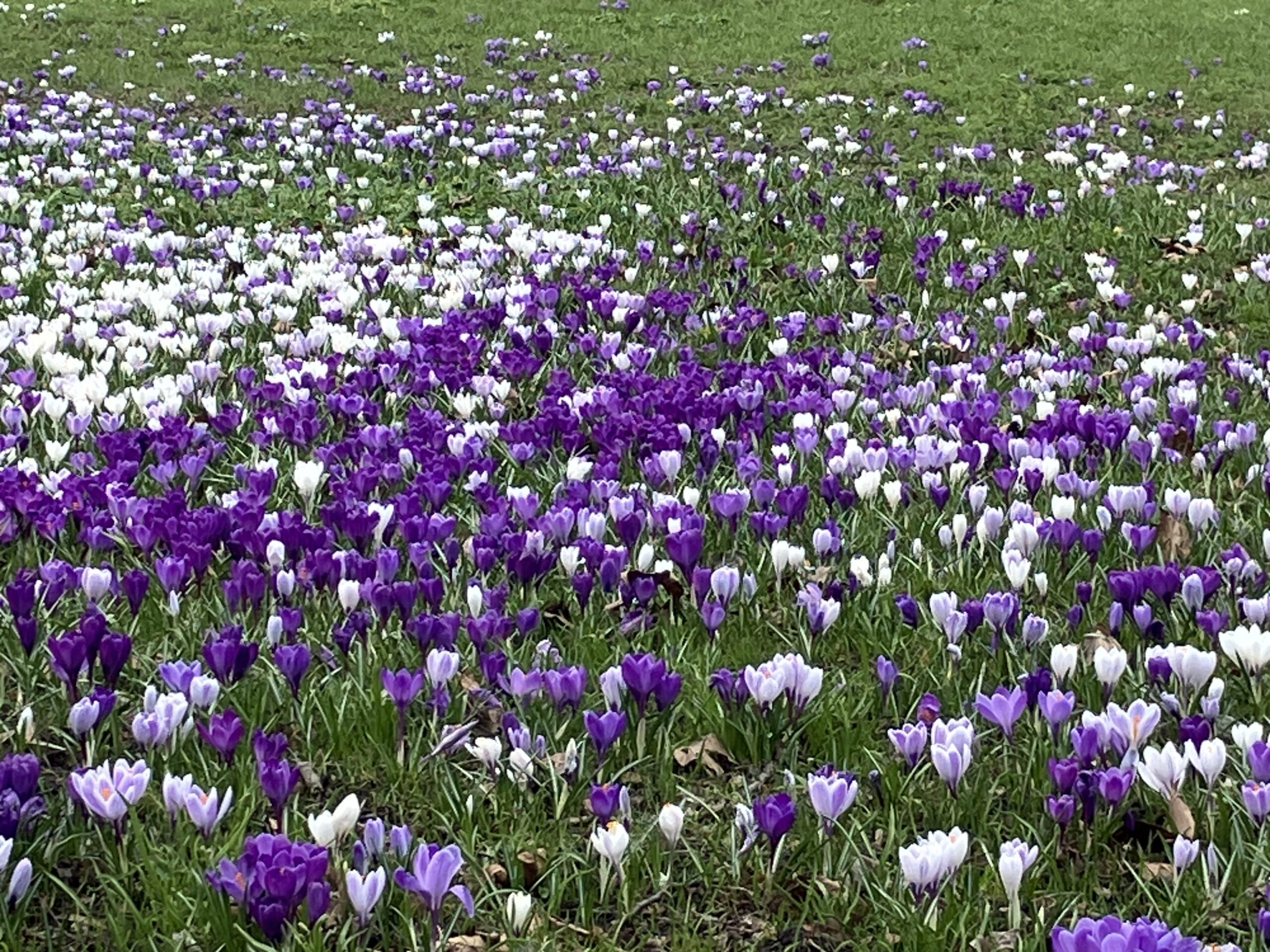
Observing flowers provides students a great way to get close to nature.  Students can engage with flowers, both wild and cultivated, in so many locations.  Whether we see them in window boxes, sprouting in gardens or fields, or smell them when the wind blows, flowers can be easily observed and appreciated. 
childs-hand-holding-flower
Photo credit:  neelam279/pixabay

With flowers, students can learn about and refine their sense of smell.  Our olfactory senses are extremely important, yet often overlooked instructionally.  Like animals around us, our sense of smell helps us stay safe, alerting us to dangers posed by smoke, for example. Smelling helps us taste foods more completely, and helps us avoid foods that are spoiled and can make us sick. 

For this activity, students will smell flowers, then create flower fragrance cards. They will also create cards for other plants and natural items they encounter, to aid comparisons and to help develop and sharpen both olfactory and language description skills.

Preparation

Before reading the story, ask students to listen for words that describe flowers.  Point out some of the words they will hear in the book, such as “fragrance” “unique” and “beauty.”

  •  What are flowers like? Explain what it means to describe something.
  • Brainstorm a list of words that could describe flowers.

Read the book Flowers Bloom.  Make sure to also read “A Note to Caregivers,” “Connecting to Flowers” “Exploring Scents” and the “Appreciating Joyful Moments” sections at the end of the book to familiarize yourself with the questions and activities. 

Materials
  • A clipboard and paper for writing outside
  • Stiff paper, card stock, or plain Index cards
  • A choice of crayons, markers, or colored pencils
  • Alternatively, individual whiteboards and dry erase markers could be used
Read Flowers Bloom

Read the book to students, asking them to pay particular attention to how flowers are described. 
crocuses

After the read-aloud, ask students to help brainstorm a list of words that could be used when talking about the olfactory senses.  Introduce words like: fragrance, smell, sweet, strong, pungent, earthy, fresh, sour, rotten, stinky, spicy, bitter, rotten, delicious. 

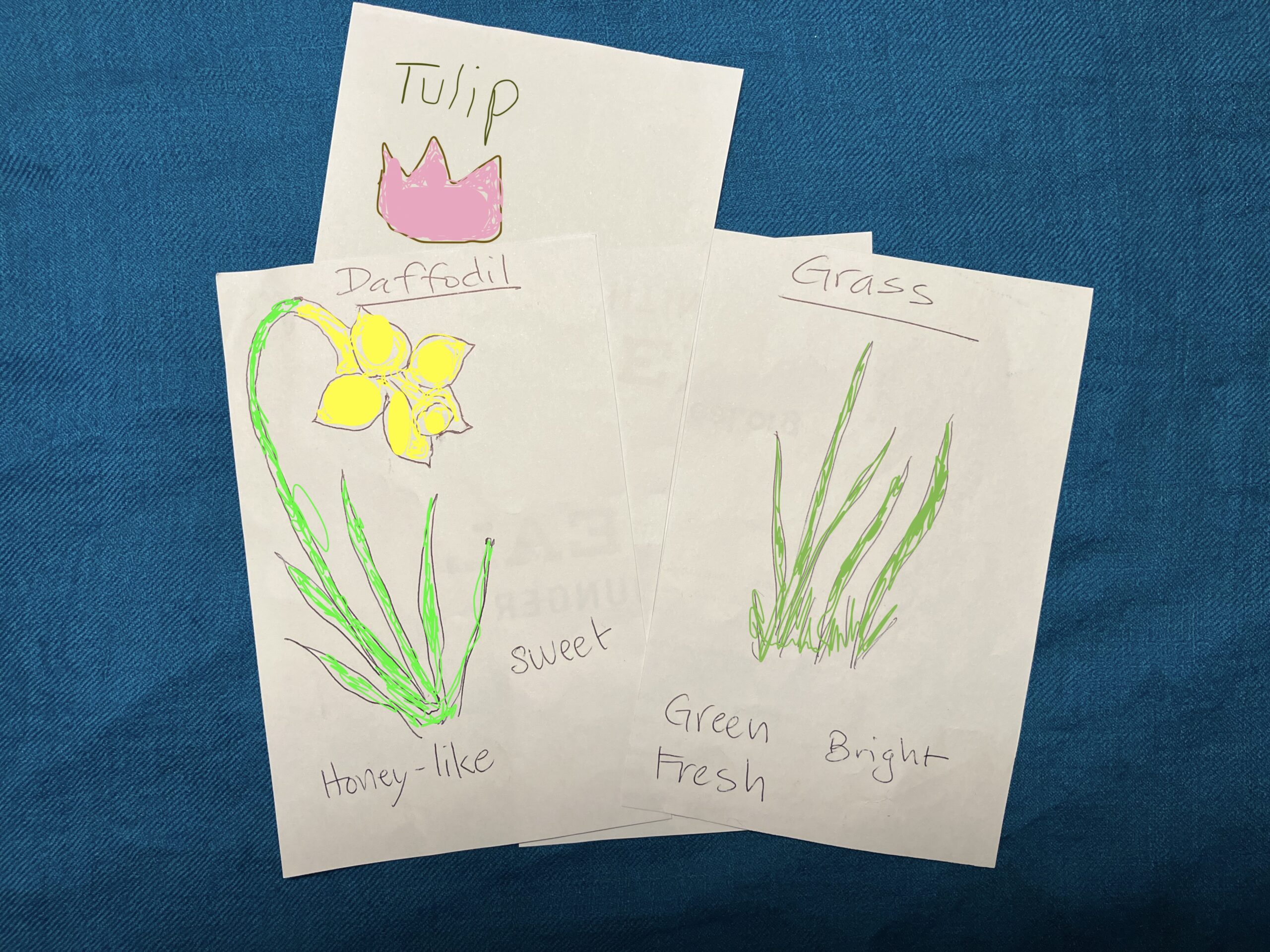
Next, take the “Scent Stroll” together, using the questions from the “Exploring Scents” section of the book.  As you encounter a flower, model safe smelling, making sure that students do not actually touch their face to the flower.  Stop and describe how the flower smells. Compare it to an item students may be familiar with.  For example, “This daffodil smells sweet, kind of like honey.”  Write these descriptions down on your clipboard.  Do this for other natural items such as dirt, grass clippings, or fallen leaves, so that students can compare scents.  

When done with your stroll, use the words you wrote down on the clipboard to create scent cards.

Directions: Make Scent Cards

Have students draw one flower or natural item on each card.  Next, have students recall the adjectives or words they used to describe scents. Refer to the words noted on your clipboard.  Encourage students to recall the metaphors they used as well.  Depending on age and ability level, students can write the words, or draw them, or do both. Focus on recalling the actual scent. Allow students to really take their time, focusing on the variety and feeling of the scents they experienced.
scent-cards

When done, have students share their cards, discussing what they smelled, and what words they wrote or drew.  Discuss which descriptive words are similar and which are different.  Talk about which flowers and items they’d like to smell more of, and which smell they’d like to avoid!

Scent cards are like an olfactory snap shot.  This activity can be repeated in different locations, or done as frequently as once a week in the same spot to determine how the landscape can change, or how flowers and other items can smell differently depending on season or time of day. For example, many flowers like roses are more fragrant later in the day after being exposed to the sun.

 Creating scent cards helps students recall significant scents, which can immediately conjure up specific scenes and memories. Scent cards remind us of the importance of using our noses to stay safe and heed warnings as well. Scent cards also help students expand their descriptive vocabulary and allows students to take time out to literally smell the roses, be in the moment, and to appreciate other smells of nature.

Additional Resources

Common Core ELA Standards Alignment:

  • CCSS.ELA-LITERACY.L.1.1.F  Use frequently occurring adjectives.
  • CCSS.ELA-LITERACY.L.1.5. With guidance and support from adults, demonstrate understanding of word relationships and nuances in word meanings.

Next Generation Science Standards (NGSS) Alignment:

  • K-LS1-1. Use observations to describe patterns of what plants and animals (including humans) need to survive.

Featured image credit: “Smelling-Flowers”-by-Editor-B-is-licensed-under-CC-BY-2.0.

Melina-Mangal-headshot

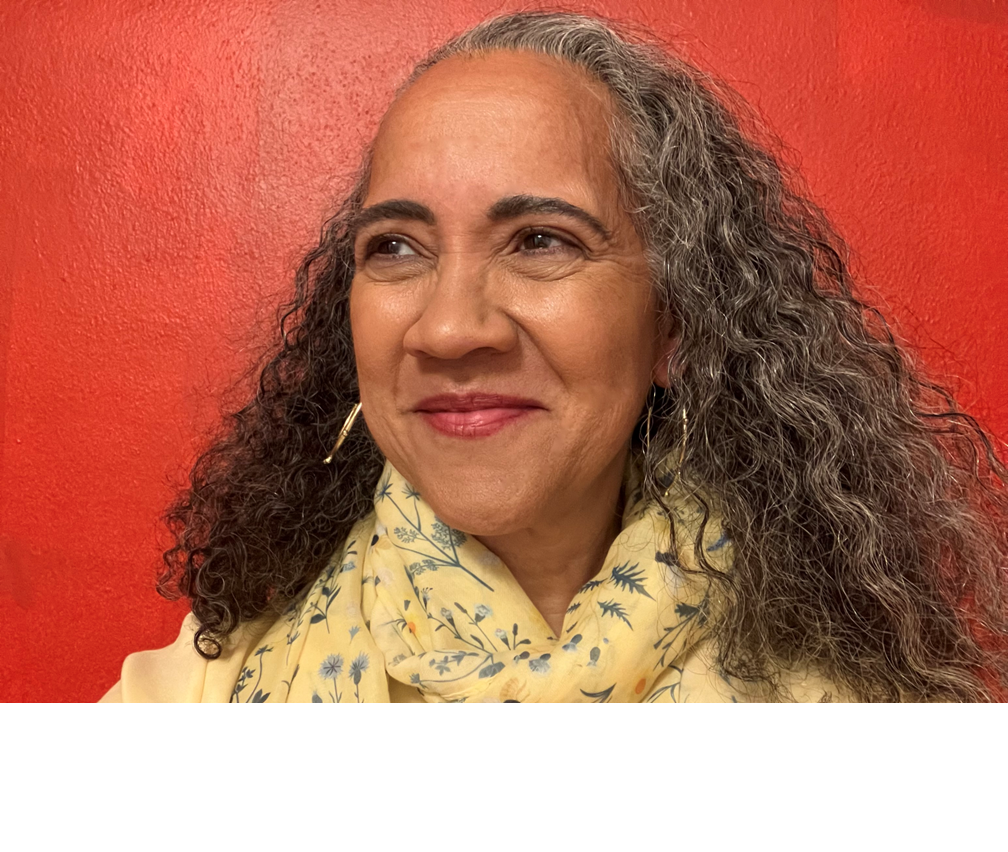
Mélina Mangal writes picture books, biographies, and short stories that focus on connections with nature and culture. She is the author of The Vast Wonder of the World: Biologist Ernest Everett Just, winner of the Carter G. Woodson Award, Jayden’s Impossible Garden, named One of the Best Children’s Books of the Year by Bank Street Center for Children’s Literature, and the sequel, Jayden’s Secret Ingredient. Her picture book biography in verse, Revolutions Are Made of Love: The Story of James Boggs and Grace Lee Boggs was co-written with Sun Yung Shin and is a finalist for the Minnesota Book Award. She is the author of the nature-based board book series Outside Our Window. Website: melinamangal.com  Facebook:  @MelinaMangal Instagram: @melinamangal Bookshop.org link: bookshop.org   

Click for more LITLINKS STEM + Literacy activities

Tags: STEM+LiteracySTEM+Literacy Natural Science
No Comments
Share
0

You also might be interested in

EarthDayEveryDay

LitLinks: The BEST lessons to celebrate Earth Day every day

Dec 29, 2021

BY PATRICIA NEWMAN Happy 2022! We at LitLinks are beginning[...]

ostritch-elephant - wonder

LitLinks: Developing wonder with the natural world

Jun 17, 2020

GUEST BLOGGER SHANA KELLER Rachel Carson and wonder Fly, Firefly![...]

Leonardo da Vinci interior image

LitLinks: 6 ways to teach your students to think like Leonardo da Vinci

Jul 7, 2021

GUEST BLOGGER ELIZABETH PAGEL-HOGAN Ask most students (and teachers) about[...]

Leave a Reply

Your email is safe with me.
Cancel Reply

Click the logo to have LitLinks delivered to your inbox

LitLinks Logo-2022

Author Visits

https://youtu.be/zj6n-RFOcPA?si=8WCTnyXbTiwYumYo
https://youtu.be/ziN0UrqaDYI

Earth Day Every Day Newsletter Archive

Earth-Day-Every-Day-newsletter-banner

Post Categories:

Blog Archive

Top Posts

LitLinks: How to share our ocean connections with kids and teens

LitLinks: Let’s learn to decode photos in STEM nonfiction

LitLinks: How Elephants Can Make Your Sound Unit ROAR!

LitLinks: Easy ways to build students’ science communication skills

Proof that science connects kids to the larger world

Recent Comments

  • Cynthia Argentine on LitLinks: 5 simple steps for comparing birdsong with instrumental music Wonderful integration of music and science and nature! I'm a…
  • Cynthia Argentine on LitLinks: How to observe like a scientist and write like a poet Great observations of the links between science and poetry!
  • Margaret Quinlin on LitLinks: Exploring time and sequence in nature and narrative What a creative exercise for students!
Empowering young readers to act

Latest Blog Posts

  • LitLinks: A simple flower activity to help students develop their sense of smell and descriptive language
    LitLinks: A simple flower activity to help students develop their sense of smell and descriptive language
  • LitLinks: SEL skills connected to successful student outcomes in any of the STEM fields
    LitLinks: SEL skills connected to successful student outcomes in any of the STEM fields
  • LitLinks: How sea animals take baths (it’s not as simple as you think!)
    LitLinks: How sea animals take baths (it’s not as simple as you think!)

Connect with me on social media

Action Shots

Check out the STEM Tuesday Blog

© 2026 — Patricia Newman

  • Home
  • Books
    • Beatrice and the Nightingale
    • Sharks Unhooked: The Adventures of Cristina Zenato, Underwater Ranger
    • Giant Rays of Hope: Protecting Manta Rays to Safeguard the Sea
    • A River’s Gifts: The Mighty Elwha River Reborn
    • Planet Ocean
    • Eavesdropping on Elephants
    • Neema’s Reason To Smile
    • Zoo Scientists to the Rescue
    • Sea Otter Heroes: The Predators That Saved an Ecosystem
    • Plastic, Ahoy! Investigating the Great Pacific Garbage Patch
    • Ebola: Fears and Facts
    • Jingle the Brass
    • Nugget on the Flight Deck
    • Surviving Animal Attacks
    • Elite Operations series
    • Energy Lab series
    • QuickReads Fluency Library
    • Books for English language-learners
    • Writers write all kinds of things
  • Author Visit Programs
    • FAQs
    • Calendar
  • Blog
  • Educator Resources
    • Teach the Hope
    • Earth Day Every Day newsletter archive
    • Teacher Guides
    • STEM + Literacy Activities
    • LitLinks
    • KidLit creators who make kids want to read
  • Writer Resources
    • Writing Classes
    • Manuscript or Proposal Critiques
    • How I got my start
  • Who is Patricia Newman?
  • Contact
    • Stay In Touch
    • Earth Day Every Day newsletter archive
Prev