
• Home
  • Books
    • Beatrice and the Nightingale
    • Sharks Unhooked: The Adventures of Cristina Zenato, Underwater Ranger
    • Giant Rays of Hope: Protecting Manta Rays to Safeguard the Sea
    • A River’s Gifts: The Mighty Elwha River Reborn
    • Planet Ocean
    • Eavesdropping on Elephants
    • Neema’s Reason To Smile
    • Zoo Scientists to the Rescue
    • Sea Otter Heroes: The Predators That Saved an Ecosystem
    • Plastic, Ahoy! Investigating the Great Pacific Garbage Patch
    • Ebola: Fears and Facts
    • Jingle the Brass
    • Nugget on the Flight Deck
    • Surviving Animal Attacks
    • Elite Operations series
    • Energy Lab series
    • QuickReads Fluency Library
    • Books for English language-learners
    • Writers write all kinds of things
  • Author Visit Programs
    • FAQs
    • Calendar
  • Blog
  • Educator Resources
    • Teach the Hope
    • Earth Day Every Day newsletter archive
    • Teacher Guides
    • STEM + Literacy Activities
    • LitLinks
    • KidLit creators who make kids want to read
  • Writer Resources
    • Writing Classes
    • Manuscript or Proposal Critiques
    • How I got my start
  • Who is Patricia Newman?
  • Contact
    • Stay In Touch
    • Earth Day Every Day newsletter archive
Patricia NewmanPatricia Newman
Sibert Honor Children's Book Author & Environmentalist
  • Home
  • Books
    • Beatrice and the Nightingale
    • Sharks Unhooked: The Adventures of Cristina Zenato, Underwater Ranger
    • Giant Rays of Hope: Protecting Manta Rays to Safeguard the Sea
    • A River’s Gifts: The Mighty Elwha River Reborn
    • Planet Ocean
    • Eavesdropping on Elephants
    • Neema’s Reason To Smile
    • Zoo Scientists to the Rescue
    • Sea Otter Heroes: The Predators That Saved an Ecosystem
    • Plastic, Ahoy! Investigating the Great Pacific Garbage Patch
    • Ebola: Fears and Facts
    • Jingle the Brass
    • Nugget on the Flight Deck
    • Surviving Animal Attacks
    • Elite Operations series
    • Energy Lab series
    • QuickReads Fluency Library
    • Books for English language-learners
    • Writers write all kinds of things
  • Author Visit Programs
    • FAQs
    • Calendar
  • Blog
  • Educator Resources
    • Teach the Hope
    • Earth Day Every Day newsletter archive
    • Teacher Guides
    • STEM + Literacy Activities
    • LitLinks
    • KidLit creators who make kids want to read
  • Writer Resources
    • Writing Classes
    • Manuscript or Proposal Critiques
    • How I got my start
  • Who is Patricia Newman?
  • Contact
    • Stay In Touch
    • Earth Day Every Day newsletter archive
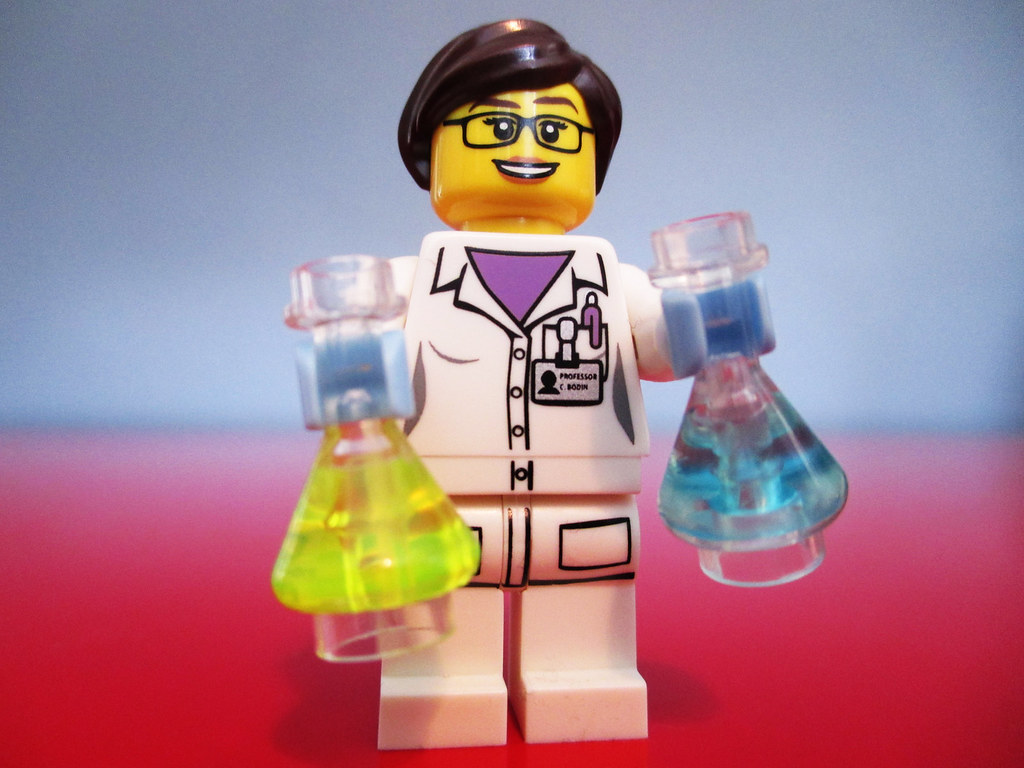
Who is a Scientist? 9662665997_57dfede583_b

LitLinks: 5 easy ways to make scientists relatable for your students

November 3, 2021 LitLinks, LitLinks-Grade 3-5, LitLinks-Grade 6-8, LitLinks-Grade K-2 No Comments
LitLinks Logo-1 (2)

GUEST BLOGGER DR. LAURA GEHL

Who Is A Scientist_cover

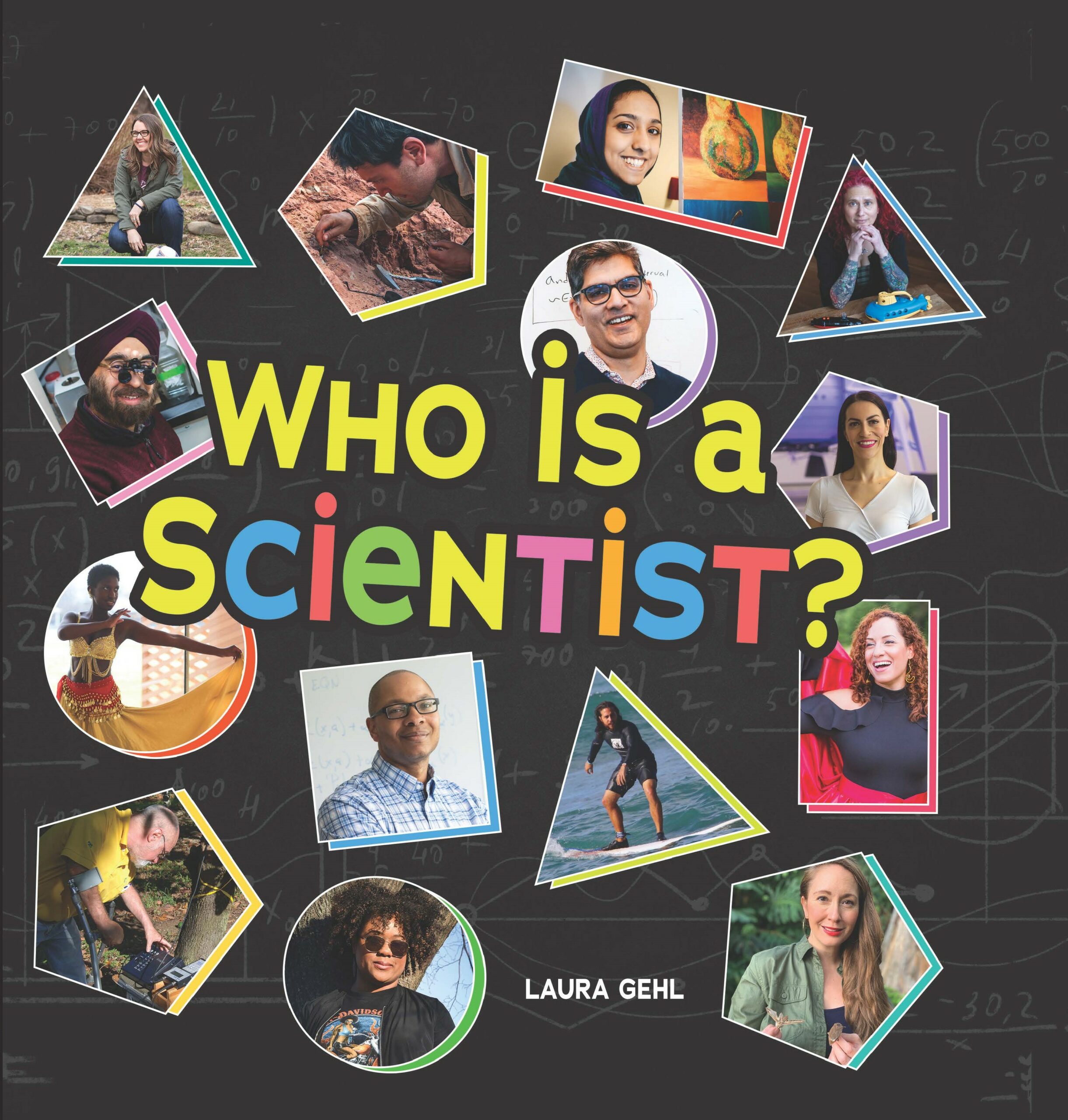
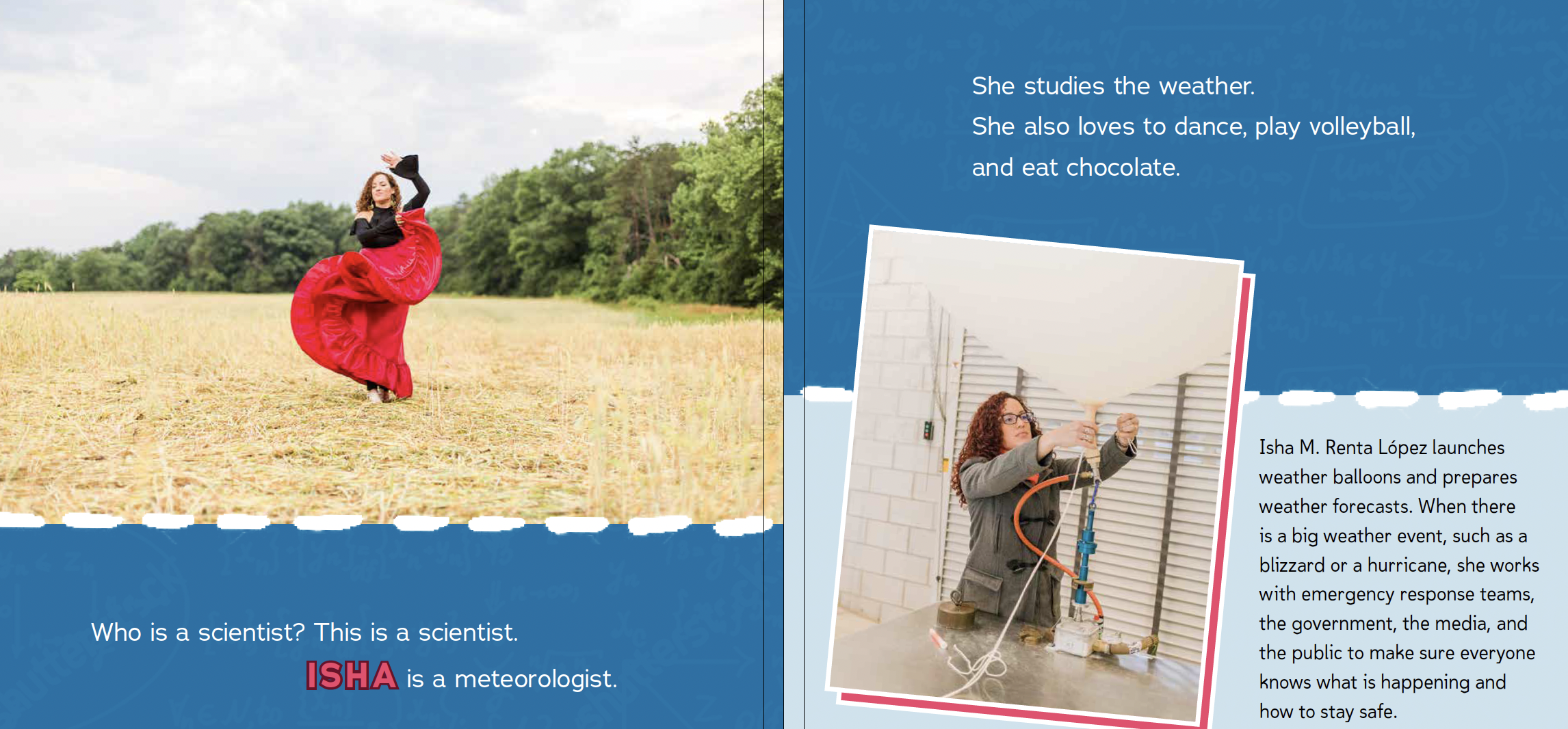
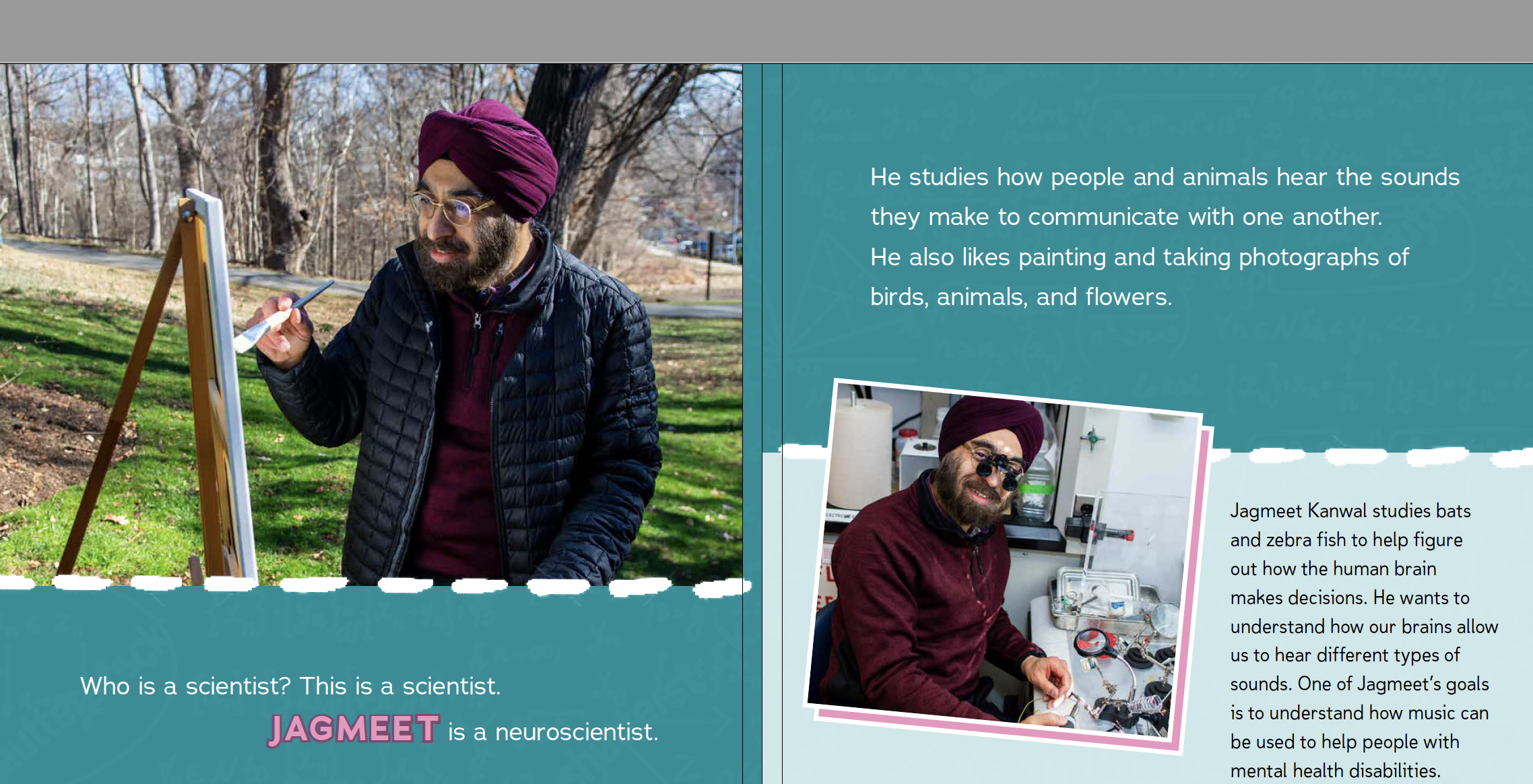
Who Is a Scientist? is about showing students that scientists are real people, just like them. The book profiles 14 scientists of different genders, races, ethnicities, ages, religions, and backgrounds. The photos show each scientist both at work and at play.  

Why is it important to show students that scientists are real people?

The more students can see scientists as real people just like them, the more they will see “scientist” as an approachable career path.

By seeing that scientists:

  • Study just about everything…from the human body to the stars to dinosaurs to bugs to submarines…students will understand that becoming a scientist is one way they could learn more about the topics that interest them—whatever those topics might be.
  • Don’t fit into any one box…that scientists can wear a hijab or have tattoos or put on bright red lipstick or use forearm crutches in the field…students will see that there is no box they would need to fit into in order to be a scientist.
  • Have many of the same hobbies and passions as kids, from dancing and soccer to eating junk food and playing with pets, students will realize that there is nothing so different between themselves and professional scientists. Students will understand that if they just keep asking questions and learning, they can become scientists too.
Screen Shot 2021-10-06 at 11.27.38 AM

Activity 1: Compare and contrast

Each student will choose two scientists to compare and contrast. What do the scientists study? Where do they work? What hobbies do they enjoy outside of science? Students can either choose two scientists from the book Who Is a Scientist? or research other scientists online.

Students will make a Venn Diagram showing the differences between their two chosen scientists, and what the two have in common.

Activity 2: Make class lists

Help your students compile three lists based on all of the scientists they chose to compare and contrast.

  • Different topics of study
  • The places they work
  • Different interests they have in addition to science

Now that your students see how different scientists can be from one another, ask your students what they think ALL scientists around the world have in common. Scientists do not all share the same background or the same language. What do they share? Possible answers might include curiosity, a desire to answer questions, or the willingness to work hard.

Activity 3: Vocabulary building

There are so many branches of science, and scientists who work in different fields have different titles that are fun for students to learn.

Challenge your students to either research or guess what each of these scientists might study.

Easier:

  • Oceanographer (Answer: oceans)
  • Zoologist (Answer: animals)
  • Microbiologist (Answer: microscopic plants and animals)
  • Volcanologist (Answer: volcanoes)

Harder:

  • Seismologist (Answer: earthquakes)
  • Cytologist (Answer: cells) 
  • Hydrologist (Answer: water)  
  • Petrologist (Answer: rocks. Petrology is a branch of geology.)
Screen Shot 2021-10-06 at 11.28.20 AM

Activity 4: Brainstorming research questions like scientists

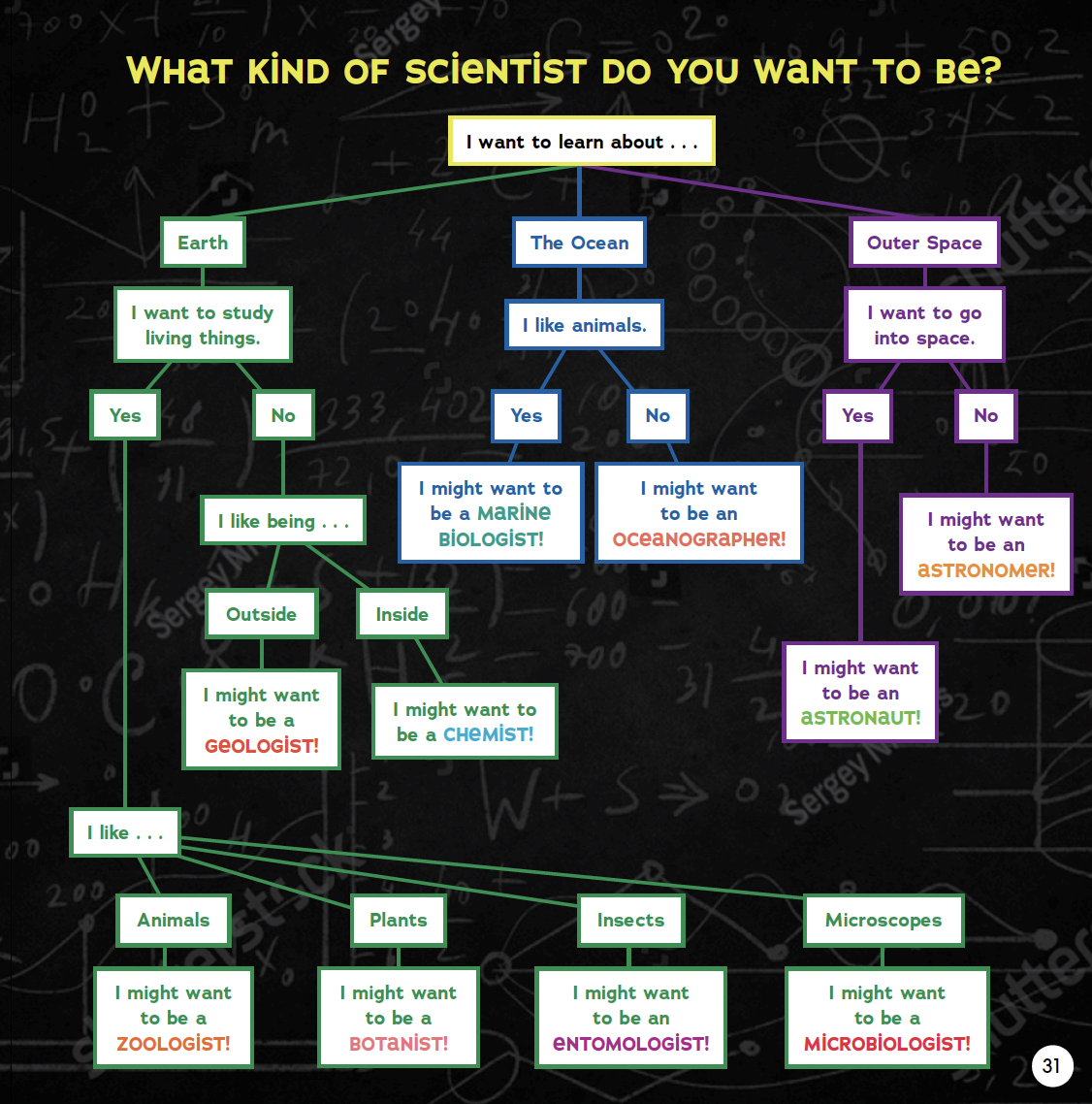
Ask students to use the flow chart from Who Is a Scientist? to see which type of scientist they might want to be. Now ask them to think of a research question they might want to ask as that type of scientist. How would they go about finding the answer to their question?

A sample research question for a botanist might be, “Do tulips grow better in the shade or in the sun?” One way to find out the answer would be to plant 100 tulip bulbs in 10 different sunny locations and 100 tulip bulbs in 10 different shady locations and then observe what happens (How many tulips grow in each location? How tall do they grow? How long do they live?).
Screen Shot 2021-10-05 at 8.32.02 AM

Activity 5: Designing inventions

Some scientists are also inventors, like Tara Astigarraga. Tara has invented many new kinds of computer programs. Ask students, “If you were an inventor, what might you want to invent?” Have students write about the invention they would like to make, or draw a picture.

Further resources:

  • Show your students the Who Is a Scientist? Book Trailer
  • Download the Who Is a Scientist? Educator’s Guide
LauraGehlBooks

Dr. Laura Gehl holds a B.A. in psychology from Yale University and a Ph.D. in neuroscience from Georgetown. She has nearly twenty years of experience teaching and writing about science for preschool, elementary, middle, and high school students. Many of Laura’s two dozen books for young readers have scientific themes, including Always Looking Up: Nancy Grace Roman, Astronomer; the Baby Scientist series; and I Got A Chicken For My Birthday, which features a brilliant engineering chicken. Laura is a frequent presenter at schools, libraries, and community centers, bringing elements of math, science, and engineering into her interactive presentations. Visit her online at www.lauragehl.com and follow her @AuthorLauraGehl on twitter and Instagram.
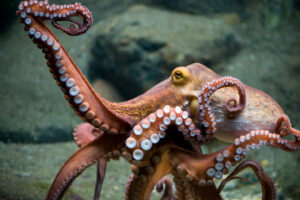
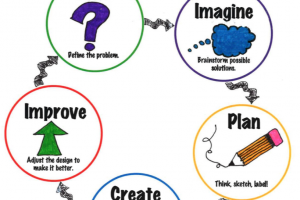
Click for more LITLINKS STEM + Literacy activities

Tags: STEM+LiteracySTEM+Literacy Natural ScienceSTEM+Literacy Physical Science
No Comments
Share
0

You also might be interested in

Velvet purple coronet
Birds create their colors in many ways. Hummingbirds are famous for creating colors with a kind of structural coloration called iridescence.

LitLinks: Creating a Rainbow with BIRDS OF EVERY COLOR

May 1, 2019

TODAY’S GUEST BLOGGER: SNEED B. COLLARD III With the possible[...]

Farm-grown vegetables

LitLinks: The eco-pyramid research tool – an easy way to boost comprehension

Apr 5, 2023

GUEST BLOGGER DEBBIE GONZALES What is an eco-pyramid? The Eco-Pyramid[...]

Patricia Newman's plastic consumption
My plastic consumption for three weeks. Milk containers, tennis ball cans, yogurt cups, contact lens solution bottles, pasta bags, strawberry containers. Cereal box liners. Yikes! Where does it end?

LitLinks: How to celebrate #PlasticFreeJuly and be a voice for change

Jul 5, 2023

PATRICIA NEWMAN Ever since I wrote Plastic, Ahoy!, my news[...]

Leave a Reply

Your email is safe with me.
Cancel Reply

Click the logo to have LitLinks delivered to your inbox

LitLinks Logo-2022

Author Visits

https://youtu.be/zj6n-RFOcPA?si=8WCTnyXbTiwYumYo
https://youtu.be/ziN0UrqaDYI

Earth Day Every Day Newsletter Archive

Earth-Day-Every-Day-newsletter-banner

Post Categories:

Blog Archive

Top Posts

LitLinks: How to share our ocean connections with kids and teens

LitLinks: Let’s learn to decode photos in STEM nonfiction

LitLinks: How Elephants Can Make Your Sound Unit ROAR!

LitLinks: Easy ways to build students’ science communication skills

Proof that science connects kids to the larger world

Recent Comments

  • Cynthia Argentine on LitLinks: 5 simple steps for comparing birdsong with instrumental music Wonderful integration of music and science and nature! I'm a…
  • Cynthia Argentine on LitLinks: How to observe like a scientist and write like a poet Great observations of the links between science and poetry!
  • Margaret Quinlin on LitLinks: Exploring time and sequence in nature and narrative What a creative exercise for students!
Empowering young readers to act

Latest Blog Posts

  • LitLinks: How to help students see connections in vernal pools
    LitLinks: How to help students see connections in vernal pools
  • LitLinks: A simple flower activity to help students develop their sense of smell and descriptive language
    LitLinks: A simple flower activity to help students develop their sense of smell and descriptive language
  • LitLinks: SEL skills connected to successful student outcomes in any of the STEM fields
    LitLinks: SEL skills connected to successful student outcomes in any of the STEM fields

Connect with me on social media

Action Shots

Check out the STEM Tuesday Blog

© 2026 — Patricia Newman

  • Home
  • Books
    • Beatrice and the Nightingale
    • Sharks Unhooked: The Adventures of Cristina Zenato, Underwater Ranger
    • Giant Rays of Hope: Protecting Manta Rays to Safeguard the Sea
    • A River’s Gifts: The Mighty Elwha River Reborn
    • Planet Ocean
    • Eavesdropping on Elephants
    • Neema’s Reason To Smile
    • Zoo Scientists to the Rescue
    • Sea Otter Heroes: The Predators That Saved an Ecosystem
    • Plastic, Ahoy! Investigating the Great Pacific Garbage Patch
    • Ebola: Fears and Facts
    • Jingle the Brass
    • Nugget on the Flight Deck
    • Surviving Animal Attacks
    • Elite Operations series
    • Energy Lab series
    • QuickReads Fluency Library
    • Books for English language-learners
    • Writers write all kinds of things
  • Author Visit Programs
    • FAQs
    • Calendar
  • Blog
  • Educator Resources
    • Teach the Hope
    • Earth Day Every Day newsletter archive
    • Teacher Guides
    • STEM + Literacy Activities
    • LitLinks
    • KidLit creators who make kids want to read
  • Writer Resources
    • Writing Classes
    • Manuscript or Proposal Critiques
    • How I got my start
  • Who is Patricia Newman?
  • Contact
    • Stay In Touch
    • Earth Day Every Day newsletter archive
Prev Next