

• Home
  • Books
    • Beatrice and the Nightingale
    • Sharks Unhooked: The Adventures of Cristina Zenato, Underwater Ranger
    • Giant Rays of Hope: Protecting Manta Rays to Safeguard the Sea
    • A River’s Gifts: The Mighty Elwha River Reborn
    • Planet Ocean
    • Eavesdropping on Elephants
    • Neema’s Reason To Smile
    • Zoo Scientists to the Rescue
    • Sea Otter Heroes: The Predators That Saved an Ecosystem
    • Plastic, Ahoy! Investigating the Great Pacific Garbage Patch
    • Ebola: Fears and Facts
    • Jingle the Brass
    • Nugget on the Flight Deck
    • Surviving Animal Attacks
    • Elite Operations series
    • Energy Lab series
    • QuickReads Fluency Library
    • Books for English language-learners
    • Writers write all kinds of things
  • Author Visit Programs
    • FAQs
    • Calendar
  • Blog
  • Educator Resources
    • Teach the Hope
    • Earth Day Every Day newsletter archive
    • Teacher Guides
    • STEM + Literacy Activities
    • LitLinks
    • KidLit creators who make kids want to read
  • Writer Resources
    • Writing Classes
    • Manuscript or Proposal Critiques
    • How I got my start
  • Who is Patricia Newman?
  • Contact
    • Stay In Touch
    • Earth Day Every Day newsletter archive
Patricia NewmanPatricia Newman
Sibert Honor Children's Book Author & Environmentalist
  • Home
  • Books
    • Beatrice and the Nightingale
    • Sharks Unhooked: The Adventures of Cristina Zenato, Underwater Ranger
    • Giant Rays of Hope: Protecting Manta Rays to Safeguard the Sea
    • A River’s Gifts: The Mighty Elwha River Reborn
    • Planet Ocean
    • Eavesdropping on Elephants
    • Neema’s Reason To Smile
    • Zoo Scientists to the Rescue
    • Sea Otter Heroes: The Predators That Saved an Ecosystem
    • Plastic, Ahoy! Investigating the Great Pacific Garbage Patch
    • Ebola: Fears and Facts
    • Jingle the Brass
    • Nugget on the Flight Deck
    • Surviving Animal Attacks
    • Elite Operations series
    • Energy Lab series
    • QuickReads Fluency Library
    • Books for English language-learners
    • Writers write all kinds of things
  • Author Visit Programs
    • FAQs
    • Calendar
  • Blog
  • Educator Resources
    • Teach the Hope
    • Earth Day Every Day newsletter archive
    • Teacher Guides
    • STEM + Literacy Activities
    • LitLinks
    • KidLit creators who make kids want to read
  • Writer Resources
    • Writing Classes
    • Manuscript or Proposal Critiques
    • How I got my start
  • Who is Patricia Newman?
  • Contact
    • Stay In Touch
    • Earth Day Every Day newsletter archive
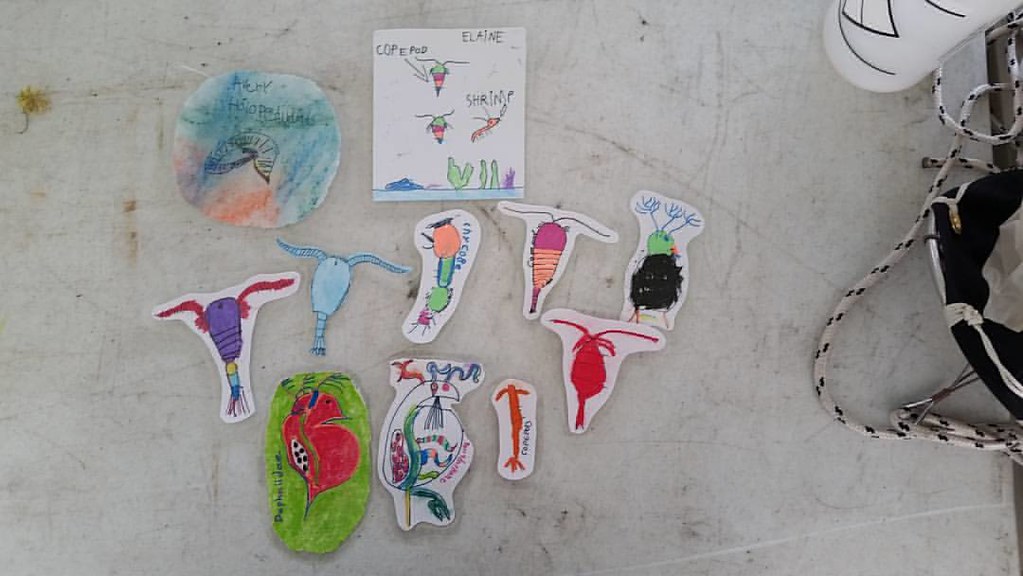
"some-zooplankton-creations-from-today's-workshop-with-@kiac-Yukon-Riverside-Arts-Festival.-#beingadrift"-by-meganleigh-is-licensed-under-CC-BY-SA-2.0.

LitLinks: Show students how to add tension, movement & awe to their writing

June 3, 2026 LitLinks, LitLinks-Grade 3-5, LitLinks-Grade 6-8, LitLinks-Grade K-2 No Comments
LitLinks Logo-2022

GUEST BLOGGER JILANNE HOFFMANN
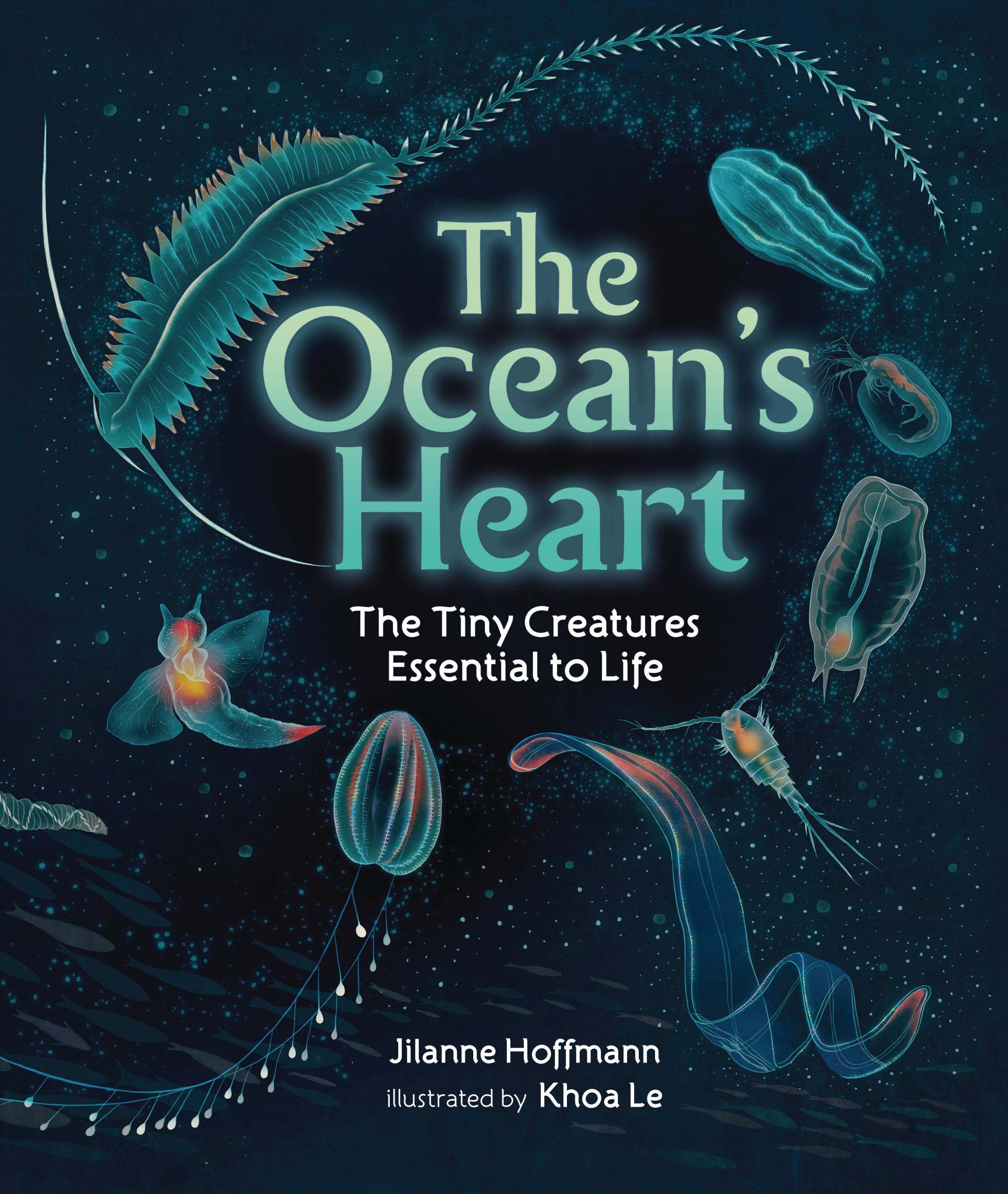

The-Ocean's-Heart-cover

In The Ocean’s Heart: The Tiny Creatures Essential to Life readers plunge far below the ocean’s surface where billions of restless animals called zooplankton dwell in the Twilight Zone. Some are tiny, some enormous, and most are exquisitely strange and beautiful. As the author of this story, I wanted to create tension, movement, and awe.

  • Tension, to engage readers and get them to turn the pages.
  • Movement, so that readers could feel the rhythmic pulse of the ocean and the never-ending migration that’s happening somewhere in the ocean every minute of the day.
  • Awe so that readers would also grow in appreciation and curiosity about ocean life that is often overlooked. This leads to understanding and caring about these tiny animals that need our protection.

How can students learn to use tension, movement and awe in their own writing?

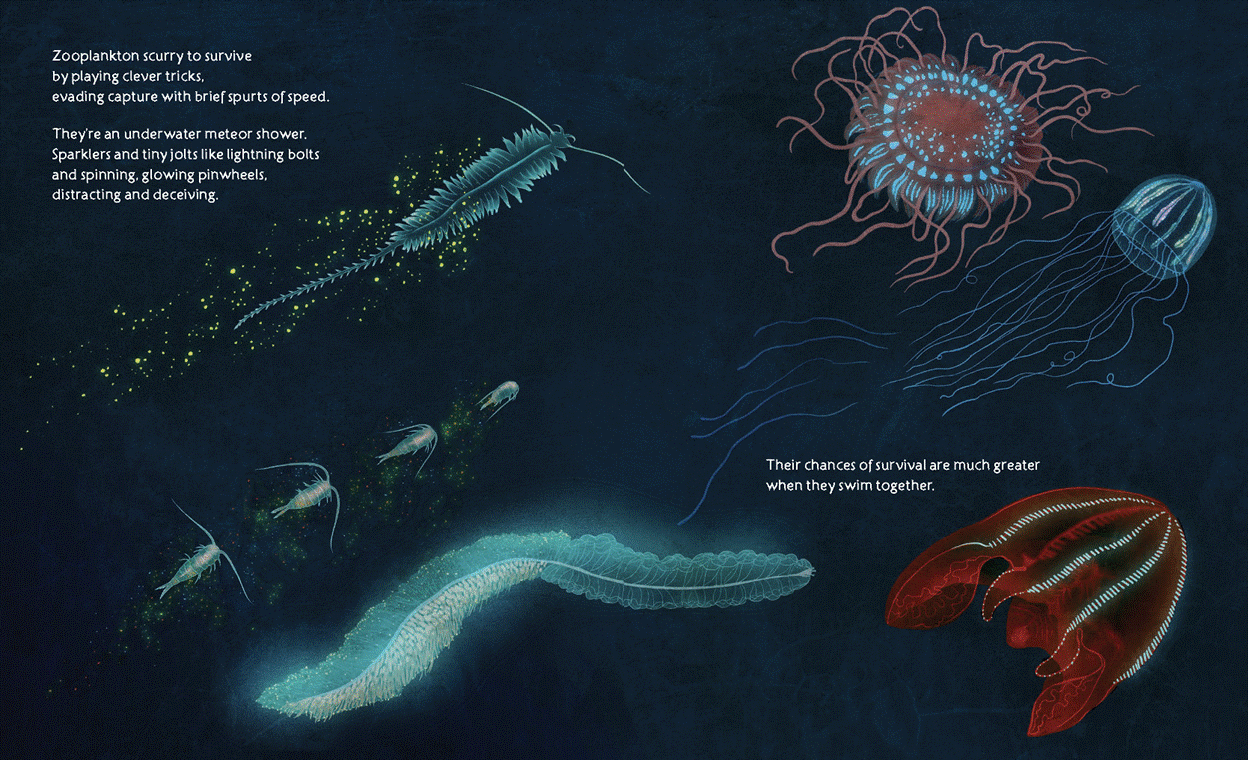
By using The Ocean’s Heart as a mentor text. The setting sun cues the zooplanktons’ journey to surface waters for a midnight feast on trillions of tiny plants (and each other). It’s a daunting, perilous, nightly migration that transforms the dark ocean into a carnival of lights amidst a feeding frenzy in this eat before being eaten world—a journey that’s vital to all life on Earth.
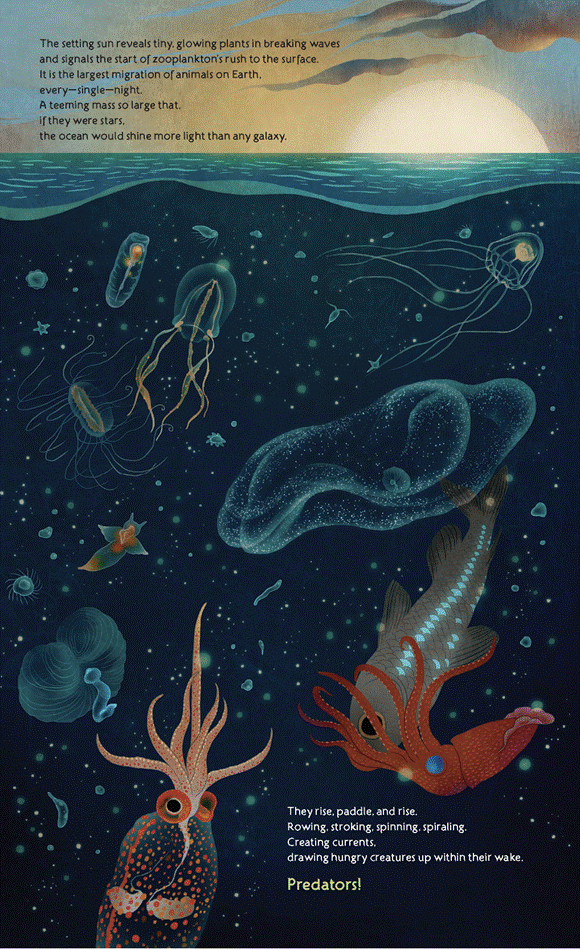
From The Ocean’s Heart: The Tiny Creatures Essential to Life by Jilanne Hoffmann, illustrated by Khoa Le (Millbrook Press/Lerner, 2026)
Ask students to read through The Ocean’s Heart and identify the sources of tension in the story.

In general, discuss why tension is important in storytelling, even in nonfiction.

    Students may note specific details that increase tension such as:

    Visual elements

    • Dark illustrations
    • Strange-shaped animals
    • Animals being seized by predators

    Narrative elements

    • High stakes – life/death – use of the word “survival” – these creatures must swim to reach their food to survive
    • A ticking clock – swimming long distances in limited time (sunset to sunrise)
    • Violence-related verbs –  examples include “seized,” “biting,” “tearing,” “gulping”
    • Fear-related verbs – examples include “waiting,” “hiding,” “evading”

    Ask students to write a short story or poem or draw a story in graphic novel format that incorporates some of the elements of tension they’ve identified.

    Ask students to read through The Ocean’s Heart and identify how the author and illustrator created a sense of movement in the story.

    Why do students think it was important to the author and illustrator to do this?

    Students may note details like:

    Narrative elements

    • Adjectives and participle adjectives (“ing” form of a verb that describes a noun) – “restless,” “glowing,” “breaking,” “stinging”
    • Present participle verbs – use of “ing” to show ongoing action – examples include “hiding,” “waiting,” “rowing,” “stroking,” “spinning,” “spiraling”
    • Use of repetition – “paddle and rise/dive”
    • Story fades out like the end of a song  – the story continues even as the distance grows between the reader and characters in the story
    • The story’s circular structure – wait, rise, eat, dive, wait, rise….

    Visual elements

    • Illustrator’s slanting animal movement upward to the right
    • Vertical illustrations showing rising from/diving down into the depths
    • Water ripples
    • Tentacles that curve
    • Schools of fish

    Ask students to write a short story or poem or draw a story in graphic novel format that incorporates some of the elements of movement they’ve identified.

    Ask students to read through The Ocean’s Heart and identify how the author and illustrator created a sense of awe in the story.

    Why do students think the author wanted to create a sense of awe?

    Students may note details like:

    Narrative elements

    • Word choice: “Behold their strange and glorious beauty!” “Behold” creates a sense of grandeur or majesty. Pairing “strange” and “glorious” evokes a sense of fascination and wonder. How can something so strange be so beautiful?
    • Use of metaphors – examples include:
      •  equating zooplankton to “stars” and the ocean to a “galaxy”
      • “Underwater meteor shower,” “sparklers,” “lighting bolts”
      • “Candlelight of stars”
    From The Ocean’s Heart: The Tiny Creatures Essential to Life by Jilanne Hoffmann, illustrated by Khoa Le (Millbrook Press/Lerner, 2026)

    Visual elements

    • Animals that glow
    • Strangeness (the unusual can bring about a sense of awe) but also beauty
    • Surrounding darkness feels a bit mysterious, and also creates a sense of the vastness of the ocean
    Wrap-up

    Ask students to write a short story or poem or draw a story in graphic novel format that incorporates some of the elements of awe they’ve identified.

    Ask students to seek out other picture books that they find engaging and analyze how the author/illustrator captured their interest. It’s fun to use mentor texts to learn how to improve students’ skills!                                    

    Featured image credit: “some zooplankton creations from today’s workshop with @kiac Yukon Riverside Arts Festival. #beingadrift” by meganleigh is licensed under CC BY-SA 2.0.


    Jilanne-Hoffmann-headshot

    Jilanne Hoffmann is an engineer-turned-children’s author who loves the natural world and wants to share that wonder with readers. Jilanne’s middle grade novel in verse/prose, HeartLand, received a starred review from School Library Journal and is “highly recommended for all middle grade collections.” She’s also the author of the nonfiction picture books, The Ocean’s Heart, which received starred reviews from Kirkus and Booklist, and A River of Dust, which received a starred review from Publishers Weekly, a Junior Library Guild gold designation, the Louis J. Batton Author’s Award from the American Meteorological Society, and named to the Garden State Book List. It was also listed as a best children’s book by Bank Street College and American Library Association. She lives in San Francisco with her family. Website: https://jilannehoffmann.com/ Social Media: IG @jilanne2694 Bluesky: @jilanne.bsky.social FB: Jilanne.Hoffmann.96

    Click for more LITLINKS STEM + Literacy activities

    Tags: STEM+LiteracySTEM+Literacy Natural Science
    No Comments
    Share
    0

    You also might be interested in

    boat_land_cartoon

    LitLinks: Show students how to play with point of view to improve informational writing

    Nov 30, 2022

    GUEST BLOGGER MATT LILLEY Good Eating: The Short Life of[...]

    BenjaminBanneker-interior1

    LitLinks: How Benjamin Banneker can surprise your students

    Aug 25, 2021

    GUEST BLOGGER SHANA KELLER Benjamin Banneker was born in 1731.[...]

    Fly agaric mushrooms, Netherlands

    LitLinks: How the weird world of fungi improves writing

    Sep 2, 2020

    GUEST BLOGGER LINDSAY H. METCALF Fungi are all around us.[...]

    Leave a Reply

    Your email is safe with me.
    Cancel Reply

    Click the logo to have LitLinks delivered to your inbox

    LitLinks Logo-2022

    Author Visits

    https://youtu.be/zj6n-RFOcPA?si=8WCTnyXbTiwYumYo
    https://youtu.be/ziN0UrqaDYI

    Earth Day Every Day Newsletter Archive

    Earth-Day-Every-Day-newsletter-banner

    Post Categories:

    Blog Archive

    Top Posts

    LitLinks: How to share our ocean connections with kids and teens

    LitLinks: Let’s learn to decode photos in STEM nonfiction

    LitLinks: How Elephants Can Make Your Sound Unit ROAR!

    LitLinks: Easy ways to build students’ science communication skills

    Proof that science connects kids to the larger world

    Recent Comments

    • Cynthia Argentine on LitLinks: 5 simple steps for comparing birdsong with instrumental music Wonderful integration of music and science and nature! I'm a…
    • Cynthia Argentine on LitLinks: How to observe like a scientist and write like a poet Great observations of the links between science and poetry!
    • Margaret Quinlin on LitLinks: Exploring time and sequence in nature and narrative What a creative exercise for students!
    Empowering young readers to act

    Latest Blog Posts

    • LitLinks: Show students how to add tension, movement & awe to their writing
      LitLinks: Show students how to add tension, movement & awe to their writing
    • LitLinks: Easy lessons to inspire students to think like an architect
      LitLinks: Easy lessons to inspire students to think like an architect
    • LitLinks: 5 easy steps to help students dig deep when they research
      LitLinks: 5 easy steps to help students dig deep when they research

    Connect with me on social media

    Action Shots

    Check out the STEM Tuesday Blog

    © 2026 — Patricia Newman

    • Home
    • Books
      • Beatrice and the Nightingale
      • Sharks Unhooked: The Adventures of Cristina Zenato, Underwater Ranger
      • Giant Rays of Hope: Protecting Manta Rays to Safeguard the Sea
      • A River’s Gifts: The Mighty Elwha River Reborn
      • Planet Ocean
      • Eavesdropping on Elephants
      • Neema’s Reason To Smile
      • Zoo Scientists to the Rescue
      • Sea Otter Heroes: The Predators That Saved an Ecosystem
      • Plastic, Ahoy! Investigating the Great Pacific Garbage Patch
      • Ebola: Fears and Facts
      • Jingle the Brass
      • Nugget on the Flight Deck
      • Surviving Animal Attacks
      • Elite Operations series
      • Energy Lab series
      • QuickReads Fluency Library
      • Books for English language-learners
      • Writers write all kinds of things
    • Author Visit Programs
      • FAQs
      • Calendar
    • Blog
    • Educator Resources
      • Teach the Hope
      • Earth Day Every Day newsletter archive
      • Teacher Guides
      • STEM + Literacy Activities
      • LitLinks
      • KidLit creators who make kids want to read
    • Writer Resources
      • Writing Classes
      • Manuscript or Proposal Critiques
      • How I got my start
    • Who is Patricia Newman?
    • Contact
      • Stay In Touch
      • Earth Day Every Day newsletter archive
    Prev