


GUEST BLOGGER HENRY HERZ
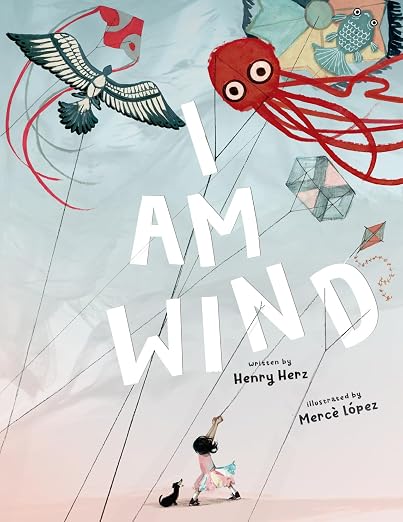
What can you smell, hear, and feel but never see? Soft as a feather or strong as a storm? Bringing comfort and delight or chaos and destruction? Wind, of course! Told in lyrical, riddling first-person narrative, Wind boasts of its essential role in life as we know it—from carving the Earth’s face to spreading seeds and pollen. I AM WIND’s back matter about the science of wind and weather enhances the book for STEM learning.
Amazing wind facts
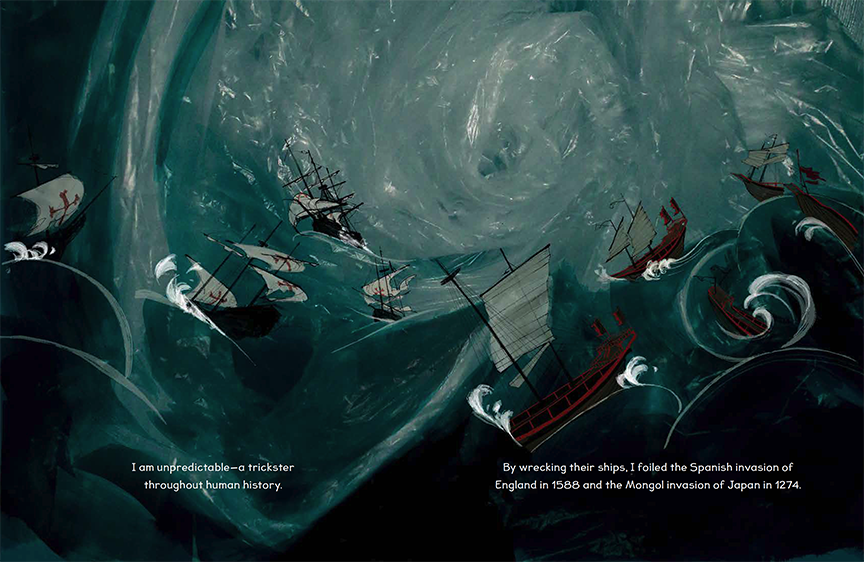
- Wind propelled the sailing ships of brave explorers like Ferdinand Magellan, Hanno the Navigator, Leif Erikson, Francis Drake, Piri Reis, and Zheng He to new lands.
- Many plants require help spreading their seeds or pollen. Some well-known plant helpers are birds, bees, butterflies, and bats. But wind is also a powerful pollinator. The spread of seeds helps plants take root in new areas. But if wind blows too strongly, it can damage seedlings or make it harder for plants to grow.
- Many animals locate their food by its scent. Wolves, foxes, and bears are predators with powerful senses of smell. Elephants use smell to detect water, even at a distance. Vultures, hyenas, Komodo dragons, and other carrion eaters locate rotting carcasses using their sense of smell. Other animals use their sense of smell to avoid predators. Some birds can detect the chemical signals given off by weasels. Rodents and rabbits will react if they smell predators like cats, ferrets, and foxes.
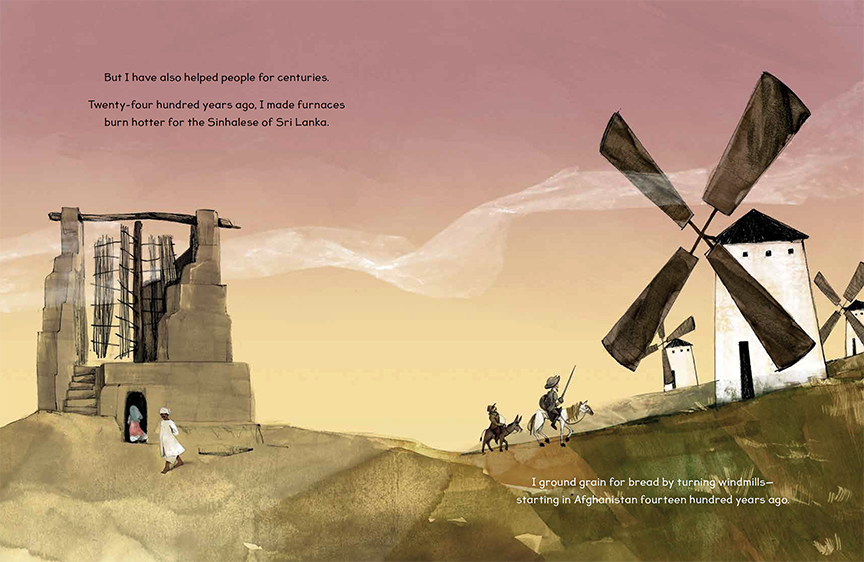
- Wind helped people by turning windmills to grind grain as long as fourteen hundred years ago. Today, windmills generate electricity.
- When wind hurls dust, it can erode hills. Wind can raise sand dunes and spread topsoil. Loess is a type of sediment formed when aeolian (windborne) dust piles up. But, when wind blows too hard, sediment deflation (the erosion of soil), occurs.
- The Coriolis effect is caused by the Earth’s rotation and appears to deflect the movement of moving objects like air and water. Different latitudes on Earth rotate at different speeds. This causes winds to appear to curve to the right in the northern hemisphere and to the left in the southern hemisphere.
Fun with wind: Wind vane
Objective
Make a wind vane to determine the direction of the wind.
Materials needed
A pencil with an eraser on top, a drinking straw, card stock cut into the shape of an arrow head, a pin, clay or plasticine, tape or glue.
Demo
Attach the arrow head to one end of the straw. Stick the pin through the center of the straw into the pencil eraser so the straw is perpendicular to the pencil. Find a suitable outdoor location and use the clay to mount the pencil vertically. Watch how the arrow points in the direction of the wind.
Fun with Wind: Anemometer
Objective
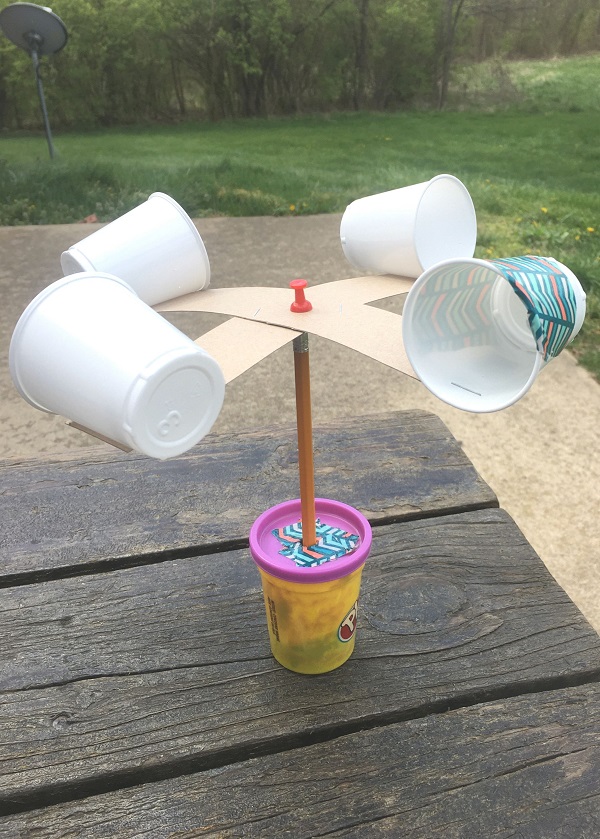
Make a wind anemometer to measure wind speed (see featured image).
Materials needed
4 paper cups, corrugated cardboard, thumbtack, hot glue gun or stapler, scissors, tape, pencil with an eraser, plasticine container.
Demo
Cut the corrugated cardboard into two 1.5” by 12” strips. Hot glue or staple the strips together to form a cross. Center the pieces as much as possible so there’s an equal length of cardboard on each side. Put tape on the outside of one cup to visually differentiate it. Staple or hot glue a cup to each end of the cardboard cross. Make sure the open ends of the cups align as shown below. Insert the lead end of the pencil vertically into the plasticine container. Stick the thumbtack through the center of the cardboard cross. Jiggle it a little so the hole is bigger than the pin. Stick the thumbtack into the pencil eraser. Check to ensure the cross can freely rotate. Take outside. Set a timer for one minute and count how many times the cup with the tape goes around in a circle. If the cup goes around ten times in one minute, the wind speed is approximately one mile per hour. If it rotates 20 times in a minute, the wind is two miles per hour, etc.
Fun with wind: Balloon-powered car
Objective
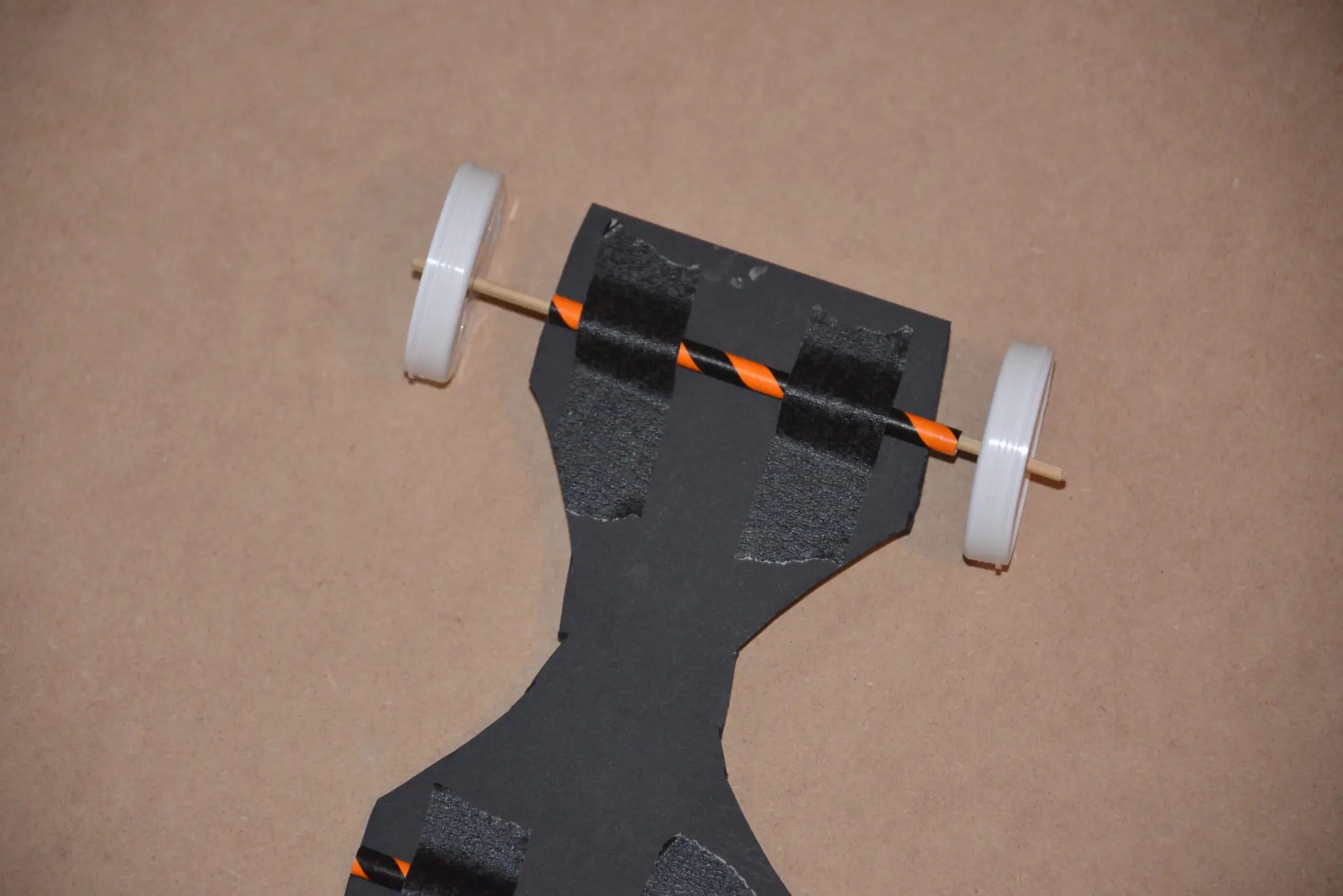
Show how wind applies force by building a balloon-powered car.
Materials needed
cardboard, scissors, 3 drinking straws, 4 equal-sized plastic lids, balloon, rubber band or tape, 2 skewers.
Demo
Cut an hourglass-shaped car base out of cardboard. Tape a straw across each of the wide ends. Insert a skewer through each straw, and poke the skewer through a plastic lid on either end to create wheeled axles. Check to make sure the axles rotate freely. Attach a balloon to a third straw using a rubber band or tape. Tape the straw lengthwise to the other side of the car base. Inflate the balloon and set on a smooth surface. The car should roll until the force of the compressed air is exhausted.
Featured image credit: Anemometer courtesy of Henry Herz

Henry Herz is the author of fourteen picture books, including I Am Light and the award-winning I Am Smoke. Find him at henryherz.com, https://www.facebook.com/henryherzauthor, https://www.instagram.com/henry_herz/, and https://bsky.app/profile/henryherz.bsky.social




Leave a Reply
Your email is safe with me.