

• Home
  • Books
    • Beatrice and the Nightingale
    • Sharks Unhooked: The Adventures of Cristina Zenato, Underwater Ranger
    • Giant Rays of Hope: Protecting Manta Rays to Safeguard the Sea
    • A River’s Gifts: The Mighty Elwha River Reborn
    • Planet Ocean
    • Eavesdropping on Elephants
    • Neema’s Reason To Smile
    • Zoo Scientists to the Rescue
    • Sea Otter Heroes: The Predators That Saved an Ecosystem
    • Plastic, Ahoy! Investigating the Great Pacific Garbage Patch
    • Ebola: Fears and Facts
    • Jingle the Brass
    • Nugget on the Flight Deck
    • Surviving Animal Attacks
    • Elite Operations series
    • Energy Lab series
    • QuickReads Fluency Library
    • Books for English language-learners
    • Writers write all kinds of things
  • Author Visit Programs
    • FAQs
    • Calendar
  • Blog
  • Educator Resources
    • Teach the Hope
    • Earth Day Every Day newsletter archive
    • Teacher Guides
    • STEM + Literacy Activities
    • LitLinks
    • KidLit creators who make kids want to read
  • Writer Resources
    • Writing Classes
    • Manuscript or Proposal Critiques
    • How I got my start
  • Who is Patricia Newman?
  • Contact
    • Stay In Touch
    • Earth Day Every Day newsletter archive
Patricia NewmanPatricia Newman
Sibert Honor Children's Book Author & Environmentalist
  • Home
  • Books
    • Beatrice and the Nightingale
    • Sharks Unhooked: The Adventures of Cristina Zenato, Underwater Ranger
    • Giant Rays of Hope: Protecting Manta Rays to Safeguard the Sea
    • A River’s Gifts: The Mighty Elwha River Reborn
    • Planet Ocean
    • Eavesdropping on Elephants
    • Neema’s Reason To Smile
    • Zoo Scientists to the Rescue
    • Sea Otter Heroes: The Predators That Saved an Ecosystem
    • Plastic, Ahoy! Investigating the Great Pacific Garbage Patch
    • Ebola: Fears and Facts
    • Jingle the Brass
    • Nugget on the Flight Deck
    • Surviving Animal Attacks
    • Elite Operations series
    • Energy Lab series
    • QuickReads Fluency Library
    • Books for English language-learners
    • Writers write all kinds of things
  • Author Visit Programs
    • FAQs
    • Calendar
  • Blog
  • Educator Resources
    • Teach the Hope
    • Earth Day Every Day newsletter archive
    • Teacher Guides
    • STEM + Literacy Activities
    • LitLinks
    • KidLit creators who make kids want to read
  • Writer Resources
    • Writing Classes
    • Manuscript or Proposal Critiques
    • How I got my start
  • Who is Patricia Newman?
  • Contact
    • Stay In Touch
    • Earth Day Every Day newsletter archive
Sound-Through-the-Airwaves-LitLinks

LitLinks: The amazing way radio waves share music with us

September 16, 2026 LitLinks, LitLinks-Grade 3-5, LitLinks-Grade 6-8, LitLinks-Grade K-2 No Comments
LitLinks Logo-2022

BY PATRICIA NEWMAN


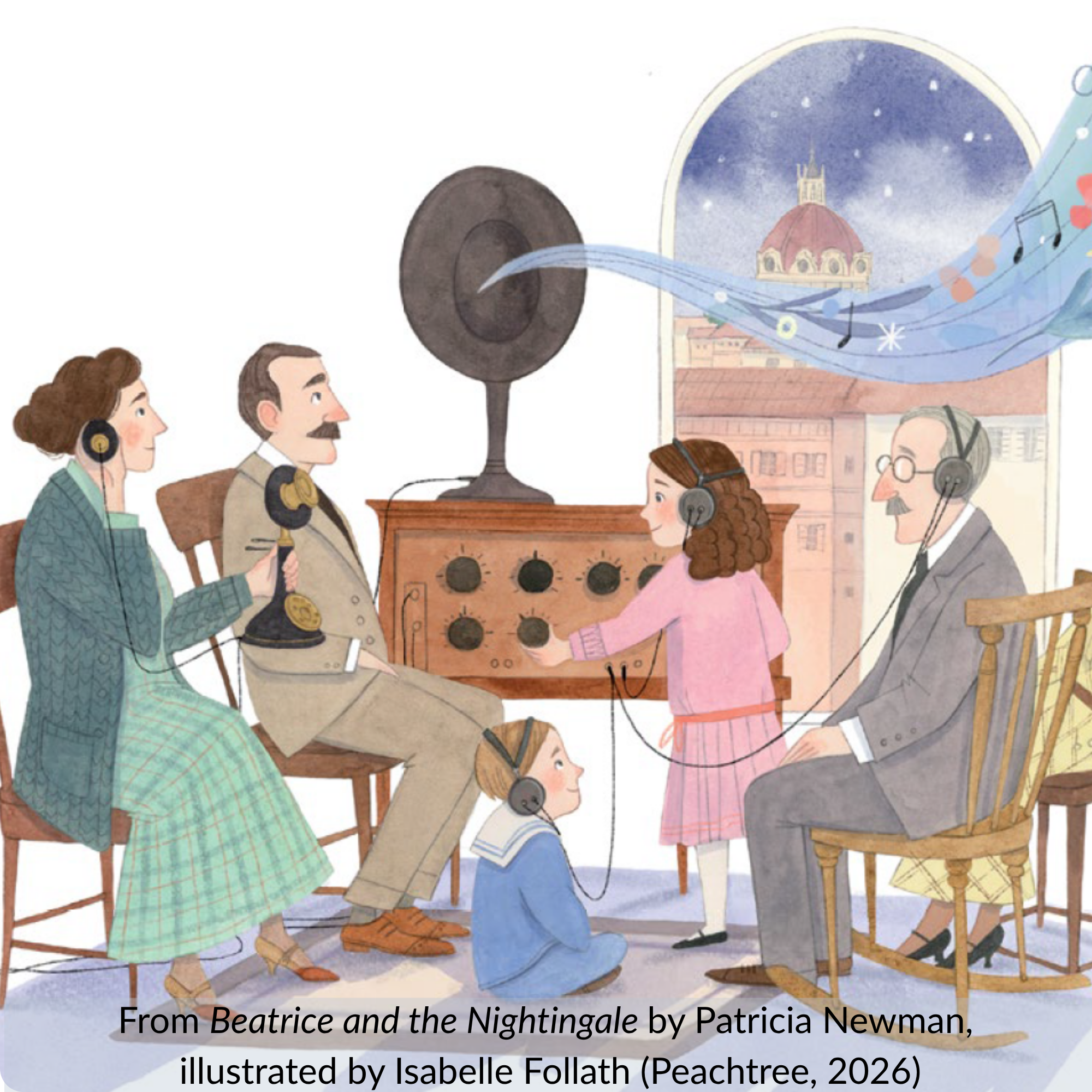
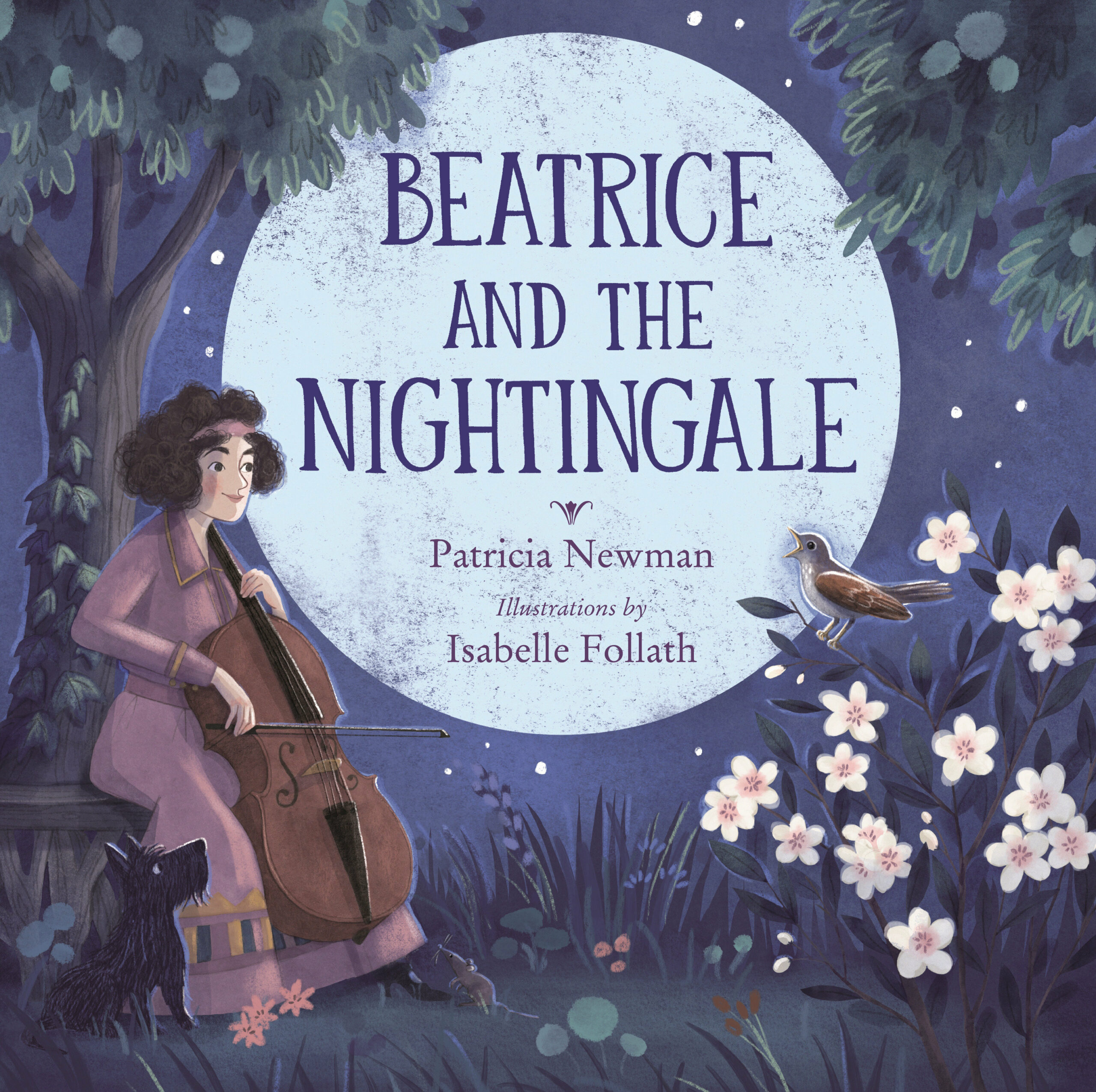
One night in May of 1924, cellist Beatrice Harrison did something no one had ever done before. She convinced the BBC to broadcast a nightingale singing as she practiced her cello in her garden. Why was this so amazing? It was the first time birdsong had ever been broadcast over the airwaves. Before Cornell’s Lab of Ornithology began recording birdsong. Before the Merlin app. More than one million listeners tuned in around the world for an unprecedented share experience! But how did the BBC make it happen? The answer lies in the way radio transmits sound waves. A fascinating hands-on lesson for 10- to 12-year-olds!

Review.

Chances are you’ve already explored sound waves with your students, but in case you haven’t I suggest you try one of the following two options by way of review:

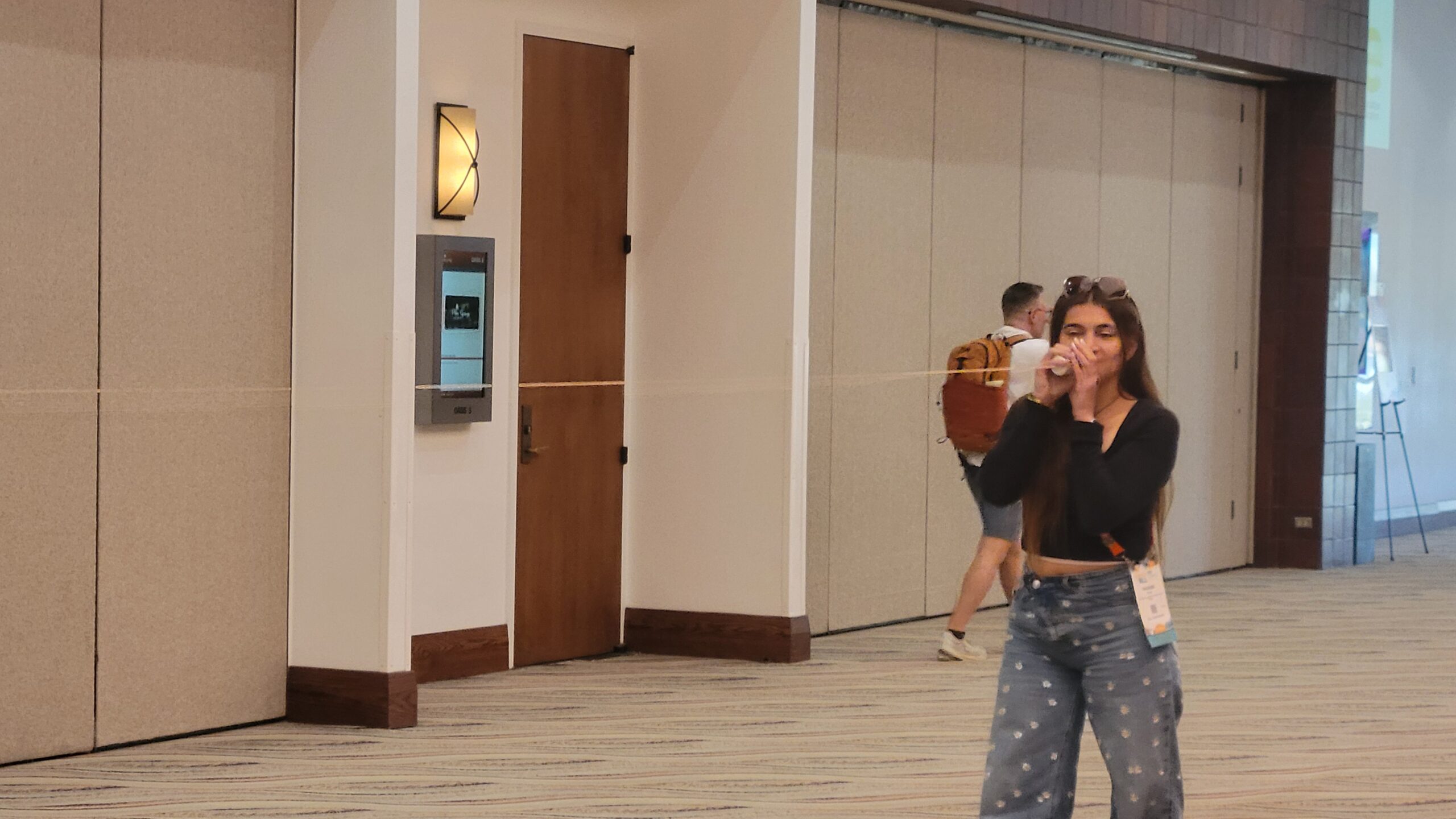
  • What is Sound, Really? lesson in this educator guide (see page 7). In this lesson, your students see how a tuning fork creates sound wave ripples in water, chat through string telephones, and explore pitch and volume with rubber bands. As students gather results, create a sound wave anchor chart on a whiteboard and discuss terms such as amplitude, frequency, and wavelength.
  • A previous LitLinks lesson called How Elephants Can Make Your Sound Unit ROAR! which explores how animals use sounds to communicate different messages.
sound-waves-cup-and-string-model

Build a model.

Ask students to build a cup-and-string model. (If you’ve done this as part of the Review step, students can use the same model.) If you have more advance technology available, use a basic circuit and speaker to demonstrate how sound travels.

Guided questions:

  • How does the sound travel through the string/wiring?
  • What happens to words after you speak them?

Mapping the journey.
Beatrice-and-the-Nightingale-cover

If you haven’t already read Beatrice and the Nightingale to your students, now’s the time! Focus on the pages that show Beatrice speaking to the head of the BBC and the night the engineers came to her garden with their equipment.

Ask students to draw a map that shows the journey sound waves make from Beatrice’s cello and the nightingale’s song to the listening audience. The basic science is included in the Beatrice text, but you may want to ask students to conduct a bit of research on their own to answer the following questions:

  • Why was the microphone necessary and why was it hidden in the bush?
  • What happened to the sound after the microphone picked it up?
  • How did the wires, amplifiers, and the Harrison’s phone line help the music travel as radio waves to one million listeners?
Idea: Consider playing classical music at a low volume as the children work.

Class discussion.

Discuss how radio technology might have changed since 1924.

Discuss what radio might have meant to people in 1924 when streaming and Spotify weren’t invented.

What was the impact of Beatrice’s broadcast with the nightingale on their audience?

Write a radio show.

Ask students to think about a sound in nature that they love. An animal sound. The wind. Rain on the roof. It could be anything.

Next, ask them to write a short radio skit, drama, play, or advertisement about this nature sound. Students can work individually or with a partner. They must incorporate sound vocabulary, such as volume, frequency, amplitude, etc. into their script. Encourage creativity and connection to their personal experiences with nature. (Download the Radio Script Template in this educator guide, p. 15.)

Ask students to practice reading their scripts aloud, then record them. Share the recordings.

Featured image credit: Isabelle Follath (used with permission)

Click for more LITLINKS STEM + Literacy activities

Tags: STEM+LiteracySTEM+Literacy Natural ScienceSTEM+Literacy Physical Science
No Comments
Share
0

You also might be interested in

Sortingplastic

LitLinks: Plastic pollution offers a simple way to teach cause and effect

Feb 2, 2022

GUEST BLOGGER KELLY CRULL If you’re looking for cause and effect activities[...]

butterfly life cycle

LitLinks: Cycles in Life Science and Language Arts

Aug 7, 2019

GUEST BLOGGER: HEATHER L. MONTGOMERY Cycles – they’re all around[...]

Using Hearing Aids cover

LitLinks: Hearing aid models inspire inclusion in the classroom

Dec 11, 2019

GUEST BLOGGER DIEUWERTJE KAST Editor’s note: I’m thrilled to introduce[...]

Leave a Reply

Your email is safe with me.
Cancel Reply

Click the logo to have LitLinks delivered to your inbox

LitLinks Logo-2022

Author Visits

https://youtu.be/oEZiUVKmt2k
https://youtu.be/ziN0UrqaDYI

Earth Day Every Day Newsletter Archive

Earth-Day-Every-Day-newsletter-banner

Post Categories:

Blog Archive

Top Posts

LitLinks: How to share our ocean connections with kids and teens

LitLinks: Let’s learn to decode photos in STEM nonfiction

LitLinks: How Elephants Can Make Your Sound Unit ROAR!

LitLinks: Easy ways to build students’ science communication skills

Proof that science connects kids to the larger world

Recent Comments

  • Cynthia Argentine on LitLinks: 5 simple steps for comparing birdsong with instrumental music Wonderful integration of music and science and nature! I'm a…
  • Cynthia Argentine on LitLinks: How to observe like a scientist and write like a poet Great observations of the links between science and poetry!
  • Margaret Quinlin on LitLinks: Exploring time and sequence in nature and narrative What a creative exercise for students!
Empowering young readers to act

Latest Blog Posts

  • LitLinks: The amazing way radio waves share music with us
    LitLinks: The amazing way radio waves share music with us
  • LitLinks: It’s all about perspective!
    LitLinks: It’s all about perspective!
  • LitLinks: How To Inspire Future Climate Innovators and Problem-Solvers
    LitLinks: How To Inspire Future Climate Innovators and Problem-Solvers

Connect with me on social media

Action Shots

Check out the STEM Tuesday Blog

© 2026 — Patricia Newman

  • Home
  • Books
    • Beatrice and the Nightingale
    • Sharks Unhooked: The Adventures of Cristina Zenato, Underwater Ranger
    • Giant Rays of Hope: Protecting Manta Rays to Safeguard the Sea
    • A River’s Gifts: The Mighty Elwha River Reborn
    • Planet Ocean
    • Eavesdropping on Elephants
    • Neema’s Reason To Smile
    • Zoo Scientists to the Rescue
    • Sea Otter Heroes: The Predators That Saved an Ecosystem
    • Plastic, Ahoy! Investigating the Great Pacific Garbage Patch
    • Ebola: Fears and Facts
    • Jingle the Brass
    • Nugget on the Flight Deck
    • Surviving Animal Attacks
    • Elite Operations series
    • Energy Lab series
    • QuickReads Fluency Library
    • Books for English language-learners
    • Writers write all kinds of things
  • Author Visit Programs
    • FAQs
    • Calendar
  • Blog
  • Educator Resources
    • Teach the Hope
    • Earth Day Every Day newsletter archive
    • Teacher Guides
    • STEM + Literacy Activities
    • LitLinks
    • KidLit creators who make kids want to read
  • Writer Resources
    • Writing Classes
    • Manuscript or Proposal Critiques
    • How I got my start
  • Who is Patricia Newman?
  • Contact
    • Stay In Touch
    • Earth Day Every Day newsletter archive
Prev