

• Home
  • Books
    • Beatrice and the Nightingale
    • Sharks Unhooked: The Adventures of Cristina Zenato, Underwater Ranger
    • Giant Rays of Hope: Protecting Manta Rays to Safeguard the Sea
    • A River’s Gifts: The Mighty Elwha River Reborn
    • Planet Ocean
    • Eavesdropping on Elephants
    • Neema’s Reason To Smile
    • Zoo Scientists to the Rescue
    • Sea Otter Heroes: The Predators That Saved an Ecosystem
    • Plastic, Ahoy! Investigating the Great Pacific Garbage Patch
    • Ebola: Fears and Facts
    • Jingle the Brass
    • Nugget on the Flight Deck
    • Surviving Animal Attacks
    • Elite Operations series
    • Energy Lab series
    • QuickReads Fluency Library
    • Books for English language-learners
    • Writers write all kinds of things
  • Author Visit Programs
    • FAQs
    • Calendar
  • Blog
  • Educator Resources
    • Teach the Hope
    • Earth Day Every Day newsletter archive
    • Teacher Guides
    • STEM + Literacy Activities
    • LitLinks
    • KidLit creators who make kids want to read
  • Writer Resources
    • Writing Classes
    • Manuscript or Proposal Critiques
    • How I got my start
  • Who is Patricia Newman?
  • Contact
    • Stay In Touch
    • Earth Day Every Day newsletter archive
Patricia NewmanPatricia Newman
Sibert Honor Children's Book Author & Environmentalist
  • Home
  • Books
    • Beatrice and the Nightingale
    • Sharks Unhooked: The Adventures of Cristina Zenato, Underwater Ranger
    • Giant Rays of Hope: Protecting Manta Rays to Safeguard the Sea
    • A River’s Gifts: The Mighty Elwha River Reborn
    • Planet Ocean
    • Eavesdropping on Elephants
    • Neema’s Reason To Smile
    • Zoo Scientists to the Rescue
    • Sea Otter Heroes: The Predators That Saved an Ecosystem
    • Plastic, Ahoy! Investigating the Great Pacific Garbage Patch
    • Ebola: Fears and Facts
    • Jingle the Brass
    • Nugget on the Flight Deck
    • Surviving Animal Attacks
    • Elite Operations series
    • Energy Lab series
    • QuickReads Fluency Library
    • Books for English language-learners
    • Writers write all kinds of things
  • Author Visit Programs
    • FAQs
    • Calendar
  • Blog
  • Educator Resources
    • Teach the Hope
    • Earth Day Every Day newsletter archive
    • Teacher Guides
    • STEM + Literacy Activities
    • LitLinks
    • KidLit creators who make kids want to read
  • Writer Resources
    • Writing Classes
    • Manuscript or Proposal Critiques
    • How I got my start
  • Who is Patricia Newman?
  • Contact
    • Stay In Touch
    • Earth Day Every Day newsletter archive
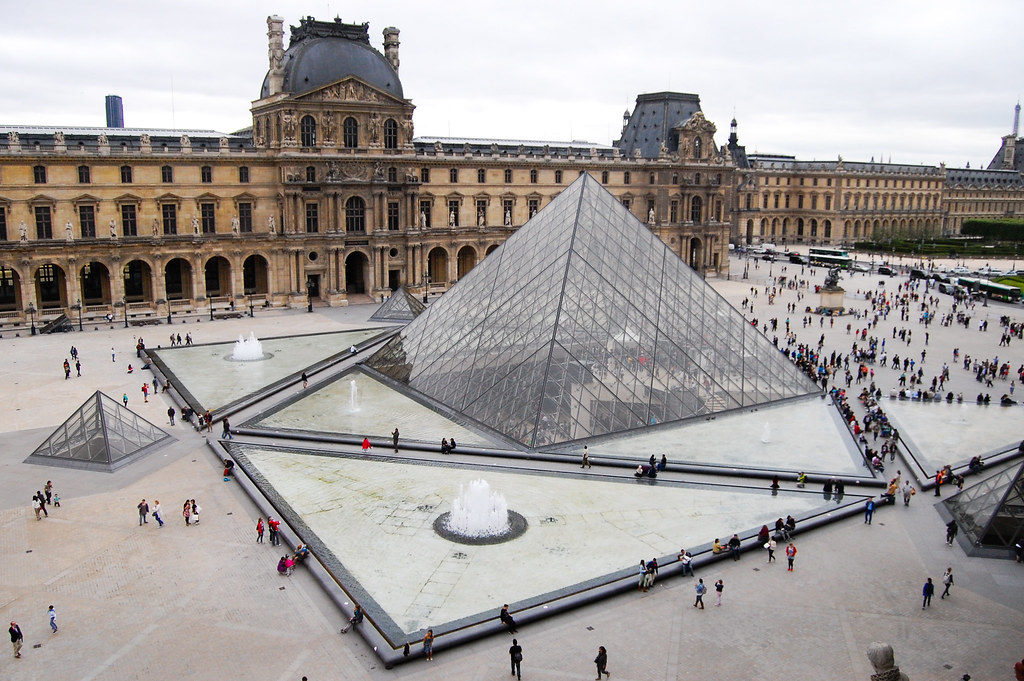
"The-Louvre"-by-Telstar-Logistics-is-licensed-under-CC-BY-NC-2.0.

LitLinks: Easy lessons to inspire students to think like an architect

May 27, 2026 LitLinks, LitLinks-Grade 3-5, LitLinks-Grade 6-8 No Comments
LitLinks Logo-2022

GUEST BLOGGER JEANNE WALKER HARVEY


Dream it! Design it! Do it!

“Success is a collection of problems solved.” – I.M. Pei

Architect I.M Pei was on a secret mission! He was asked by the French president to solve problems at the famous Louvre Museum in Paris. Visitors struggled to find the entrance and their way around the galleries. Public space was limited and there were no rooms to store or restore art pieces. Pei worked secretly until he devised a creative design solution because he knew the French wouldn’t like a Chinese American touching their beloved historical Louvre.
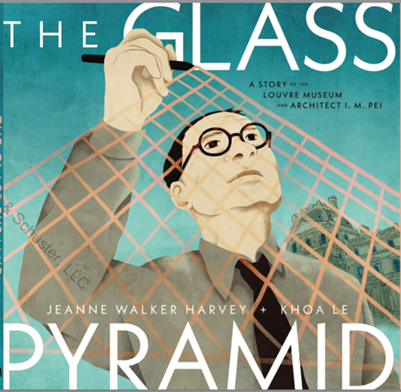
By reading THE GLASS PYRAMID: A STORY OF THE LOUVRE MUSEUM AND ARCHITECT I.M Pei, your students will learn what design problems Pei faced and how he successfully solved them in creating the glass pyramid entrance and redesign of the Louvre.

Activity 1 – Connect and read

Ask students if they like to make sandcastles or structures with Legos. Ask if they know what an architect does. (Simple answer: An architect is a person who uses their creativity to design buildings and then prepares plans to give to a builder.)

Discuss what challenges an architect might face in designing a building (e.g., size, shape, materials, and purpose of a building).

Show students a photo of the Louvre with the completed glass pyramid as a preview.

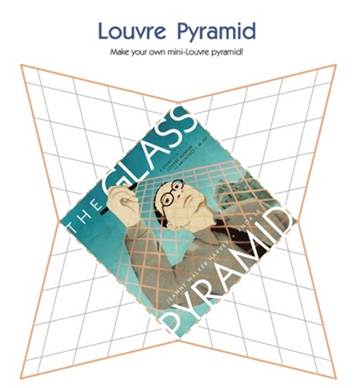
Build a paper pyramid to understand the pyramid shape, pointing out the square and four triangles. Ask students to cut on the orange lines, then fold along dashed lines and tape sides together. Then, ask if the triangles need to be the same size to form a pyramid. What do they think would happen if the triangles were taller or the square base smaller?
Read THE GLASS PYRAMID to learn more about the challenges Pei faced in the design and construction of the glass pyramid, and how he addressed them.

Activity 2 – Reflect and discuss

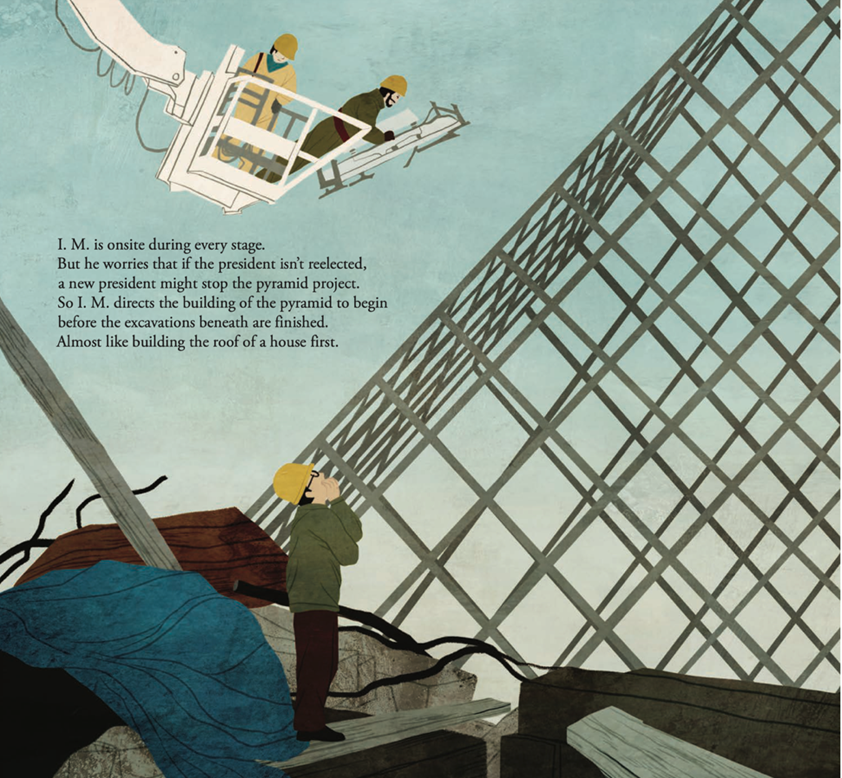
Recalling the shapes, spaces and sunlight in famous grand French parks and his childhood rock garden in China, Pei designed a modern glass pyramid for the Louvre.
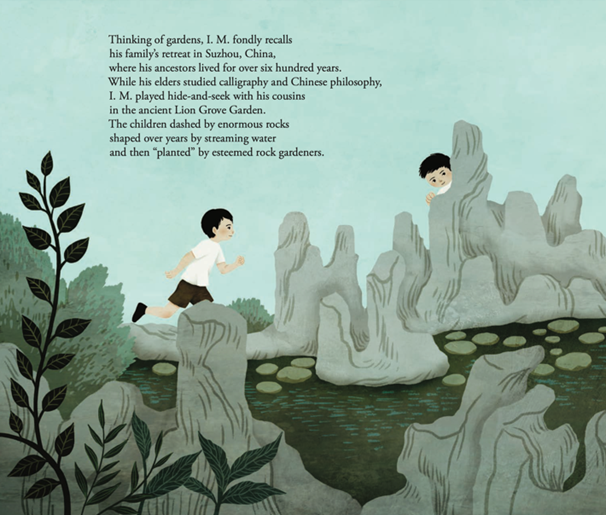
From The Glass Pyramid: A Story of the Louvre Museum and Architect I.M Pei by Jeanne Walker Harvey, illustrated by Khoa Le (Atheneum/Simon & Schuster 2025)

Discuss with students:

  • How did Pei solve the design solutions for the problems the Louvre faced? (Answers: A new entrance space in the center of the courtyard. An inviting glass pyramid that didn’t block the views of the magnificent Louvre. A spiral staircase leading underground to connect the three sides of the museum. Additional public/storage space underground).
  • When Pei was thinking of new ideas, he slept badly and became irritable. Why do you think he felt this way? Do you ever feel this way when you’re trying to solve something. As the book explains, “But he keeps trying.” Do you think this is what scientists working on a problem need to do also? Why?
  • List three construction problems identified in the book and how Pei solved them. (See text for simple answers or for more details see Back Matter section: “STEM Connections: Solving Construction Problems”)
    • How can the glass be made without a green tint?
    • How can the 673 glass panes be connected?
    • How will the panes be cleaned?
From The Glass Pyramid: A Story of the Louvre Museum and Architect I.M Pei by Jeanne Walker Harvey, illustrated by Khoa Le (Atheneum/Simon & Schuster 2025)

Activity 3 – Think like an architect

Invite students to design a new structure or entrance that solves a problem for a public building or space. Examples: a hot playground, a windy park, a rainy school entrance, a crowded cafeteria, a boring classroom. Ask students to write and/or draw answers to these prompts:

  • Ask — What is the problem? Who will benefit from your design?
  • Imagine and plan— What are possible solutions?  Brainstorm as many as possible.
  • Create — Choose one idea and draw and/or describe in writing.
  • Share – Invite students to a gallery walk to look at others’ ideas and write comments.
  • Reflect and improve — Revise idea/plan after feedback from classmates

Share with students that Pei’s renovation of the Louvre won a prestigious award because it has “stood the test of time … for its architectural design and significance.”

Ask students to reflect: Do they think their design would stand the test of time and be admired and appreciated in years to come. Why? What inspired them to dream and design their solution?

Featured image credit: “The Louvre” by Telstar Logistics is licensed under CC BY-NC 2.0.


Jeanne-Walker-Harvey-headshot

Jeanne Walker Harvey studied literature and psychology at Stanford University and has worn many job hats, ranging from being a roller coaster ride operator to an attorney, a middle school language arts teacher, and a long-time docent for school groups at the San Francisco Museum of Modern Art.  She is the author of many other award-winning picture book biographies, in addition to The Glass Pyramid: Ablaze with Color: A Story of Painter Alma Thomas; Else B. in the Sea: The Woman Who Painted the Wonders of the Deep; Dressing up the Stars: The Story of Movie Costume Designer Edith Head; Maya Lin: Artist-Architect of Light and Lines, and My Hands Sing the Blues: Romare Bearden’s Childhood Journey. Jeanne lives in Northern California with an adorable adopted cat as her writing companion. Visit her online at JeanneHarvey.com. For more fun activities, free book related activities on Jeanne’s website  https://www.jeannewalkerharvey.com/projects

  • Website: jeannewalkerharvey.com
  • Instagram: @jeannewharvey
  • Twitter/X: @JeanneWHarvey
  • Bluesky: @jeannewharvey.bsky.social
  • Pinterest: @JeanneWalkerHarvey

Click for more LITLINKS STEM + Literacy activities

Tags: STEM+LiteracySTEM+Literacy Physical Science
No Comments
Share
0

You also might be interested in

Who is a Scientist? 9662665997_57dfede583_b

LitLinks: 5 easy ways to make scientists relatable for your students

Nov 3, 2021

GUEST BLOGGER DR. LAURA GEHL Who Is a Scientist? is[...]

"Pier Bird Light" by Michel Curi is licensed under CC BY 2.0.

LitLinks: How to connect STEM observations with language arts through nature journaling

Jul 3, 2024

GUEST BLOGGER JESSICA STREMER When you step outside, there’s a[...]

Dr-Davison-with-snail-on-face

LitLinks: An easy way to practice science communication skills

Feb 26, 2025

GUEST BLOGGER DARCY PATTISON Why do we need science communication?[...]

Leave a Reply

Your email is safe with me.
Cancel Reply

Click the logo to have LitLinks delivered to your inbox

LitLinks Logo-2022

Author Visits

https://youtu.be/zj6n-RFOcPA?si=8WCTnyXbTiwYumYo
https://youtu.be/ziN0UrqaDYI

Earth Day Every Day Newsletter Archive

Earth-Day-Every-Day-newsletter-banner

Post Categories:

Blog Archive

Top Posts

LitLinks: How to share our ocean connections with kids and teens

LitLinks: Let’s learn to decode photos in STEM nonfiction

LitLinks: How Elephants Can Make Your Sound Unit ROAR!

LitLinks: Easy ways to build students’ science communication skills

Proof that science connects kids to the larger world

Recent Comments

  • Cynthia Argentine on LitLinks: 5 simple steps for comparing birdsong with instrumental music Wonderful integration of music and science and nature! I'm a…
  • Cynthia Argentine on LitLinks: How to observe like a scientist and write like a poet Great observations of the links between science and poetry!
  • Margaret Quinlin on LitLinks: Exploring time and sequence in nature and narrative What a creative exercise for students!
Empowering young readers to act

Latest Blog Posts

  • LitLinks: Easy lessons to inspire students to think like an architect
    LitLinks: Easy lessons to inspire students to think like an architect
  • LitLinks: 5 easy steps to help students dig deep when they research
    LitLinks: 5 easy steps to help students dig deep when they research
  • LitLinks: 3 easy ways animal action verbs encourage reading and writing
    LitLinks: 3 easy ways animal action verbs encourage reading and writing

Connect with me on social media

Action Shots

Check out the STEM Tuesday Blog

© 2026 — Patricia Newman

  • Home
  • Books
    • Beatrice and the Nightingale
    • Sharks Unhooked: The Adventures of Cristina Zenato, Underwater Ranger
    • Giant Rays of Hope: Protecting Manta Rays to Safeguard the Sea
    • A River’s Gifts: The Mighty Elwha River Reborn
    • Planet Ocean
    • Eavesdropping on Elephants
    • Neema’s Reason To Smile
    • Zoo Scientists to the Rescue
    • Sea Otter Heroes: The Predators That Saved an Ecosystem
    • Plastic, Ahoy! Investigating the Great Pacific Garbage Patch
    • Ebola: Fears and Facts
    • Jingle the Brass
    • Nugget on the Flight Deck
    • Surviving Animal Attacks
    • Elite Operations series
    • Energy Lab series
    • QuickReads Fluency Library
    • Books for English language-learners
    • Writers write all kinds of things
  • Author Visit Programs
    • FAQs
    • Calendar
  • Blog
  • Educator Resources
    • Teach the Hope
    • Earth Day Every Day newsletter archive
    • Teacher Guides
    • STEM + Literacy Activities
    • LitLinks
    • KidLit creators who make kids want to read
  • Writer Resources
    • Writing Classes
    • Manuscript or Proposal Critiques
    • How I got my start
  • Who is Patricia Newman?
  • Contact
    • Stay In Touch
    • Earth Day Every Day newsletter archive
Prev