

• Home
  • Books
    • Beatrice and the Nightingale
    • Sharks Unhooked: The Adventures of Cristina Zenato, Underwater Ranger
    • Giant Rays of Hope: Protecting Manta Rays to Safeguard the Sea
    • A River’s Gifts: The Mighty Elwha River Reborn
    • Planet Ocean
    • Eavesdropping on Elephants
    • Neema’s Reason To Smile
    • Zoo Scientists to the Rescue
    • Sea Otter Heroes: The Predators That Saved an Ecosystem
    • Plastic, Ahoy! Investigating the Great Pacific Garbage Patch
    • Ebola: Fears and Facts
    • Jingle the Brass
    • Nugget on the Flight Deck
    • Surviving Animal Attacks
    • Elite Operations series
    • Energy Lab series
    • QuickReads Fluency Library
    • Books for English language-learners
    • Writers write all kinds of things
  • Author Visit Programs
    • FAQs
    • Calendar
  • Blog
  • Educator Resources
    • Teach the Hope
    • Earth Day Every Day newsletter archive
    • Teacher Guides
    • STEM + Literacy Activities
    • LitLinks
    • KidLit creators who make kids want to read
  • Writer Resources
    • Writing Classes
    • Manuscript or Proposal Critiques
    • How I got my start
  • Who is Patricia Newman?
  • Contact
    • Stay In Touch
    • Earth Day Every Day newsletter archive
Patricia NewmanPatricia Newman
Sibert Honor Children's Book Author & Environmentalist
  • Home
  • Books
    • Beatrice and the Nightingale
    • Sharks Unhooked: The Adventures of Cristina Zenato, Underwater Ranger
    • Giant Rays of Hope: Protecting Manta Rays to Safeguard the Sea
    • A River’s Gifts: The Mighty Elwha River Reborn
    • Planet Ocean
    • Eavesdropping on Elephants
    • Neema’s Reason To Smile
    • Zoo Scientists to the Rescue
    • Sea Otter Heroes: The Predators That Saved an Ecosystem
    • Plastic, Ahoy! Investigating the Great Pacific Garbage Patch
    • Ebola: Fears and Facts
    • Jingle the Brass
    • Nugget on the Flight Deck
    • Surviving Animal Attacks
    • Elite Operations series
    • Energy Lab series
    • QuickReads Fluency Library
    • Books for English language-learners
    • Writers write all kinds of things
  • Author Visit Programs
    • FAQs
    • Calendar
  • Blog
  • Educator Resources
    • Teach the Hope
    • Earth Day Every Day newsletter archive
    • Teacher Guides
    • STEM + Literacy Activities
    • LitLinks
    • KidLit creators who make kids want to read
  • Writer Resources
    • Writing Classes
    • Manuscript or Proposal Critiques
    • How I got my start
  • Who is Patricia Newman?
  • Contact
    • Stay In Touch
    • Earth Day Every Day newsletter archive
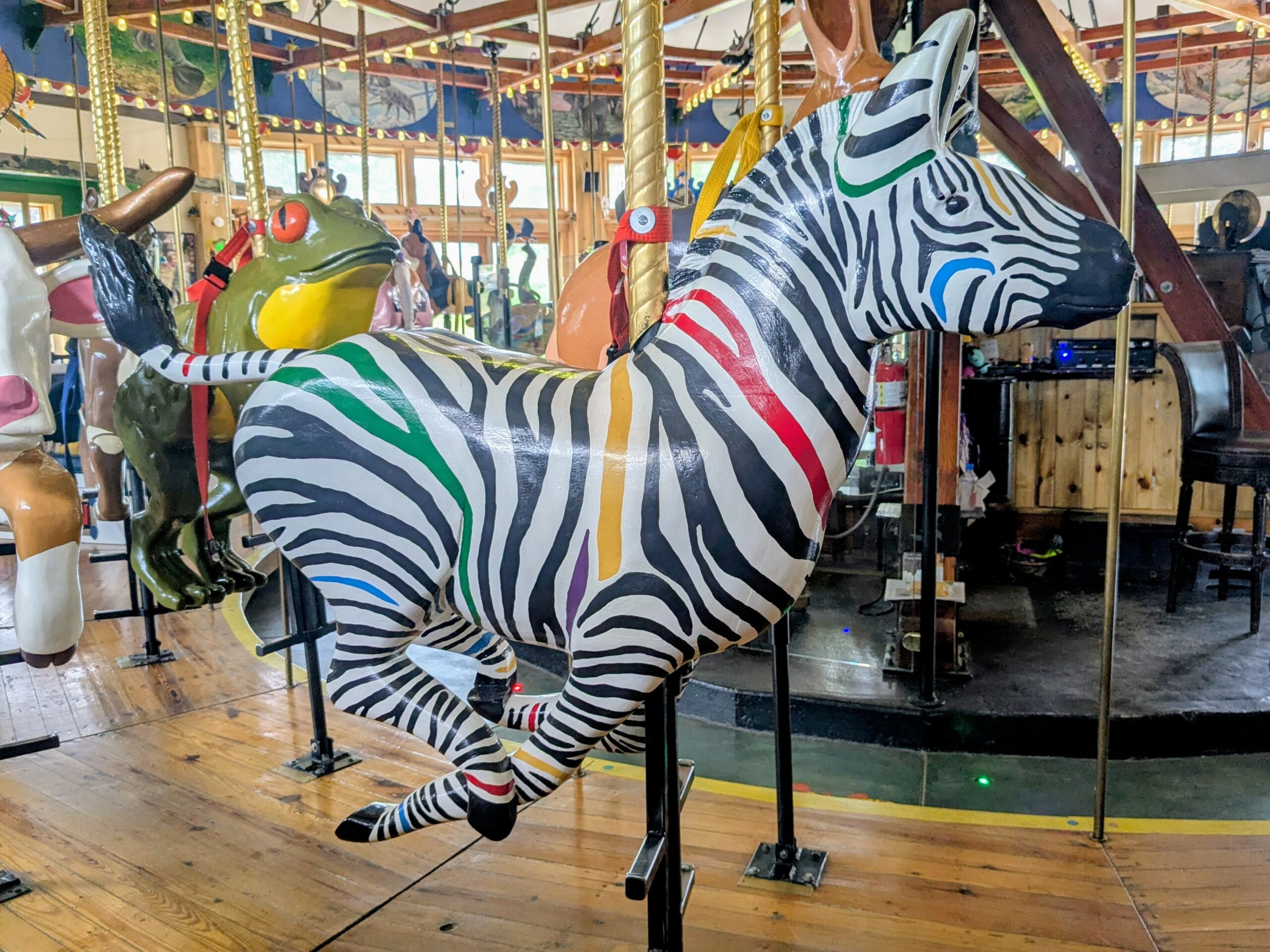
carousel-zebra

LitLinks: How to make a carousel, an engineering design lesson

March 11, 2026 LitLinks, LitLinks-Grade 3-5, LitLinks-Grade 6-8 No Comments
LitLinks Logo-2022

GUEST BLOGGER HEATHER PREUSSER
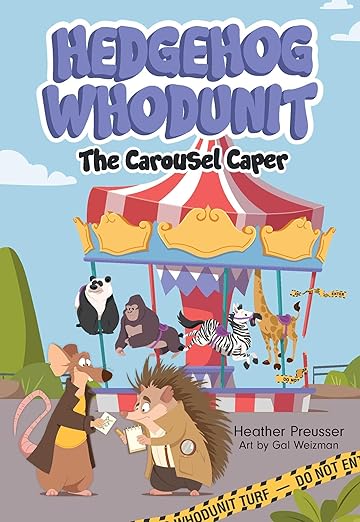

Hedgehog-WhoDunit-Book-2

It’s merry-go-round mischief for Hitch the hedgehog! Hitch, a hardboiled hedgehog detective, and his food-loving sidekick, Vinnie the rat, are back with another mystery to solve in The Carousel Caper, the second book in my Hedgehog Whodunit chapter book series (Andrews McMeel, 2025) illustrated by Gal Weizman. This time around someone has stolen the wooden cheetah from the City Zoo’s carousel. This lesson invites students to work together to design and build their own carousel, encouraging them to think critically, solve puzzles collaboratively, and explain their engineering choices logically.

Materials

  • Paper plates (for the base and canopy)
  • Straws, popsicle sticks and/or pipe cleaners (for the poles)
  • Cardboard tubes or pencils (for the center pole)
  • Play-Doh and/or tape
  • Paper and markers (to plan their design and draw the animals)
  • Scissors
  • Hole puncher
  • Optional: Gems, stickers, paint (for decorations)

Essential question

How can we collaborate to design and build a working carousel that spins smoothly and safely?

Objectives

  • To use critical reading and inference skills to move from reading fiction to reading informational text in order to apply STEM skills to a creative project.
  • To design a carousel that spins on its base (for younger grades).
  • To design a carousel that spins on its base and has one other moving part (for older grades).
  • To meet language benchmarks for fiction and informational text while engaging physics, math and problem-solving benchmarks at various grade levels.

Lesson plan instructions

Prepare
  • Read aloud an excerpt from The Carousel Caper: pages 17-20 when Hitch notices that the wooden ostrich on the zoo’s carousel is also missing. Ask students to make a prediction: How did someone get the animal off the carousel?
  • Tell students that today they are the carousel engineers; they’ve been hired to design and build a better carousel—one where wooden animals don’t go missing!
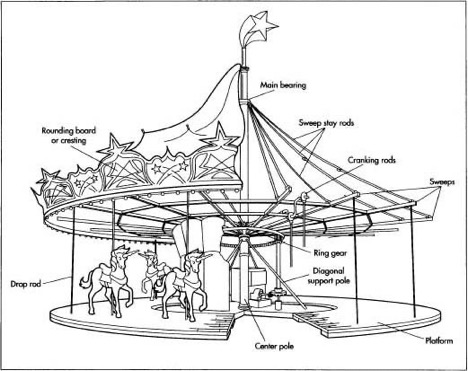
  • Activate prior knowledge by analyzing this carousel diagram from “How Products Are Made,” filling in any gaps as necessary:
    • canopy: roof of the carousel
    • center pole or axel: the big pole in the center of a carousel; a cog, or gear, sits at the top
    • sweeps: rods that stick out from the gear
    • crankshafts: located at the end of each sweep; when they spin, the poles with the animals move up and down
    • poles: hang down from the crankshafts and hold an animal at the end of each
Carousel-diagram

It may also help to watch these short two-minute videos from the BBC’s Maddie’s Do You Know? series. The first one introduces how a carousel works, and the second one explains how the animals go up and down.

Design & build
  • Place students in small groups and hand out paper and writing utensils. Working collaboratively, they first need to come up with a theme for their carousel: Do they want to feature animals, insects, reptiles, dinosaurs, etc.? They will need at least four riders per carousel.
  • Students can then draw a diagram, or blueprint, of their design, labeling each part (base, canopy, center pole/axel, rods with hanging animals, sweeps and crankshafts (optional challenge)).
  • In their groups, students should discuss and be able to answer these questions:
    • How does the carousel spin, or rotate?
    • How will they keep it stable and balanced?
    • How will they prevent any of their animals from going missing?
  • Hand out the materials and give groups time to construct their models. (I cut out some of Gal Weizman’s illustrations from the book).
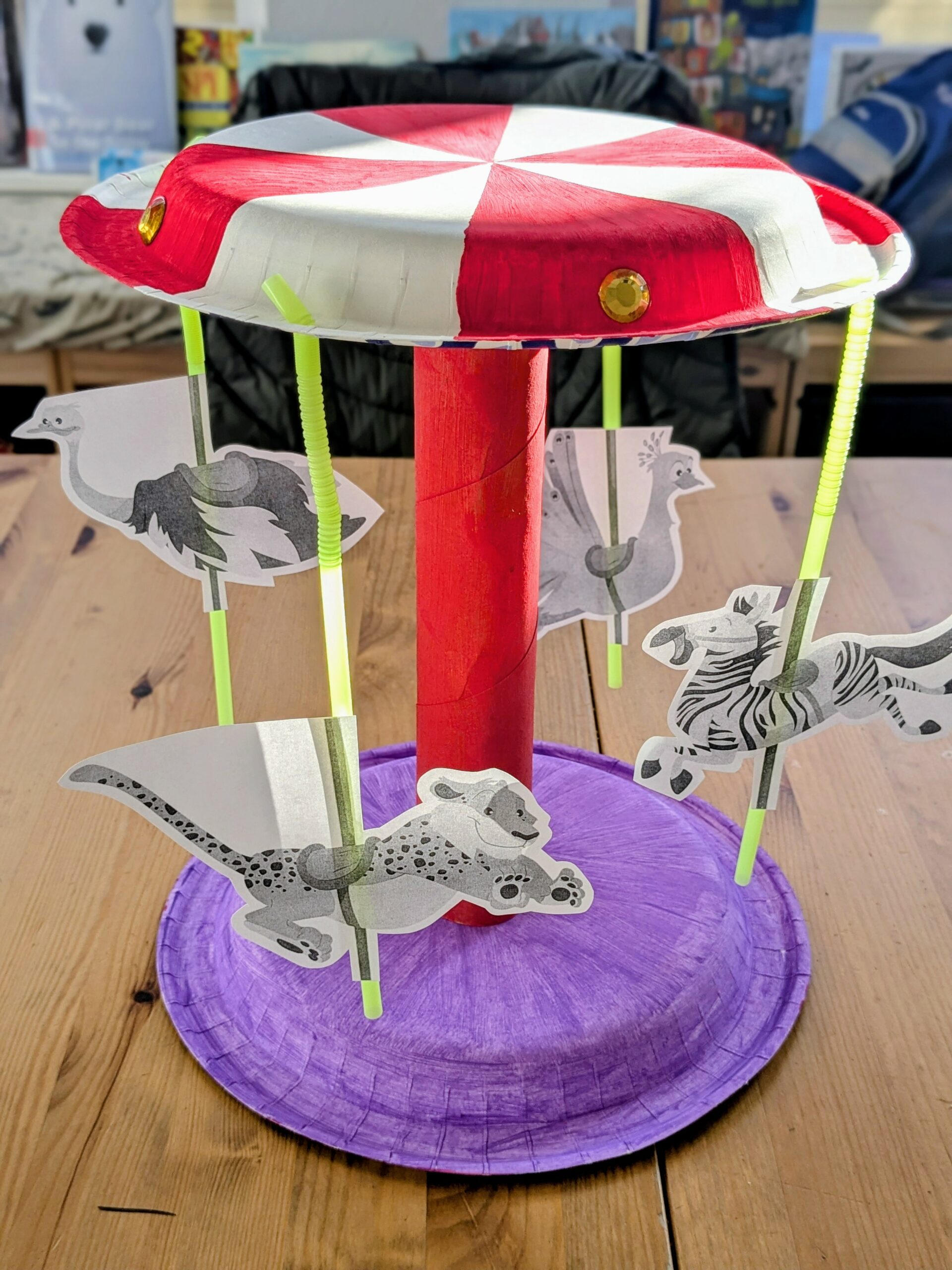
Carousel-craft-model
  • Have students test their prototypes, learning from this test and solving for the problem, just like Hitch does.
  • At the end, ask students to synthesize:
    • How would they make their carousel even better if they had more time and/or materials?
    • What do they think will happen in the book?
    • How would they advise the zoo to make their carousel safer and what advice would they give the detectives?

Optional extensions

If students enjoyed being carousel engineers, have them choose at least one of these optional challenges:

  • Make their carousel faster or safer.
  • Make their carousel more stable.
  • Make their design specific to their school.
  • Write an additional chapter for The Carousel Caper, featuring their carousel.
  • Write an engineer’s report, explaining their design choices.

Featured image credit: Heather Preusser


Heather-Preusser-headshot

Growing up in Maine, Heather Preusser read all the Nancy Drew mysteries. Every. Single. One. Now she writes her own mysteries featuring a hardboiled hedgehog detective and his tireless rodent sidekick solving animal antics at City Zoo. HEDGEHOG WHODUNIT, the first book in her chapter book series, released in October 2024 from Andrews McMeel. The second book, THE CAROUSEL CAPER, came out in July 2025, and the third book, THE PROTECTIVE ORDER OF PEANUTS (P.O.O.P.) will be available in 2026. She is also the author of the picture book A SYMPHONY OF COWBELLS (Sleeping Bear Press, 2017). When she’s not writing or teaching high school English, Heather plays with her six-year-old, a budding boxitect. She and her family live in Colorado. You can learn more at heatherpreusser.com and follow her on Instagram and Facebook.
Click for more LITLINKS STEM + Literacy activities

Tags: STEM+LiteracySTEM+Literacy Physical Science
No Comments
Share
0

You also might be interested in

LitLinks: How to watch the weather and keep a log

LitLinks: How to watch the weather and keep a log

Aug 31, 2022

GUEST BLOGGER CAROLINE ARNOLD Imagine being a lighthouse keeper–alone, a[...]

Great-White-Shark

LitLinks: A compare & contrast classification lesson with rule-breaking animals

Jan 24, 2024

GUEST BLOGGER JESSICA FRIES-GAITHER The diversity of living things on[...]

"Baby-Alpaca"-by-tintedglass-is-licensed-under-CC-BY-2.0.

LitLinks: How alpacas can help students compare and contrast

Jul 23, 2025

GUEST BLOGGER CARRIE TILLOTSON Thousands of years ago, people living[...]

Leave a Reply

Your email is safe with me.
Cancel Reply

Click the logo to have LitLinks delivered to your inbox

LitLinks Logo-2022

Author Visits

https://youtu.be/zj6n-RFOcPA?si=8WCTnyXbTiwYumYo
https://youtu.be/ziN0UrqaDYI

Earth Day Every Day Newsletter Archive

Earth-Day-Every-Day-newsletter-banner

Post Categories:

Blog Archive

Top Posts

LitLinks: How to share our ocean connections with kids and teens

LitLinks: Let’s learn to decode photos in STEM nonfiction

LitLinks: How Elephants Can Make Your Sound Unit ROAR!

LitLinks: Easy ways to build students’ science communication skills

Proof that science connects kids to the larger world

Recent Comments

  • Margaret Quinlin on LitLinks: Exploring time and sequence in nature and narrative What a creative exercise for students!
  • Sue Heavenrich on LitLinks: Great ideas to help students practice the art of asking questions Great post, Jessica! I love the way the "I notice"…
  • Lisa L. Owens on LitLinks: 4 ways Pluto can supercharge imagination Thanks for hosting me, Patricia!
Empowering young readers to act

Latest Blog Posts

  • LitLinks: How to make a carousel, an engineering design lesson
    LitLinks: How to make a carousel, an engineering design lesson
  • LitLinks: How to observe like a scientist and write like a poet
    LitLinks: How to observe like a scientist and write like a poet
  • LitLinks: 5 simple steps for comparing birdsong with instrumental music
    LitLinks: 5 simple steps for comparing birdsong with instrumental music

Connect with me on social media

Action Shots

Check out the STEM Tuesday Blog

© 2026 — Patricia Newman

  • Home
  • Books
    • Beatrice and the Nightingale
    • Sharks Unhooked: The Adventures of Cristina Zenato, Underwater Ranger
    • Giant Rays of Hope: Protecting Manta Rays to Safeguard the Sea
    • A River’s Gifts: The Mighty Elwha River Reborn
    • Planet Ocean
    • Eavesdropping on Elephants
    • Neema’s Reason To Smile
    • Zoo Scientists to the Rescue
    • Sea Otter Heroes: The Predators That Saved an Ecosystem
    • Plastic, Ahoy! Investigating the Great Pacific Garbage Patch
    • Ebola: Fears and Facts
    • Jingle the Brass
    • Nugget on the Flight Deck
    • Surviving Animal Attacks
    • Elite Operations series
    • Energy Lab series
    • QuickReads Fluency Library
    • Books for English language-learners
    • Writers write all kinds of things
  • Author Visit Programs
    • FAQs
    • Calendar
  • Blog
  • Educator Resources
    • Teach the Hope
    • Earth Day Every Day newsletter archive
    • Teacher Guides
    • STEM + Literacy Activities
    • LitLinks
    • KidLit creators who make kids want to read
  • Writer Resources
    • Writing Classes
    • Manuscript or Proposal Critiques
    • How I got my start
  • Who is Patricia Newman?
  • Contact
    • Stay In Touch
    • Earth Day Every Day newsletter archive
Prev