


GUEST BLOGGER COLLEEN PAEFF
When I wrote Pufflings Fly Free!, I conducted a lot of research on a real event, then turned that research into a fictional story. Your students will do the same thing, using Pufflings Fly Free! as their research material and telling a similar story, but they’ll tell it from the point of view of a puffin.
Before you read the book, show your students the following video. It recaps my research trip to the Westman Islands and will add some context to the story. If you can’t show the video, it’s no problem! Just move on to the next section.
Start with a video
Read the book
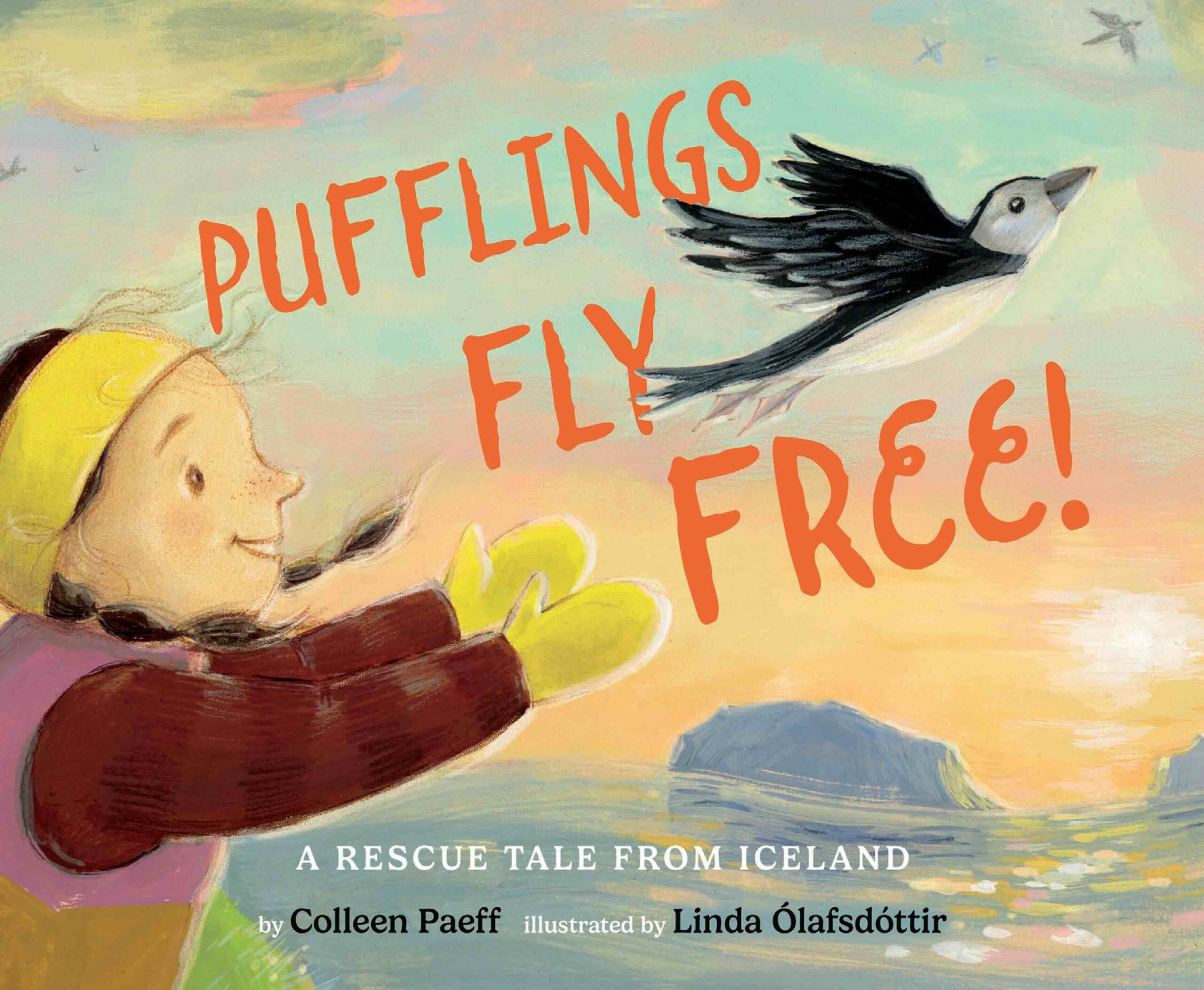
Now read Pufflings Fly Free!: A Rescue Tale from Iceland.
General discussion
Take some time to have a general discussion about the book. You might ask why your students think it was so important to Freya to rescue a puffling on her own, or whether or not your students would like to go on puffling patrol. Why or why not? Anything goes here!
Discuss point of view
Wrap the conversation up by talking about point of view, or POV. Pufflings Fly Free! is told in the third person POV – an author narrates the story and uses third person pronouns (he/her/them) to refer to the characters.
Now, talk about the difference between first person and third person POV. If Freya, or one of her family members, was narrating the story, the POV would be first person.
If you’re working with older students, you might also discuss the difference between third person omniscient (the narrator knows what’s going on in everyone’s mind) or third person limited (the narrator sticks with one person’s thoughts and feelings). Pufflings Fly Free! is considered third person limited because I stick with Freya’s thoughts.
If you can get your hands on a copy of Maria Gianferrari and Maris Wicks’ excellent nonfiction book Puffins! (Roaring Brook Press, 2026) you’ll have an example of another book about puffins that’s told in the third person omniscient POV.
You may wish to mention second person POV (where the narrate speaks directly to the reader, using “you”), but it’s not necessary for the purposes of this lesson.
A writing assignment
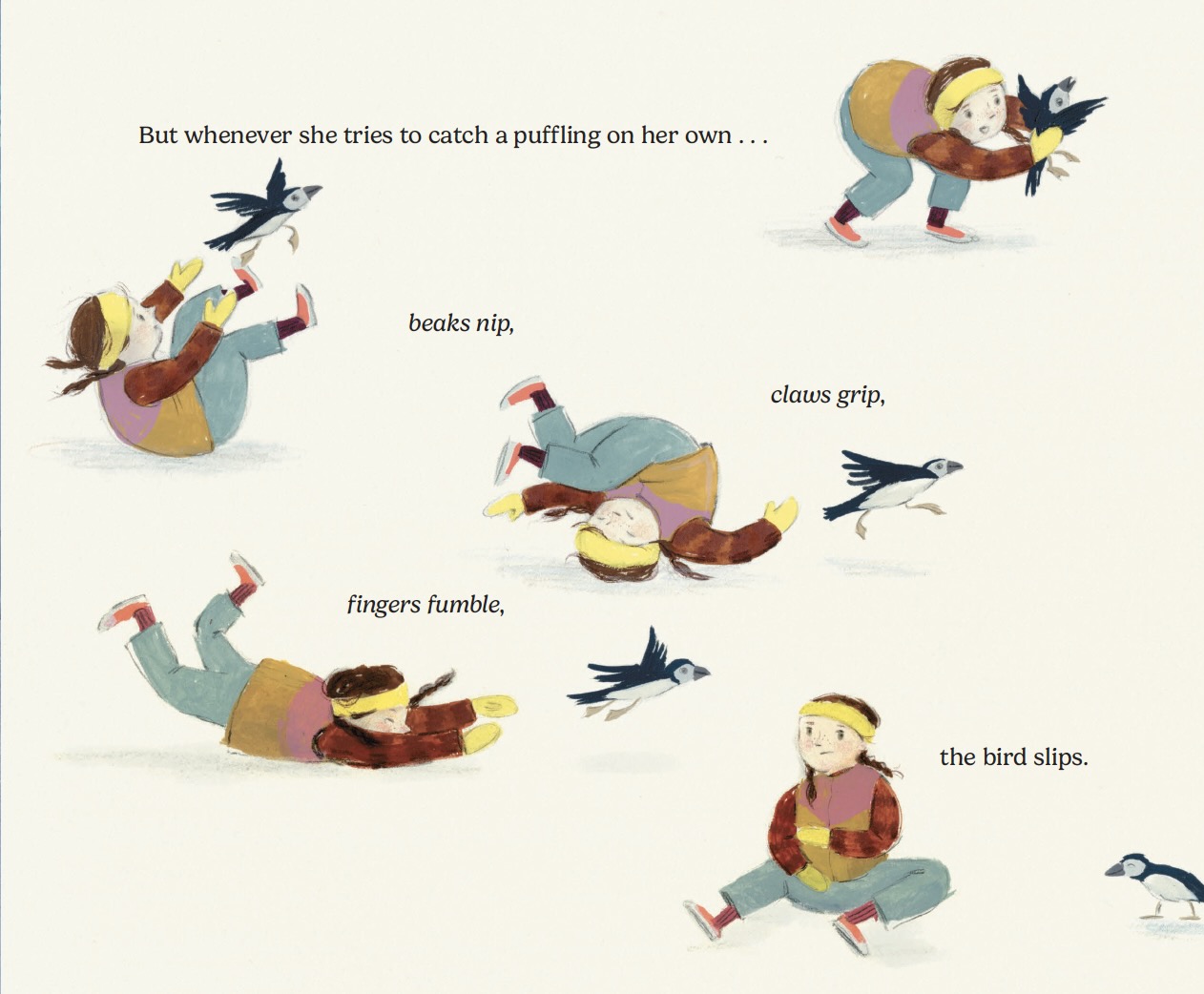
Now, ask your students to consider how this story might have been different if it had been told from the point of view of a puffling. Ask them who would narrate such a book if the POV were in first person. And what if it were in third person? Who would narrate, then?
Tell your students that they are going to retell Pufflings Fly Free! from the point of view of a puffling. They are free to use any POV they prefer as long as they are following the puffling’s experience.
But first, some research
Before your students start writing, they’ll need to do some research. Thankfully, there’s a lot of information in the back matter at the end of Pufflings Fly Free! Read the sections titled “A Puffling is Born,” “First Flight,” and “Puffling Patrol” to your students. This will help them gain insight into the puffling experience. Some of the Atlantic Puffin Facts (on the following page) may be helpful as well, especially #3. (If you have a copy of Puffins!, the book I mentioned earlier, that’s a great resource, too.)
If you only have one copy of Pufflings Fly Free!, go through it together now. You don’t need to reread it, but as you turn the pages ask students to look for clues about what the pufflings are experiencing. What might they feel, see, hear, smell, taste – or not taste? Those details will make the story come alive.
Now write and share
As your students are writing, they may need to refer back to the book, so try to have a copy available for them. When your students have finished with their stories, ask for volunteers who are willing to share a few sentences with the class. If you want to share their stories with me and receive a letter from me to your students, just email me at the link on my website!
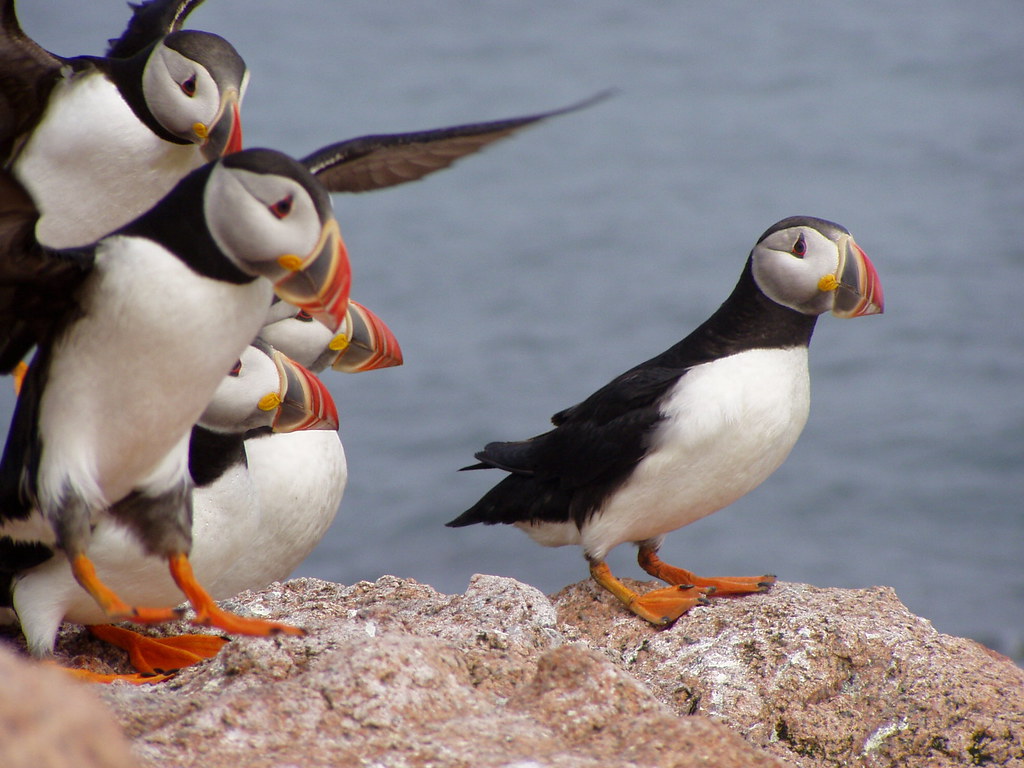
Featured image credit: “Photo of the week – Atlantic puffins landing” by U. S. Fish and Wildlife Service – Northeast Region is marked with Public Domain Mark 1.0.
Robert F. Sibert Honoree Colleen Paeff starts every book with a sense of wonder for her subject. Whether writing about pollution and infrastructure, as in The Great Stink: How Joseph Bazalgette Solved London’s Poop Pollution Problem, or the intersection of humans and the natural world, as in Pufflings Fly Free!: A Rescue Tale From Iceland and Firefly Song: Lynn Frierson Faust and the Great Smoky Mountain Diiscovery, she aims to provide readers with equal doses of information and awe. Colleen lives in Los Angeles, CA. Find her online at www.colleenpaeff.com or follow her on Instagram (@colleenpaeff), Facebook (@colleen.paeff), Bluesky (@colleenpaeff.bsky.social), or YouTube (https://www.youtube.com/@colleenpaeffauthor).



Leave a Reply
Your email is safe with me.