


BY PATRICIA NEWMAN
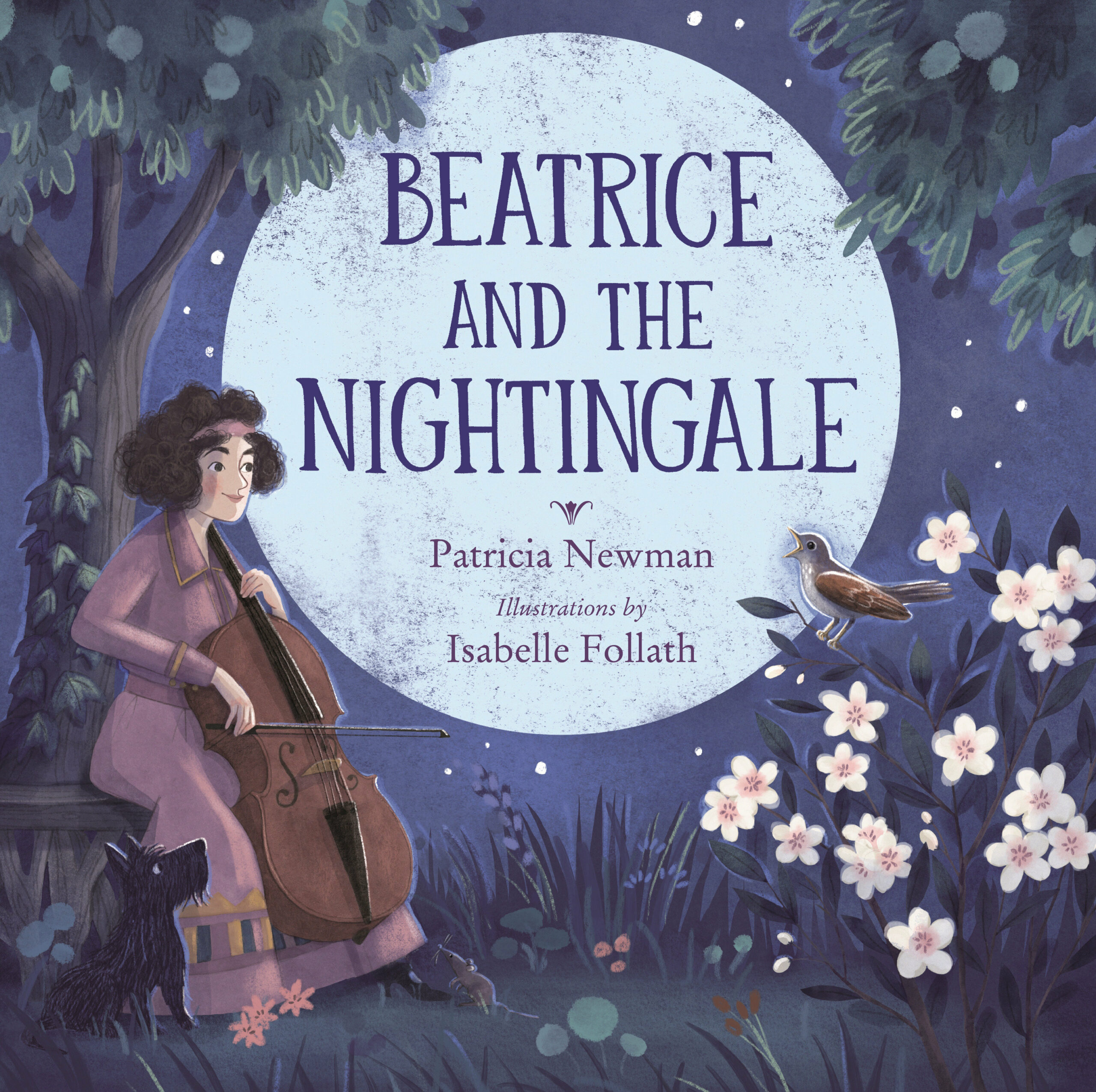
In 1924, an amazing combination of music, nature, and technology took the world by storm. Beatrice Harrison played her cello in her Surrey garden and a wild nightingale sang along with her. And it was all broadcast by the fledgling BBC to millions of listeners worldwide. This lesson integrates science, music, and language arts to help students compare natural vs. human-made sound and how the nightingale mimicked Beatrice’s music.
Nature’s musicians
Materials
- Audio of various bird calls (The Macaulay Library at Cornell University’s Laboratory of Ornithology has a wonderful collection of bird sounds.)
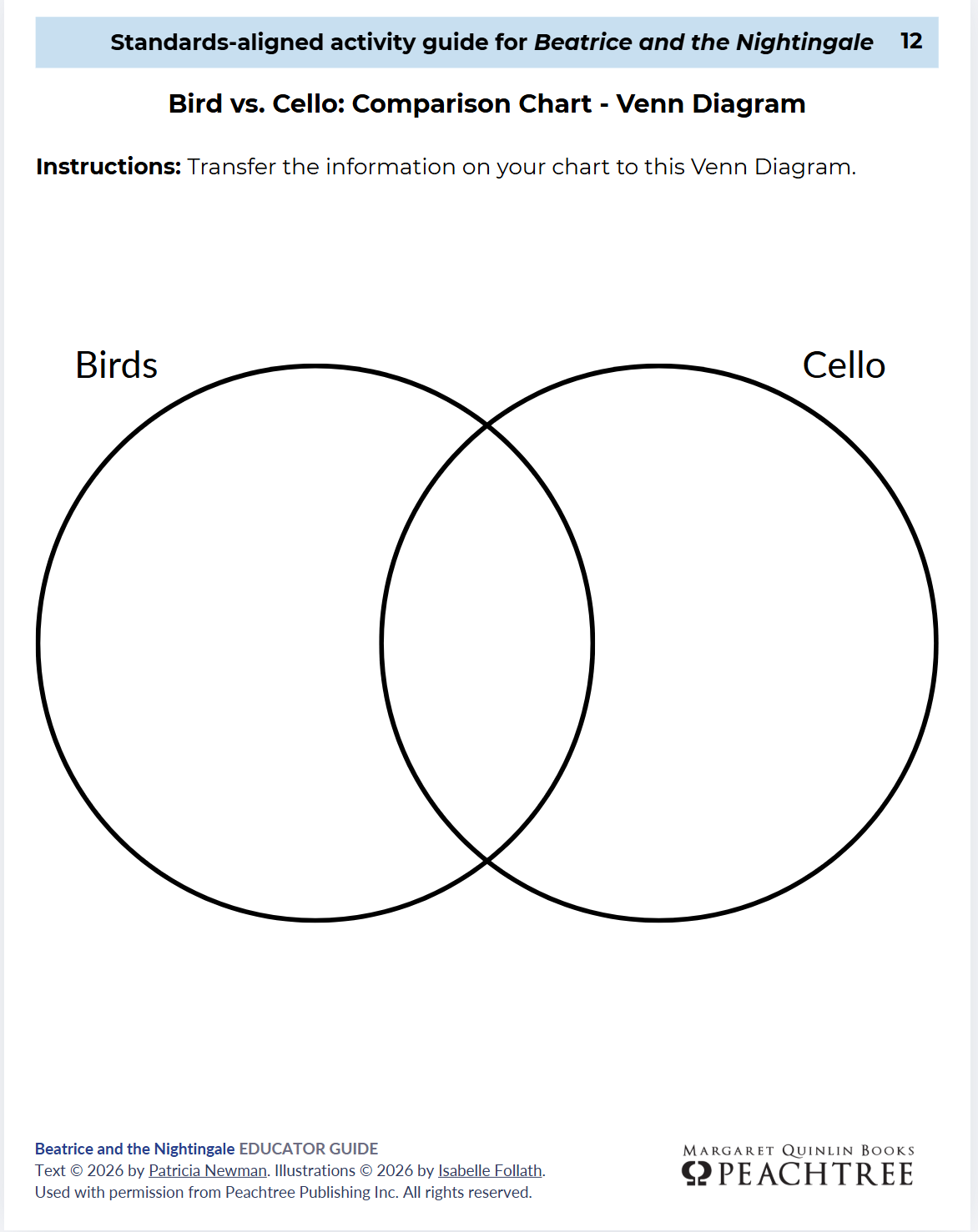
- Venn Diagram worksheet (see pages 11 and 12 of educator guide)
- Text excerpts from Beatrice and the Nightingale
Bird sound identification game
- Play audio clips of different bird sounds.
- Students will guess which bird is making the sound.
- Discuss their thoughts about the sounds and how they might relate to emotions or environments.
Text analysis
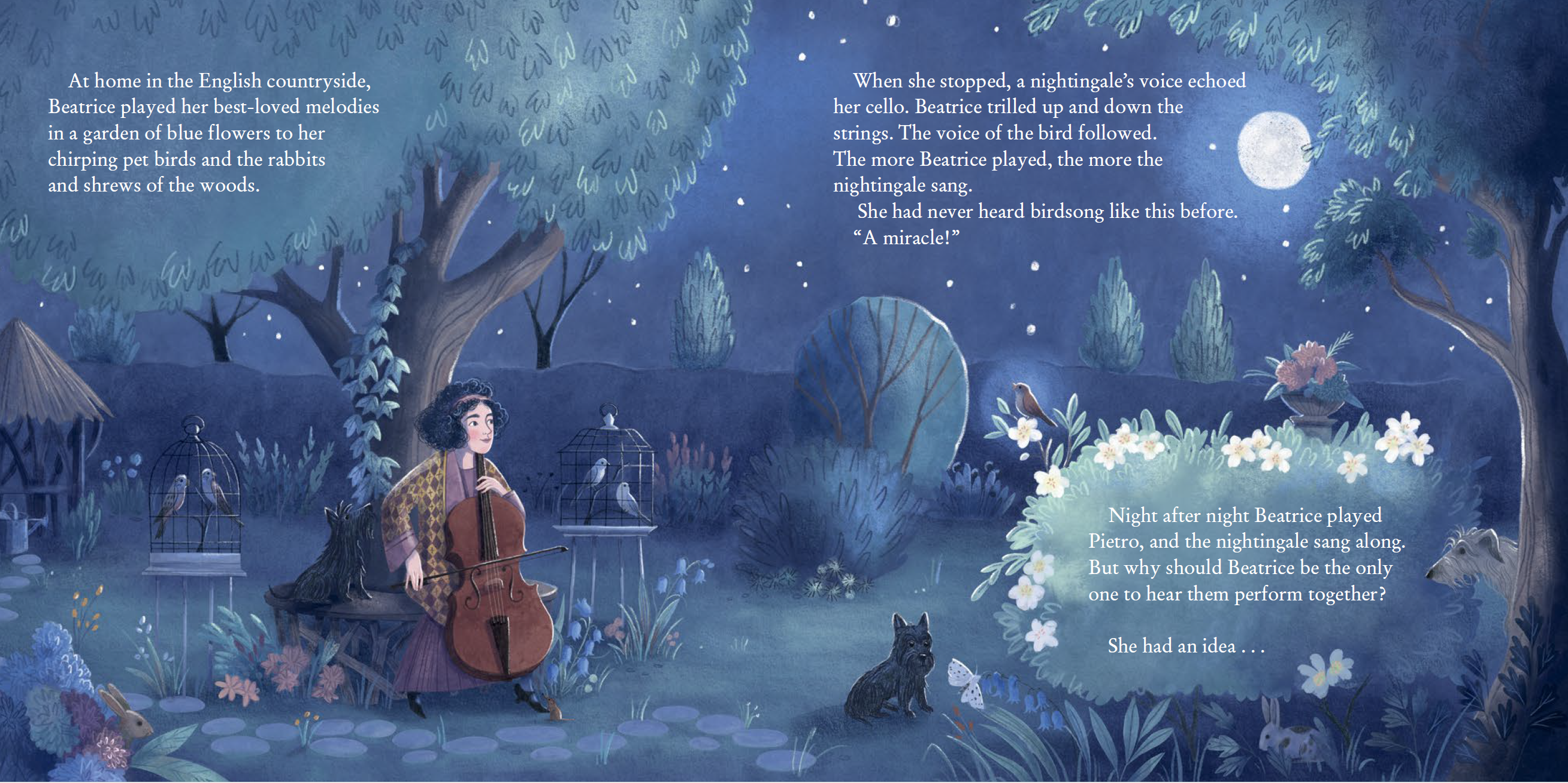
- Provide students with excerpts from the book discussing the nightingale and its musical abilities.
- Ask students to highlight key phrases that indicate how the nightingale mimics music.
Compare/contrast activity
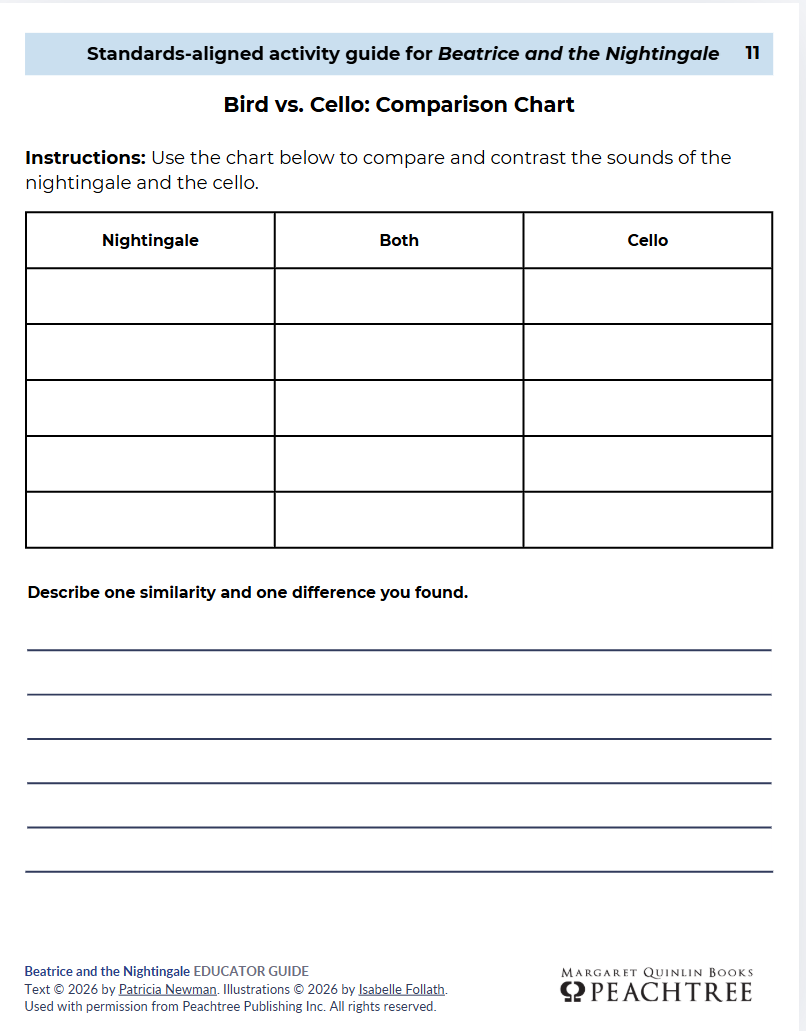
- Distribute Venn Diagram worksheets.
- Students will fill out the diagram comparing the nightingale and a cello (or another human-made instrument) based on aspects like sound production, purpose, and emotional impact.
- Here are a few links to cello music: Bach and Vivaldi; 50 Beautiful Cello Pieces; Beatrice playing with a nightingale
- Facilitate a class discussion where students share their findings.
Creative response prompt
- Students will write a short paragraph titled, “If you could play music with any animal, who would it be and why?”
- Encourage students to think about the animal’s sounds, their unique qualities, and how those sounds could create music.
Reflection
- Have students share their creative responses with a partner or in small groups.
- As a class, discuss the uniqueness of animal sounds and the similarities and differences they found between natural and human-made sounds.
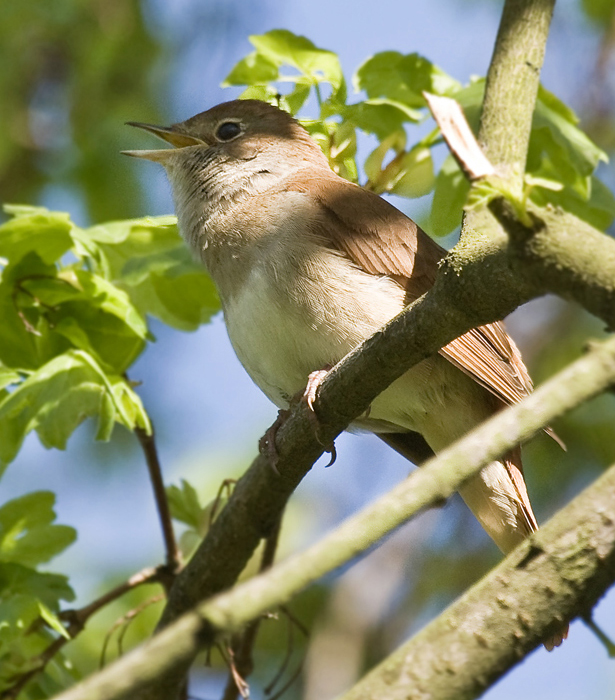
Featured image credit: Nachtigall (Luscinia megarhynchos)-2” by Nachtigall_(Luscinia_megarhynchos).jpg: J. Dietrich derivative work: Bogbumper (talk) is licensed under CC BY-SA 3.0.






.jpg)
Leave a Reply
Your email is safe with me.