


GUEST BLOGGER KATRINA TANGEN
Accessibility is for everyone—even toys!
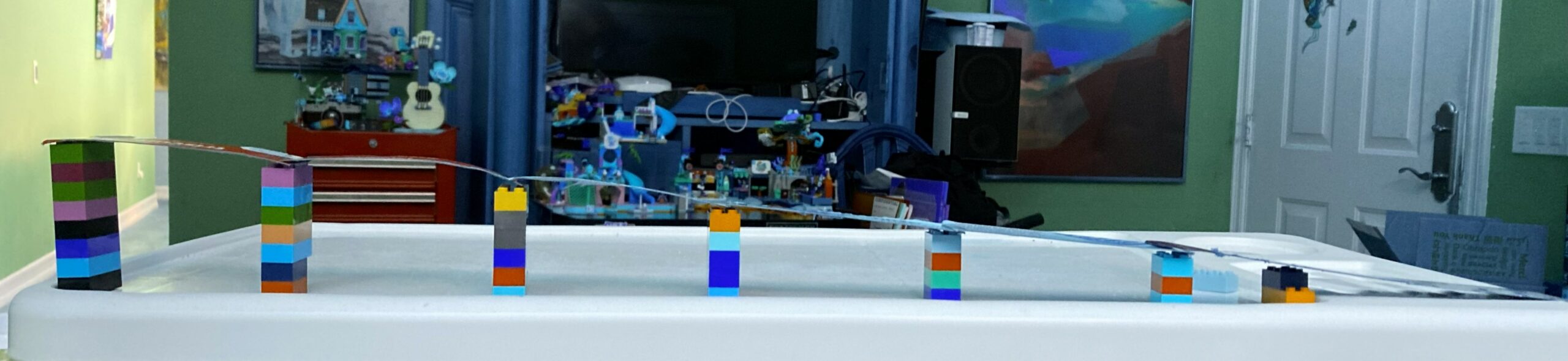
In Ramp It Up! (Charlesbridge, 2026), illustrated by Wendy Wen, Zoe builds a ramp so that her toys with wheels can get to the roof of her LEGO castle for a party. Students can build their own toy accessibility ramp from LEGO and cardboard!
#1 – Playing with inclined planes
Supplies
- An inclined plane – any flat surface, propped up at an angle. Use whatever is available in your classroom or makerspace: a large piece of sturdy cardboard, marble run tracks, textbooks, etc. A small slide can also work.
- Toys
- Toy Cars
- Toy Wheelchairs, if possible (LEGO, Barbie, and Little People make wheelchairs)
- Balls
- Marbles
- Wooden Blocks
- Other Small Toys
- Optional: Stopwatch
Instructions
Invite students to roll items down the inclined plane and make observations:
- What goes fastest?
- What goes farthest?
- What is the hardest to get moving?
- What moves the most easily?
- Attributes to consider: texture, weight, size, shape
Ask students to push objects up the ramp.
- What is easy to push up?
- What is harder?
If the inclined plane is adjustable, have students raise and lower the upper end and observe how changing the slope affects the outcomes.
If you have multiple inclined plane materials, have students compare them. For example, ask them to test whether the glossy side of a cereal box is faster or slower than the plain cardboard side.
#2 – Read Ramp It Up!
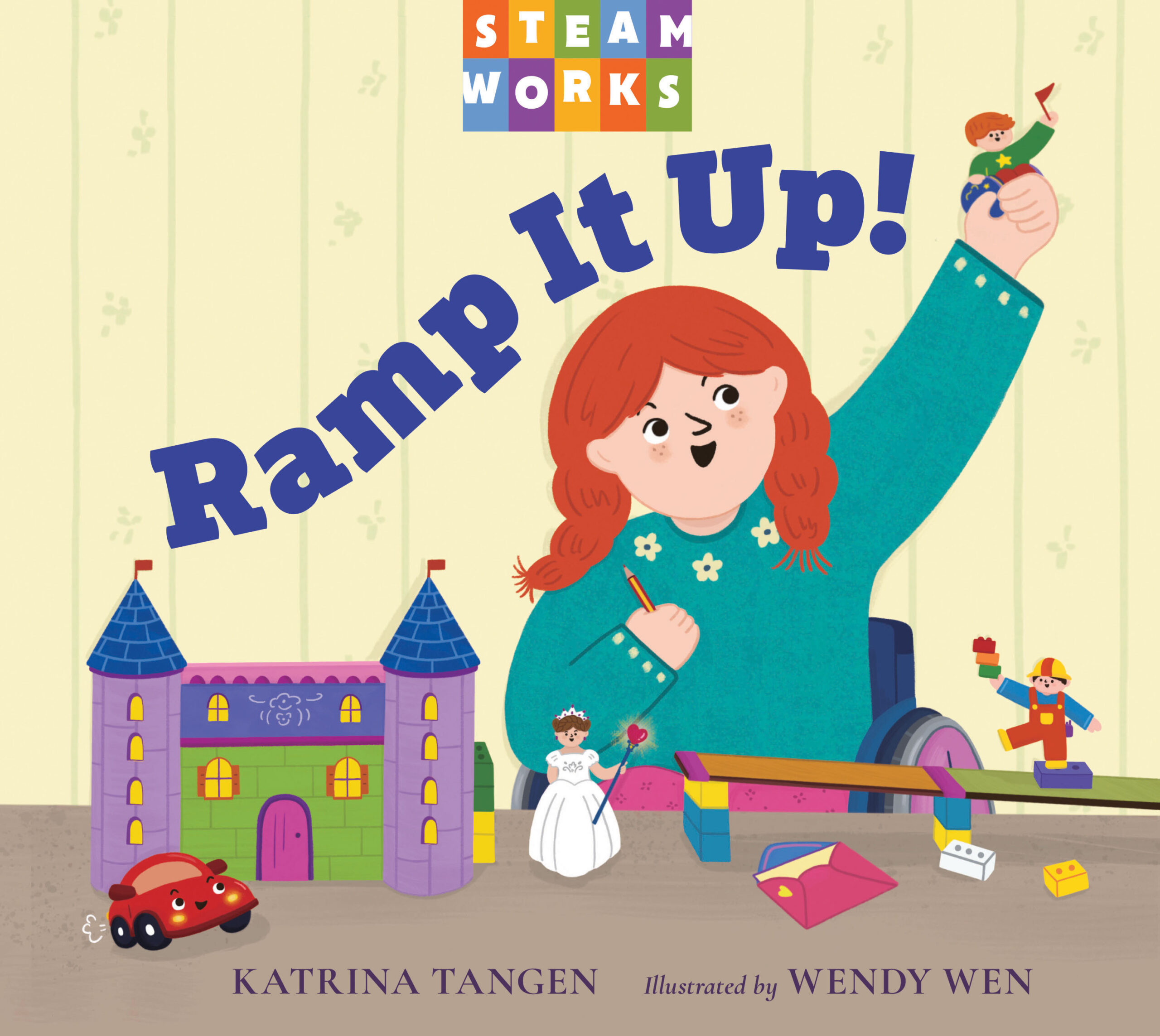
Read the story to find out how Zoe builds her ramp and read the back matter for more information about simple machines, inclined planes, and the ADA ratio for accessible ramps (1:12). (One inch of height requires 12 inches, or one foot, of length.)
- Ask students to think of inclined planes around school and other places in their lives.
- What connections can students make between their exploration of simple planes and Zoe’s ramp-making process?
#3 – Build an ADA-approved ramp
Supplies
- Cardboard strips
- LEGO bricks
- Tape
- Graph paper
Instructions
The goal is to build a safe, accessible ramp out of LEGO and cardboard with an ADA-approved slope of 1:12.
Assign a height for the ramp or allow students to choose. Students may enjoy building a LEGO house like Zoe, but a simple wall of LEGOs or any countable, stackable material will also work. A standard LEGO house is 8 bricks high. A brick is 9.6mm tall, so a 1:12 ratio ramp to the roof is around 3 feet long. If this is too long for your space, make a shorter roof or a LEGO door with 2 or 3 brick steps leading up to it.
Invite students to design a ramp using LEGOs, tape, and cardboard!
Ask students to test their ramps by pushing objects up and rolling objects down the slope, comparing these results with their earlier tests. (Tip: toy wheelchairs tend to flip backwards when trying to go up a ramp that’s too steep!)
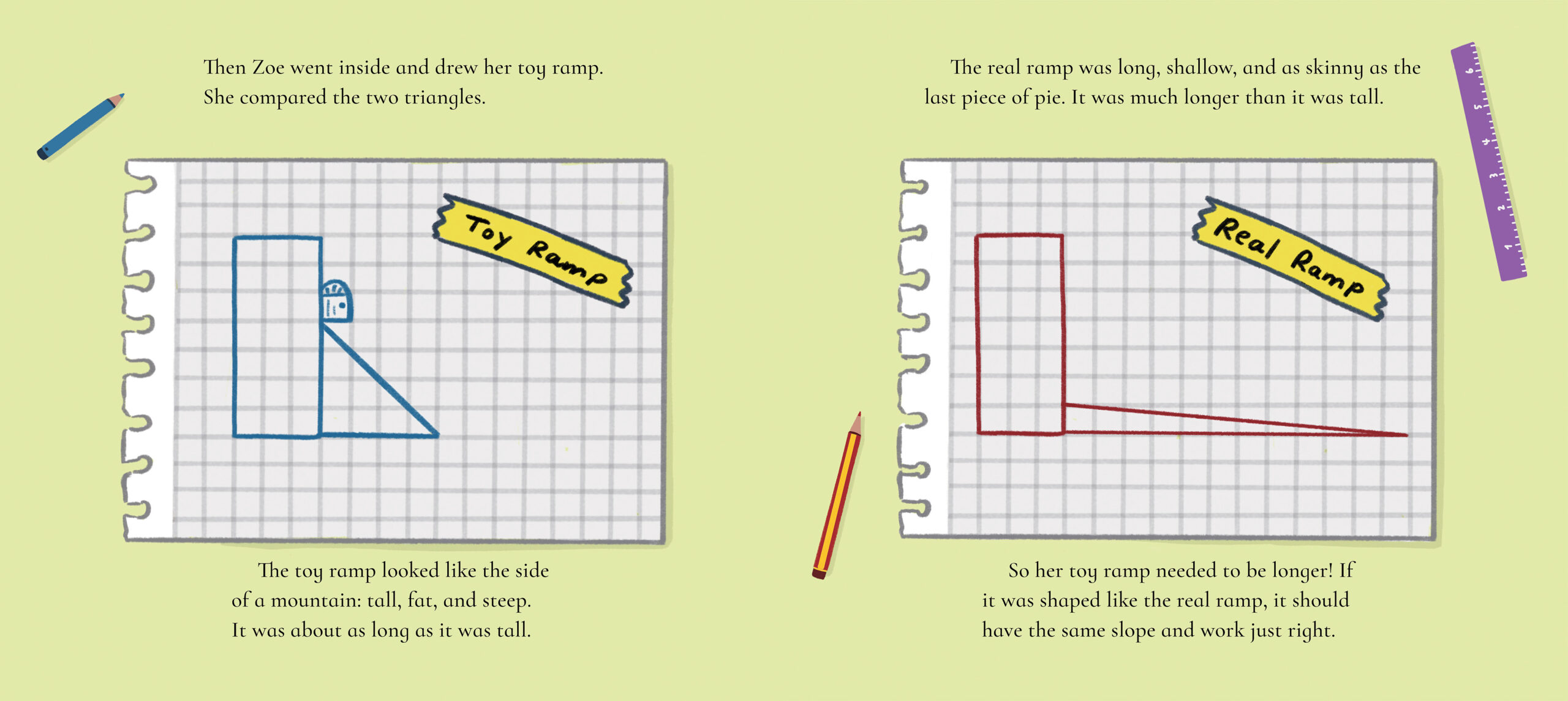
Once students think their ramp is safe, or if they’re having trouble figuring out what to try, have them draw the shape of their ramp on graph paper. Ask them to compare the shape to the ramps in the book. Does it seem like the right shape? Ask students to count the graph paper squares and compare their ramp with the graph paper ramp drawings in the book.
LEGO measuring rod
Have students make a measuring rod by clicking 12 standard Lego bricks together. Now they have two units of measure: the height of one LEGO brick and the length of one rod. One brick to one rod creates a ratio of 1:12.
If students already have a ramp built, they can use the measuring rod to check the ratio. For each vertical brick, there should be one measuring rod of horizontal length.
Or they can use the rod to design a ramp with the correct slope:
- Have students use the LEGO rod to measure a piece of cardboard and cut it to that length. (Any width is okay, as long as it’s wider than the test toys.) The correct length is about 11.5 cm or 4.5 inches. They should make one piece of cardboard for each LEGO of height in their building or wall.
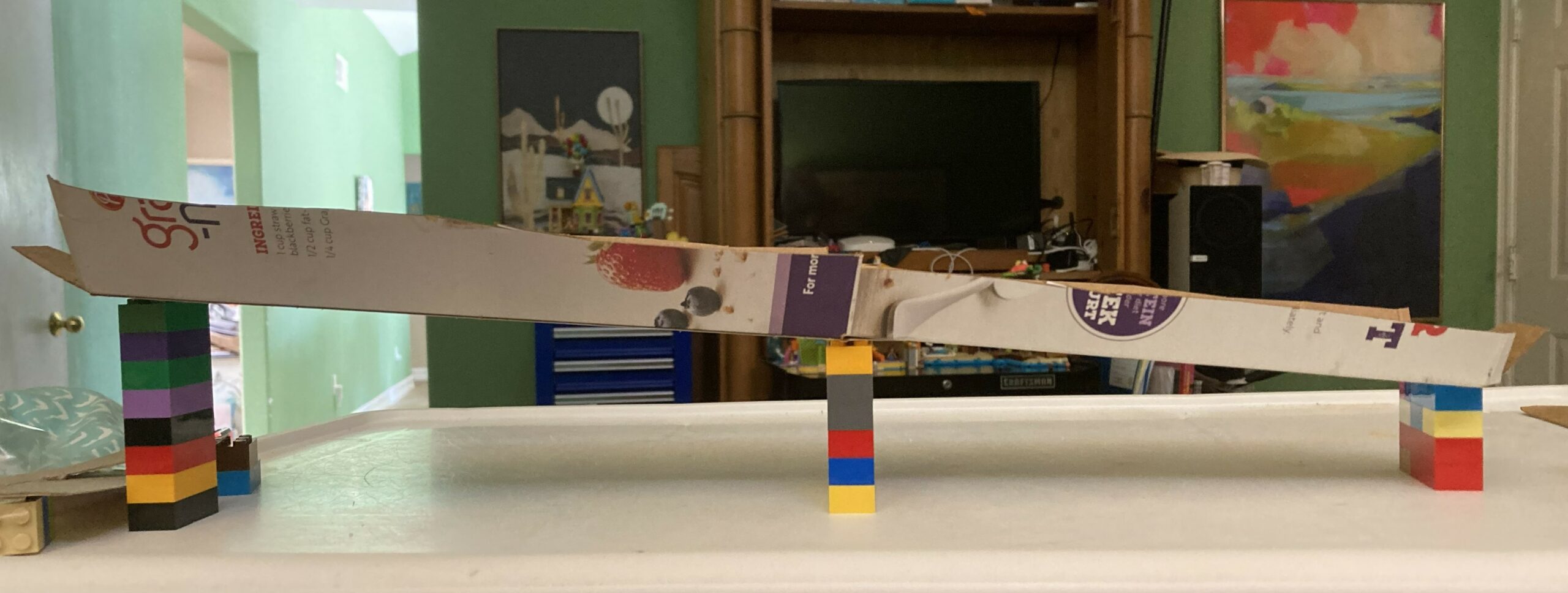
- Tell students to make a series of LEGO towers, each with one fewer brick. (For an 8-brick-tall roof, make a tower of 7, a tower of 6, etc.) Have students tape a piece of cardboard between each tower to create segments of one long ramp. This will create a 1:12 slope.
- If there isn’t a safe way for students to cut cardboard, pre-make strips in the correct length, and in too-long and too-short lengths. Students can use their LEGO rod to measure which is correct.
Notes for a smoother experience
If you want to give students more design freedom, the ramp can also be made from a smaller number of longer pieces of cardboard (or another flat material). The advantage to the short pieces is that the towers help support weaker cardboard (such as the food box tops I used in mine) and make it easier to count and understand the ratio/slope.
Students will probably have some trouble with objects falling off the sides of the ramp during testing. For younger students, provide ramp supplies that are wide enough for toys to stay on or that have a built-in guardrail, like the sides of cereal boxes, with part of the front and back still attached. For older students, provide supplies they can use to build guardrails: smaller pieces of cardboard, craft sticks, pipe cleaners, etc. Ask them to record what works best.
Find more activities and other great STEAMWORKS books in both English and Spanish at steamworksbooks.com. Happy rolling!
Featured image credit: courtesy of Katrina Tangen

Katrina Tangen uses a power wheelchair because she’s disabled by ME/CFS. At Harvard, Katrina studied the History of Science. Now she introduces STEAM to scientists of the future through books like Ramp It Up! (Charlesbridge, 2026) and the award-winning Copy That, Copy Cat!: Inventions Inspired by Animals (Barefoot Books, 2023). Katrina loves LEGO; one of her favorite builds is a treehouse with a wheelchair-accessible elevator! Katrina lives in Southern California in a house with two ramps but (sadly) no pools. Find her at katrinatangen.com and on social media at:
- Facebook: Katrina Tangen Author (http://www.facebook.com/katrinatangenauthor)
- Instagram: @katrinatangen (https://www.instagram.com/katrinatangen)
- Threads: @katrinatangen (https://www.threads.net/@katrinatangen)
- Pinterest: @katrinatangenauthor (https://www.pinterest.com/katrinatangenauthor/)
- Bluesky: @katrinatangen.bsky.social (https://bsky.app/profile/katrinatangen.bsky.social)






Leave a reply
Your email is safe with me.