GUEST BLOGGER LINDA BOOTH SWEENEY
Children start learning cause and effect early. Drop a cup, and it spills. Push your brother, and he pushes back. That’s cause and effect in action—and one of the first ways children figure out how the world works. As children grow, spotting causes and effects becomes a critical-thinking skill that helps them follow a story, understand a science experiment, and explain what led to a historical event.
That is why cause and effect rightly earns real time in elementary classrooms. But the world rarely stops after the first effect. What if we help children keep following the story?
Ask: What happens next?
Take a bird eating a berry. The bird poops, and, to a giggling second grader, that may feel like the end. But what if we ask one more question: What happens next?
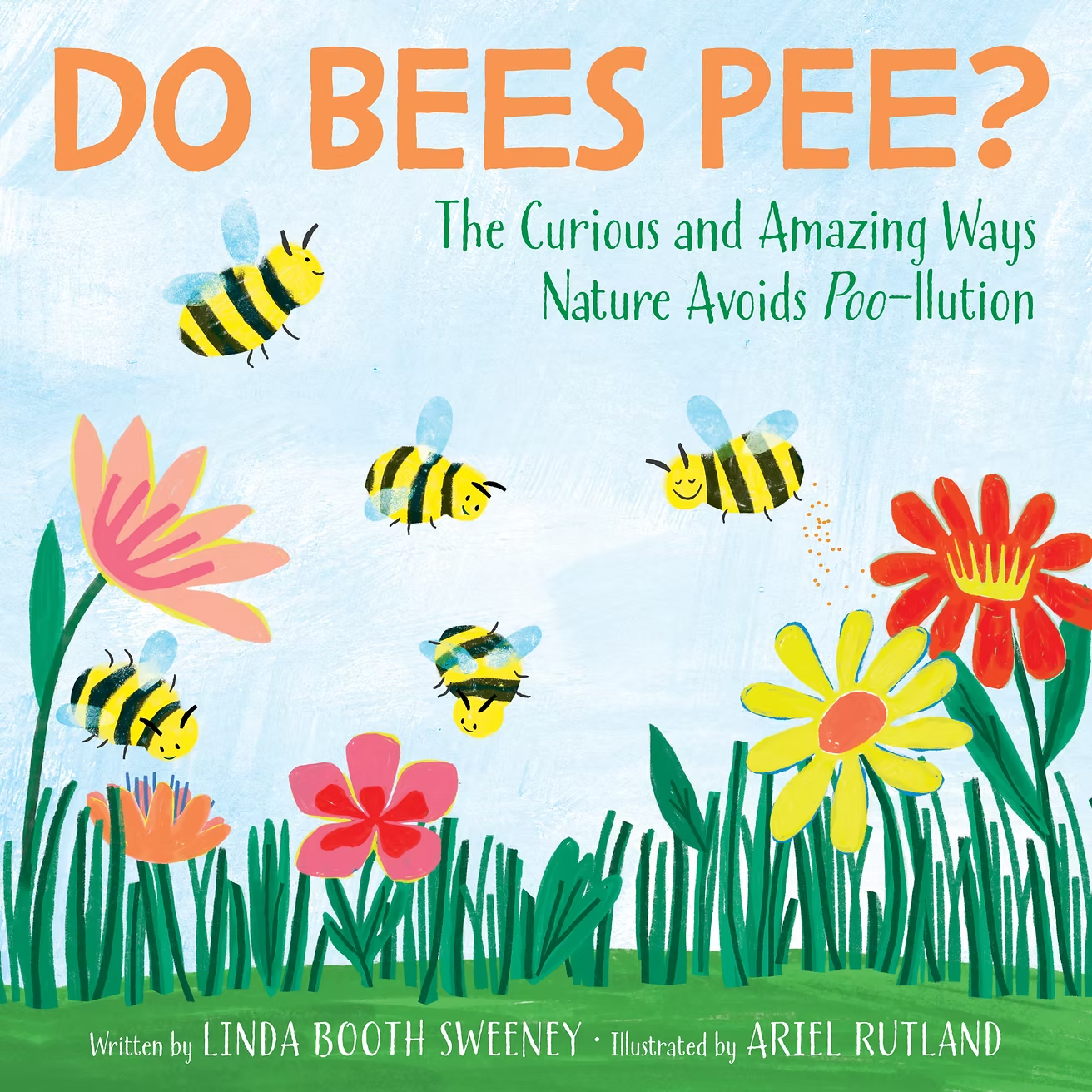
In my picture book Do Bees Pee? The Curious and Amazing Ways Nature Avoids Poo-llution, potty humor draws young readers in, but beneath the laughs is a larger idea: nature is full of ingenious closed loops. Animal waste is rarely just an ending; it can become food, fertilizer, habitat, a message, or a new beginning.
Try it with a bird
Show students an illustration of a bird—or another animal—from the book. Ask them to describe what they see.
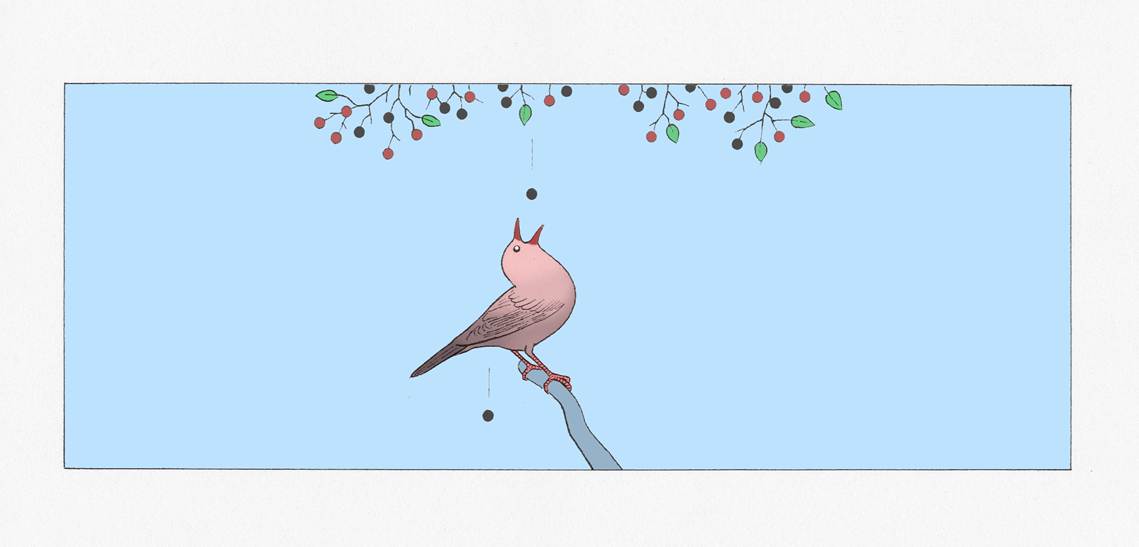
They might say:
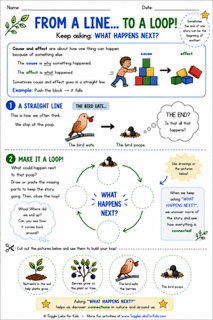
A bird eats a berry → the bird poops. Ask: What happens next? Invite students to make their thinking visible with the From a Line to a Loop worksheet.
The bird poops → the poop breaks down and adds nutrients to the soil → a plant grows → berries grow → a bird eats the berries → the bird poops.
Students trace the arrows and retell the story aloud. The ending now connects back to the beginning: a familiar sequence has become a visible model of an ongoing system.
They might also create a seed-dispersal loop: the bird deposits seeds → a new plant grows → more berries become available → the bird eats the berries. There is rarely only one useful way to map a living system. The point here is to encourage students to make their thinking about cause-and-effect visible.
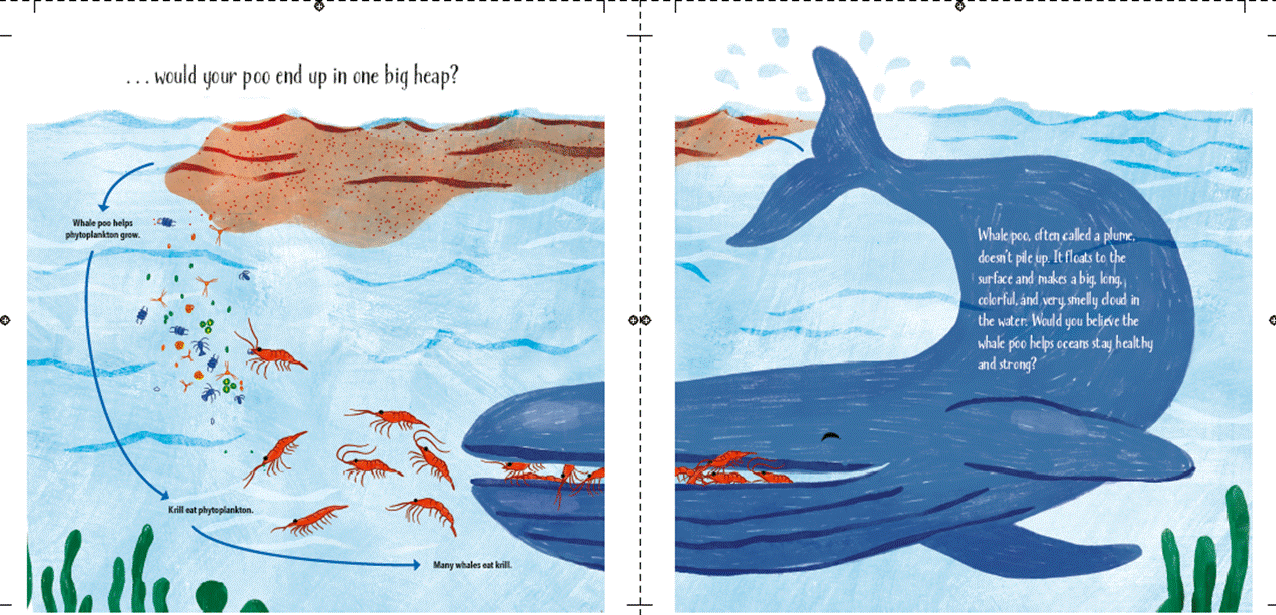
One of my favorite examples from the book works the same way at ocean scale.
Whale poop floats near the surface in a cloud scientists call a plume. The plume feeds phytoplankton àkrill eat phytoplankton à whales eat krill à and then, whale poop again.
Why move from lines to loops?
Students discover that change does not always travel in a straight line. It can loop back, branch out, or cascade forward. Some loops are cycles, tracking how water or nutrients get used again. In feedback loops, change circles back to cause more change, making something grow, shrink, speed up, or stabilize.
More than half a century ago, childhood researcher Edith Cobb called for a “reticulate”—or web-like—approach to knowledge. Her work affirms something K–5 educators see every day: children are ready to notice relationships, patterns, and reciprocity. We don’t need to protect children from complexity. We can make it approachable with a good question, a concrete example, and tools to help them trace and visualize cause and effect.
The promise of making cause and effect visible
“What happens next?” travels easily across the school day. In reading, pause after an event in a nonfiction text and trace what follows. During math, find a repeating pattern and ask when it begins again. In SEL, map a kindness loop: someone says something kind → you feel good → you do something kind for someone else → kindness spreads.
In kindergarten, one loop drawn together may do the job. By fourth or fifth grade, students can track and compare several loops. When children draw connections, sequence consequences, and turn cause-and-effect chains into loops, they are engaging in the standards-aligned science and engineering practice of developing and using models.
Becoming comfortable tracing cause and effect helps children do more than understand a science concept. It helps them explain their reasoning, communicate connections, anticipate consequences, and recognize where their choices might make a difference. In an increasingly interconnected world, that is a future-ready skill: the ability to look beyond the first effect, see more of the whole, and recognize that “actions leave tracks”.
Try it tomorrow with whatever “ending” appears in your next read-aloud or science lesson: a fallen leaf, an apple core, or a puddle drying up. Ask, “What happens next?” and see where your class takes it.
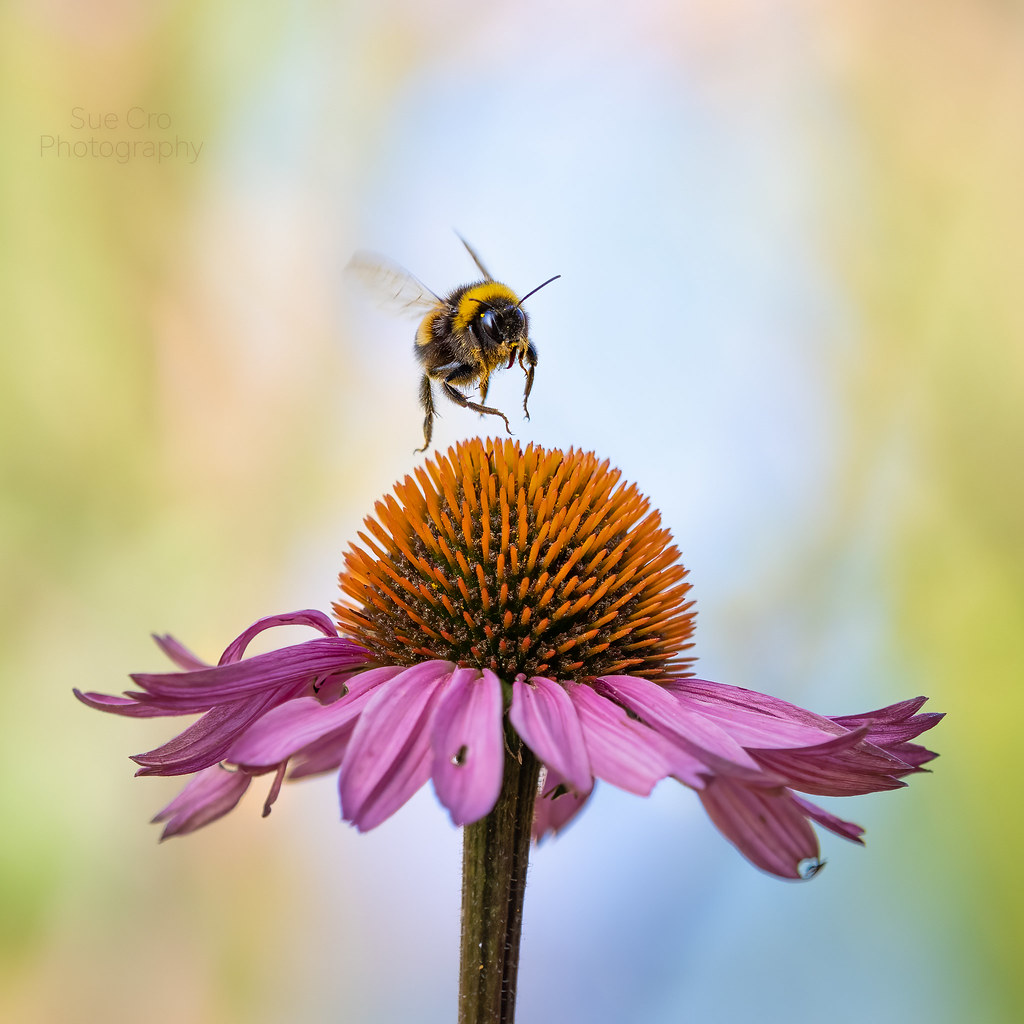
Featured image credit: “BIF-Bee-in flight”-by-susie2778-is-licensed-under-CC-BY-NC-2.0.
Dr. Linda Booth Sweeney is an award-winning children’s author and systems educator who helps children, and the adults who teach and care for them, discover the often-hidden connections that shape our world. Her books include Do Bees Pee?, The Noisy Puddle, Monument Maker and Apart, Together. Through Toggle Labs for Kids, she creates playful, research-based resources that build systems literacy through stories, science, and hands-on learning. For the Loops to Lines worksheets and other related resources, click here.


Leave a Reply
Your email is safe with me.