



GUEST BLOGGER HEATHER FERRANTI KINSER
When contemporary nonfiction authors sit down to write, they have decisions to make about how they’ll creatively approach their chosen topic. The goal is to find a fresh and engaging angle that will draw a variety of readers to the book. The possibilities are infinite! But the framework for getting started lies within the topic itself, and within the author’s skillset and imagination. Looking at two similar books side-by-side is a great opportunity for students to learn about the many choices available to them as writers.
What can we learn from comparing and contrasting books on similar topics?
There’s no one right answer on how to write, and nobody else can tell you exactly how to be a creative thinker. But seasoned authors know that reading lots of published books, and thinking about how and why those books work well (or don’t), is a learning opportunity. I’m the author of two books on topics related to geology, but I used a different approach for each. A comparison of these books can serve as an example to young writers, of how to be flexible and creative when developing an idea.
How are Nature Is a Sculptor and In a Cave similar and different?
Tell your students that the picture books Nature Is a Sculptor: Weathering and Erosion (Millbrook Press, 2023) and In a Cave (Gnome Road Publishing, 2023) are both about geologic formations and are written by the same author, Heather Ferranti Kinser—yet are quite different from one another. Let’s investigate how, and why!
Activity 1: Compare and contrast the two books
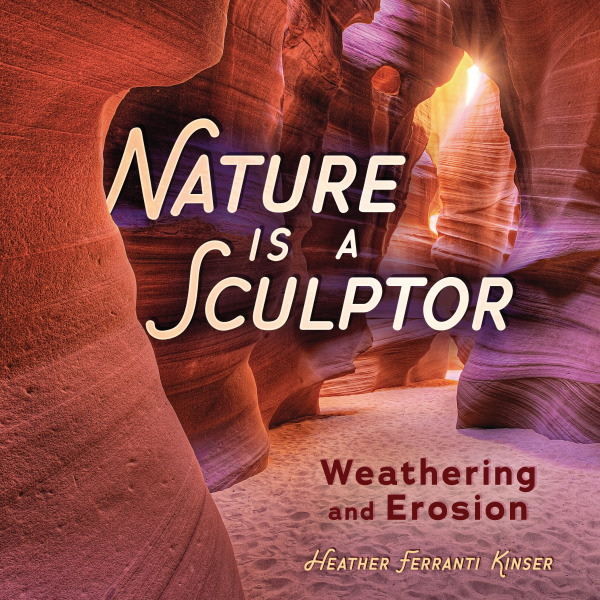
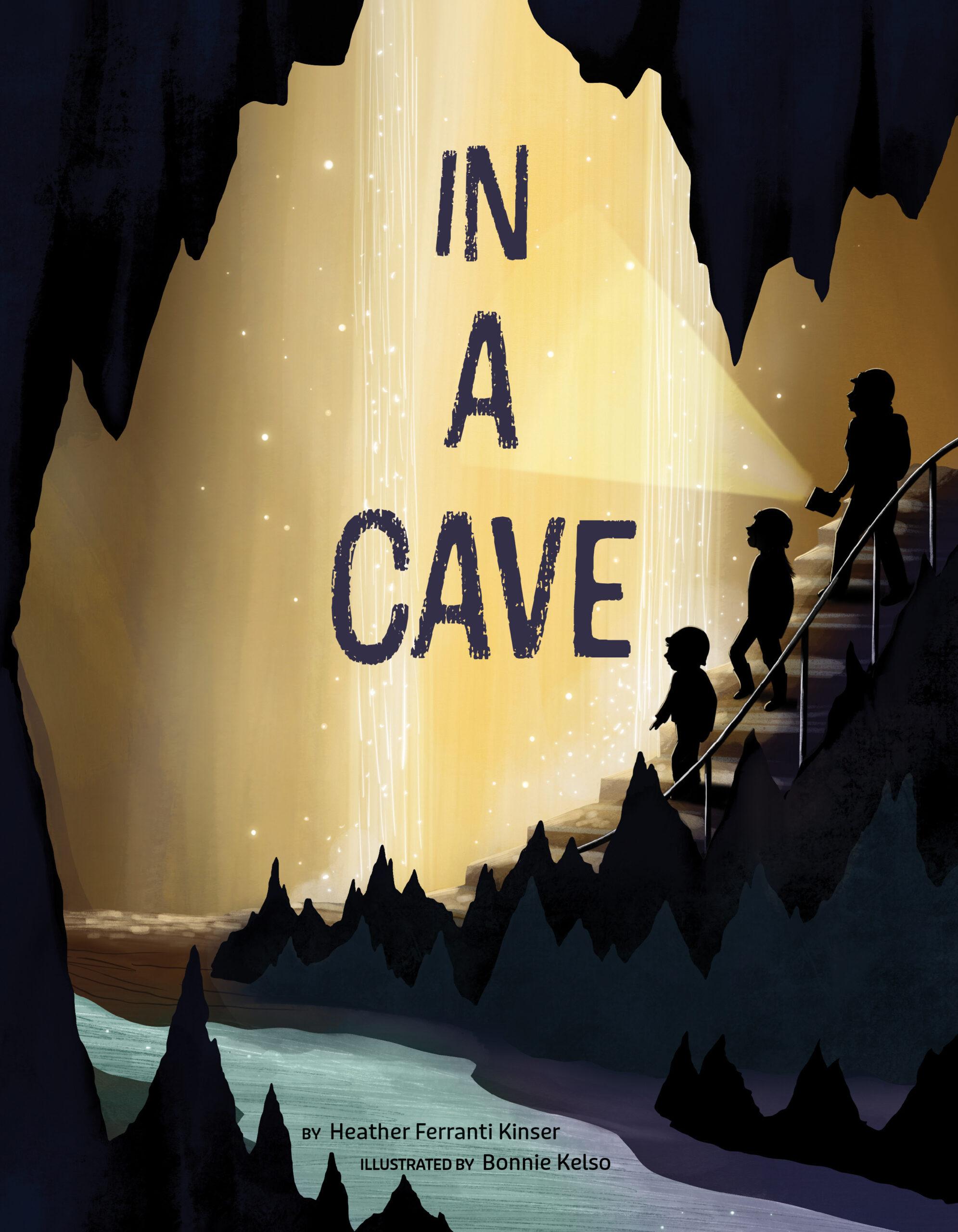
Read both Nature Is a Sculptor and In a Cave with your students, then ask them to make side-by-side comparisons. In what ways are the books similar to one another? In what respects are they different from each other? Take suggestions, and write them on the board. Use the lists below as a reference point.
Here are the similarities. Both are:
- are about geology/rocks
- describe interesting rock formations
- use poetic devices
- use some metaphors
- include some rhymes
Now the differences:
| Nature is a Sculptor | In a Cave |
|---|---|
| about weathering and erosion | about caves |
| about rock formations above-ground | about rock formations below-ground |
| nonfiction | informational fiction |
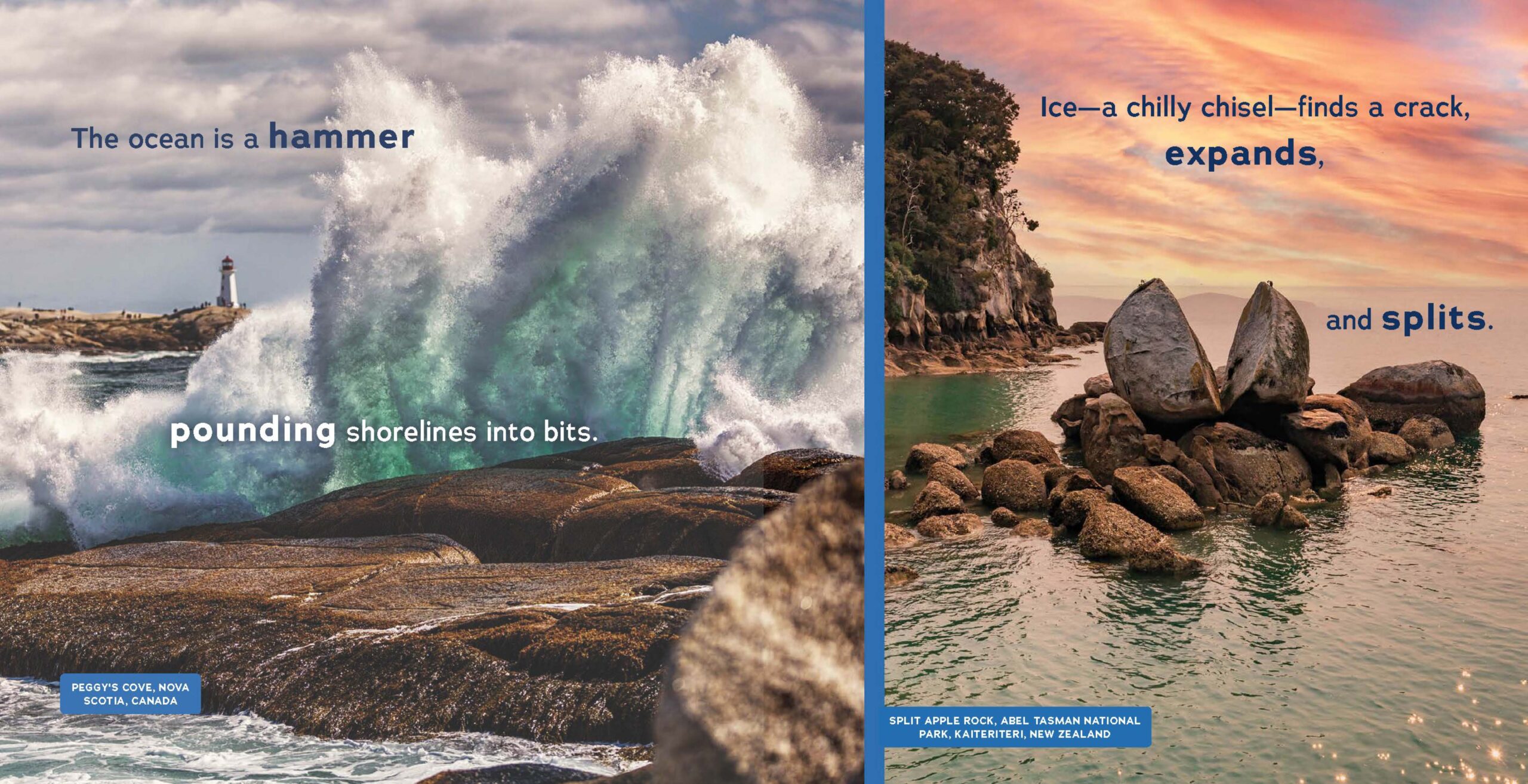
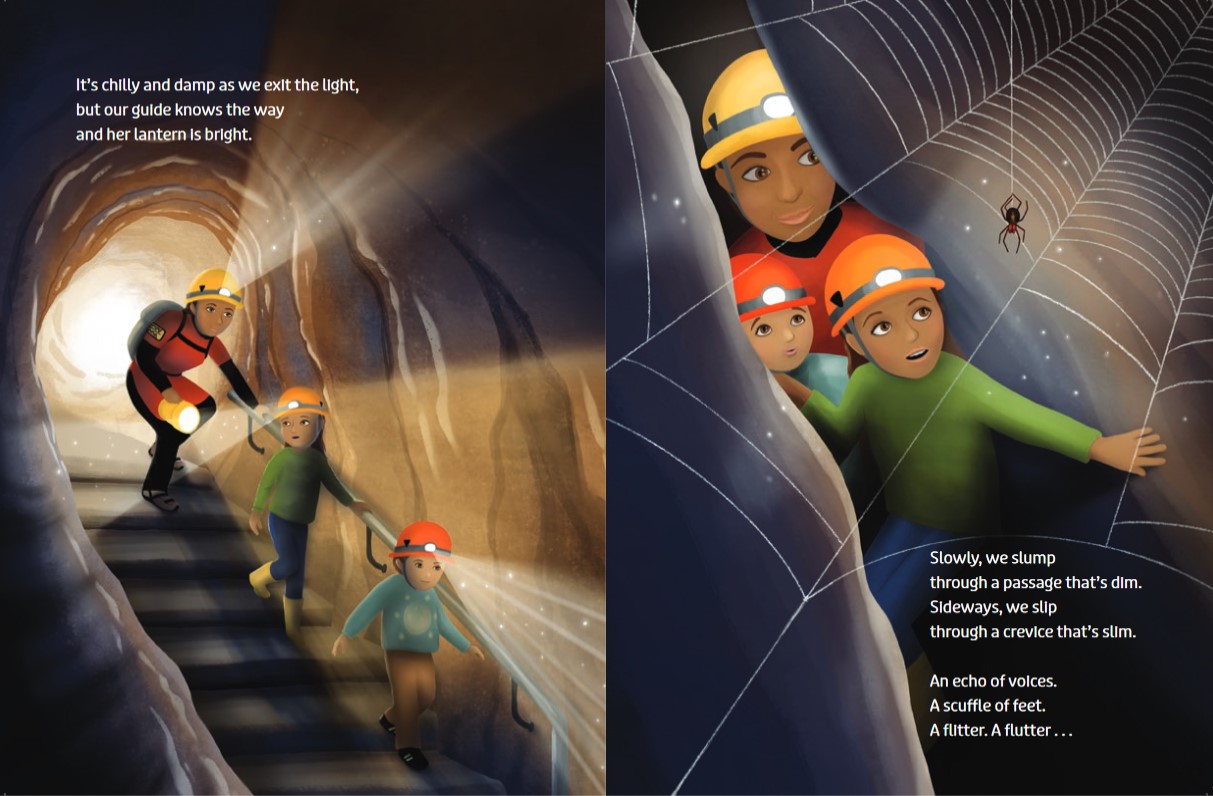
| illustrated with photos | drawn illustrations |
| does not feature fictional characters | features fictional characters |
| told from a third-person narrative point-of-view | told from a second-person narrative point-of-view (we/us) |
| lyrical/poetic (but not told in rhyme) | told all in rhyme |
| thoughtful tone | playful tone |
| encourages the reader to feel a sense of awe and wonder | encourages the reader to feel a sense of fun and adventure |
| an ode (a poem written to honor beauty) | a journey |
Activity 2: Consider why these approaches work (or don’t)
Next, ask your students to consider why the author may have chosen to approach writing each book as she did. Follow up by asking students if they think these were effective choices, and why (or why not). After your discussion, you might choose to share the following comments from the author.
Notes from the Author
I wrote Nature Is a Sculptor with lyrical language because I think the beauty of nature is best conveyed through poetry. Poetry allows us to consider deep feelings and mysteries in a way that descriptive language can’t, so I used plenty of poetic devices (such as alliteration, assonance, and an occasional rhyme) to create a mood of wonder and awe. It’s not easy to write an active story about rocks, but as soon as I thought about using the metaphor “Nature is a sculptor,” the piece quickly started to take shape. After that, I was able to move forward with the idea of equating the natural processes of weathering & erosion to the actions of a human artist. I was also sure to use lots of active verbs (such as etch, whittle, and gouge). And I was determined to include my favorite rock-formation word, hoodoo—just because I love the sound of it.
I wrote In a Cave using a regular meter and rhyme scheme because it gave the story a sense of the rhythm of walking through a cave system. Also, I knew that if I was both clever and lucky, I could create playful and funny moments by finding surprising rhymes. There’s something extra satisfying and entertaining about a clever rhyme. I knew I wanted to write about caves as mysterious places, and to show characters having feelings about their adventure. I also thought cave bacon, cave popcorn, and other cave-formation names were funny, so I gave these words big moments in the story—to release the tension created by this hike down into the dark unknown. Good stories lead readers though emotional ups and downs.
Activity 3: Writing exercise
Try writing a short nonfiction story of your own, in two different ways. Your subject should be the same for each, but your writing approaches should be different. Think about trying to create two different moods or emotional responses in your reader.
Bonus activity
Read these other terrific geology-related picture books, and make more style comparisons:
- A Stone Is a Story by Leslie Barnard Booth
- I’m Trying to Love Rocks by Bethany Barton
- Caves by Nell Cross Beckerman
- Stalactite & Stalagmite by Drew Beckmeyer
Featured image credit: “Girl-in-a-classroom”-by-World-Bank-Photo-Collection-is-licensed-under-CC-BY-NC-ND-2.0.
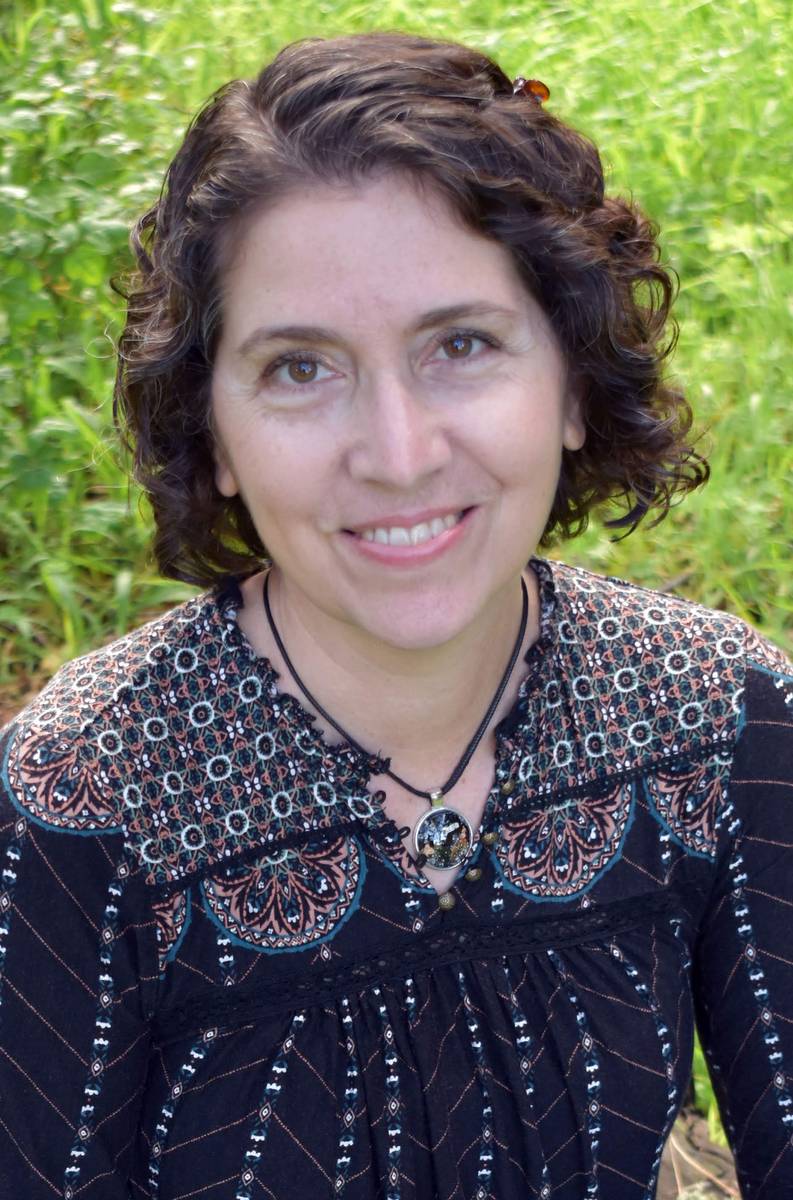
Heather Ferranti Kinser writes at the intersection of story, poetry, and nature from her home on the San Francisco Peninsula. She’s a former technical editor who now spends her days writing small stories—to make a big difference for kids! Heather is also the author of Small Matters: The Hidden Power of the Unseen (Millbrook Press) and the forthcoming Spaw Day (Simon & Schuster, summer 2027) and A Voice for the Quiet: Gordon Hempton Defends the Sounds of Nature (Calkins Creek, fall 2027). Connect with Heather on her website, HeatherKinser.com, or through her social media handles, @hethfeth (Instagram) or @HeatherKinser (Bluesky).




Leave a Reply
Your email is safe with me.