

• Home
  • Books
    • Beatrice and the Nightingale
    • Sharks Unhooked: The Adventures of Cristina Zenato, Underwater Ranger
    • Giant Rays of Hope: Protecting Manta Rays to Safeguard the Sea
    • A River’s Gifts: The Mighty Elwha River Reborn
    • Planet Ocean
    • Eavesdropping on Elephants
    • Neema’s Reason To Smile
    • Zoo Scientists to the Rescue
    • Sea Otter Heroes: The Predators That Saved an Ecosystem
    • Plastic, Ahoy! Investigating the Great Pacific Garbage Patch
    • Ebola: Fears and Facts
    • Jingle the Brass
    • Nugget on the Flight Deck
    • Surviving Animal Attacks
    • Elite Operations series
    • Energy Lab series
    • QuickReads Fluency Library
    • Books for English language-learners
    • Writers write all kinds of things
  • Author Visit Programs
    • FAQs
    • Calendar
  • Blog
  • Educator Resources
    • Teach the Hope
    • Earth Day Every Day newsletter archive
    • Teacher Guides
    • STEM + Literacy Activities
    • LitLinks
    • KidLit creators who make kids want to read
  • Writer Resources
    • Writing Classes
    • Manuscript or Proposal Critiques
    • How I got my start
  • Who is Patricia Newman?
  • Contact
    • Stay In Touch
    • Earth Day Every Day newsletter archive
Patricia NewmanPatricia Newman
Sibert Honor Children's Book Author & Environmentalist
  • Home
  • Books
    • Beatrice and the Nightingale
    • Sharks Unhooked: The Adventures of Cristina Zenato, Underwater Ranger
    • Giant Rays of Hope: Protecting Manta Rays to Safeguard the Sea
    • A River’s Gifts: The Mighty Elwha River Reborn
    • Planet Ocean
    • Eavesdropping on Elephants
    • Neema’s Reason To Smile
    • Zoo Scientists to the Rescue
    • Sea Otter Heroes: The Predators That Saved an Ecosystem
    • Plastic, Ahoy! Investigating the Great Pacific Garbage Patch
    • Ebola: Fears and Facts
    • Jingle the Brass
    • Nugget on the Flight Deck
    • Surviving Animal Attacks
    • Elite Operations series
    • Energy Lab series
    • QuickReads Fluency Library
    • Books for English language-learners
    • Writers write all kinds of things
  • Author Visit Programs
    • FAQs
    • Calendar
  • Blog
  • Educator Resources
    • Teach the Hope
    • Earth Day Every Day newsletter archive
    • Teacher Guides
    • STEM + Literacy Activities
    • LitLinks
    • KidLit creators who make kids want to read
  • Writer Resources
    • Writing Classes
    • Manuscript or Proposal Critiques
    • How I got my start
  • Who is Patricia Newman?
  • Contact
    • Stay In Touch
    • Earth Day Every Day newsletter archive
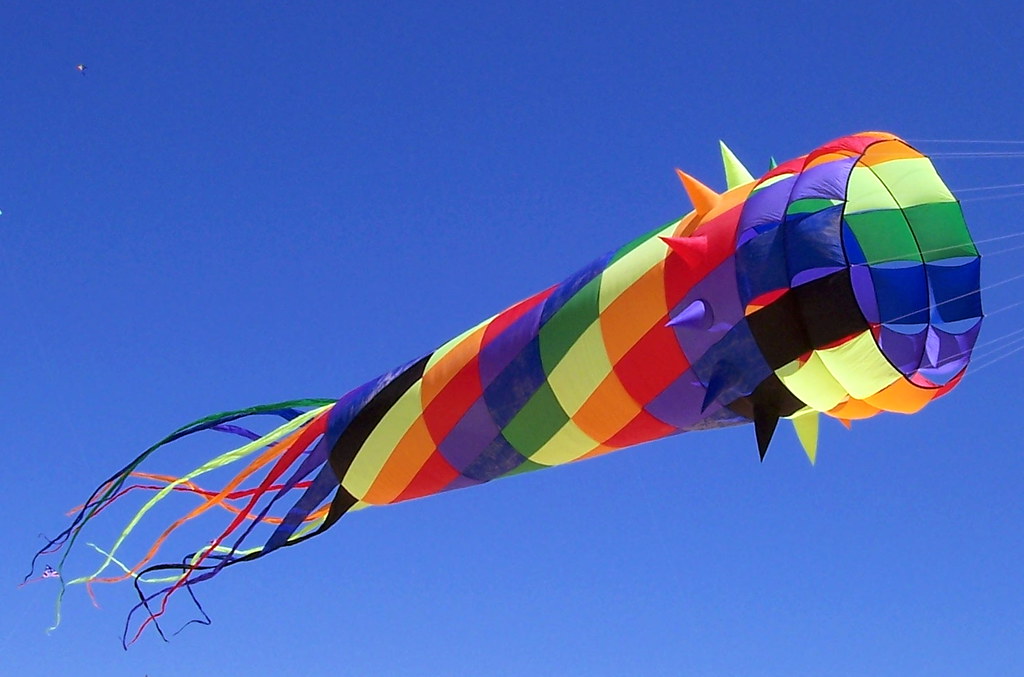
"Spinny,-Spiney-Kite"-by-yerffej9-is-licensed-under-CC-BY-2.0.

LitLinks: Three easy ways to have fun with wind

July 29, 2026 LitLinks, LitLinks-Grade 3-5, LitLinks-Grade K-2 No Comments
LitLinks Logo-2022

GUEST BLOGGER ROBERTA GIBSON

Wind is air movement. Since air is not visible, however, wind is generally inferred by seeing or feeling its effect on ourselves or other objects.

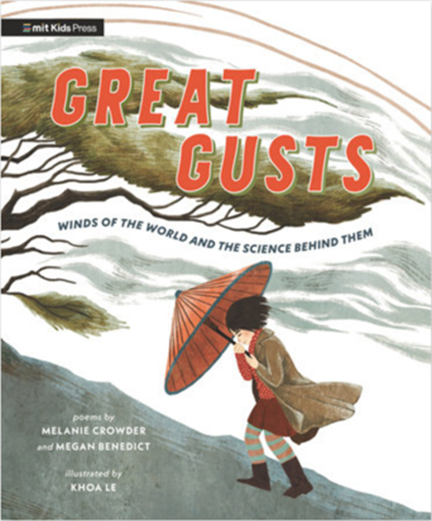
Great Gusts:  Winds of the World and the Science Behind Them by Melanie Crowder and Megan Benedict and illustrations by Khoa Le features 14 winds from regions around the world.

Show the cover illustration and ask what kind of weather is happening. What features allow the students to guess that it is windy (the waving tree branches, the girl’s posture, her hair and coat flying back, the swirling lines, etc.)

Devices such as kites, pinwheels, flags, or wind socks can help measure and explore air movement.

Make a craft kite, pinwheel, or windsock.

Note: Hold off on decorating the crafts. The students will decorate with either wind names or poems later in the final section.

Construction paper kite

Note: For classroom use, you can omit the dowels.

Windsocks and pinwheels

My Growing With Science blog post has step-by-step instructions and materials lists for making windsocks and pinwheels, but these videos are fun to watch too. Talk about how each device moves with the wind.

Gather wind names.

Have a world map handy to show where different winds are found around the world.

Hurricanes and tornados are names for wind storms that the students will recognize, but the names for regional winds are not as familiar.  For example, Willy-willies occur in Australia and Nor’easters commonly hit New England. Santa Anas cause damage in California. During Arizona summers, great walls of dust called Haboobs race across the landscape. The name was borrowed from similar dust storms found in the Middle East.

Research and create a list of names for winds. Discuss what they mean and how they might have come about. Some are derived from local languages.

  • Wikipedia List of Wind Names
  • Names of Winds (older list)
Extension

Describe some wind events. Provide some synonyms for wind, like squall or zephyr. Ask your students to brainstorm and come up with their own wind event names.

Write poems.

Great Gusts is a collection of poems. Some of those included reflect the style of poetry from the area where the winds occur. For example, the wind from Japan is an “Oroshi.” The author chose to write the poem about it using haiku, a type of Japanese poetry. The form consists of three lines. The first line has five syllables, the second seven syllables, and the third has five syllables.
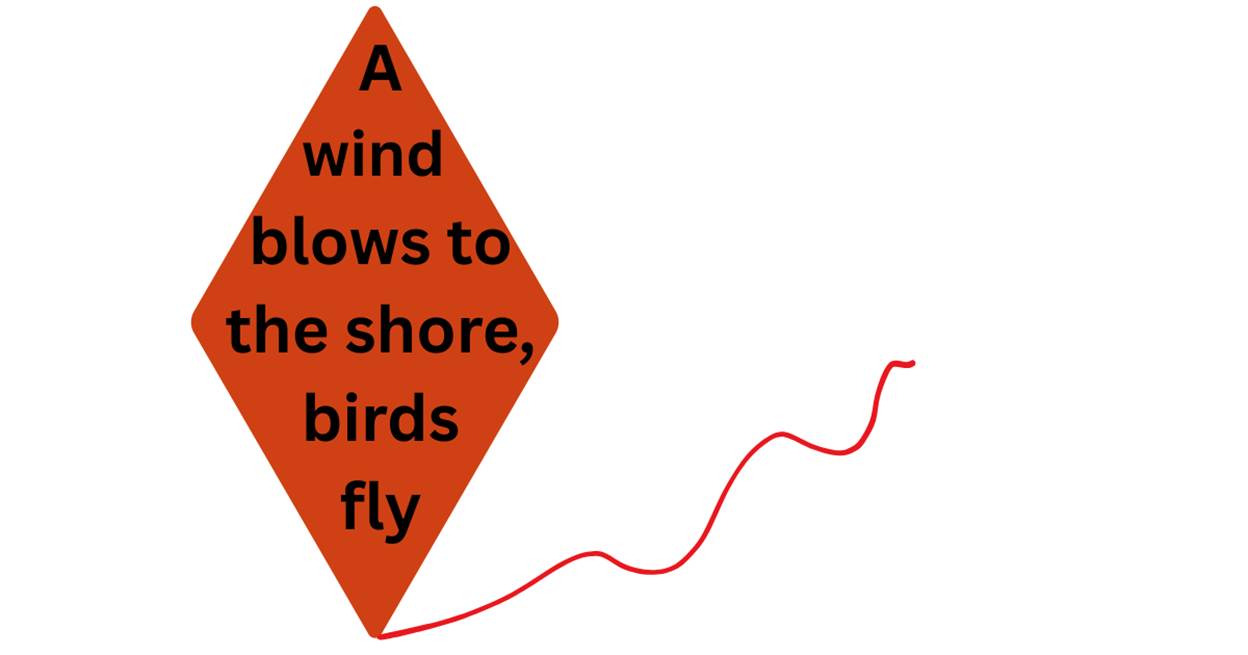
concrete-poem-about-wind

Shape poems (also called concrete poems) might be fun to try. Encourage the students to write a poem about the wind in the shape of a kite. 

Encourage the student to incorporate sensory info in their poems, such as the sounds of wind.

Wind can even have a smell. Before a summer rain in Arizona, the monsoon winds smell like creosote, a tangy earth odor. Thunderstorms can have the acrid odor from lightning strikes. Ocean breezes can smell fishy.

Extension 

Write a poem about wind without using the word “wind.”

Check out some earlier LitLinks posts with lessons using poetry:

LitLinks: How to use STEM and poetry to celebrate weather
LitLinks: Quick poetry lessons on the power of figurative language
LitLinks: How to teach science and poetry, the perfect partnership

Decorate the crafts with wind names and/or poems.

Add swirling lines to represent the movement of wind. Display the crafts.

Featured image credit: “Spinny, Spiney Kite” by yerffej9 is licensed under CC BY 2.0.


Roberta-Gibson-HEADSHOT

Roberta Gibson’s muse sends her short stories for adults and picture books for children. Check out her nonfiction picture book, How to Build an Insect and look for her upcoming title from MIT Kids Press. When her muse isn’t sending stories, Roberta gardens, studies martial arts, and fends off the affection of four cats. Where to find Roberta Gibson on the Internet: Robertagibsonwrites.com, BlueSky @robertagibson.bsky.social, Instagram @robiegibson.
Click for more LITLINKS STEM + Literacy activities

Tags: STEM+LiteracySTEM+Literacy Natural Science
No Comments
Share
0

You also might be interested in

Center of a daisy

LitLinks: 4 easy arts activities that supplement nonfiction reading

Mar 1, 2023

GUEST BLOGGER LISA L. OWENS When nonfiction readers have an[...]

stars-moon-palms

LitLinks: How to shine a light on LIGHT with art and literature

May 31, 2023

GUEST BLOGGERS CHRISTINE LAYTON AND LUCIANA NAVARRO POWELL Around the[...]

Interview_Biorobotics1

LitLinks: Easy lessons on biomimicry and robot design that WOW! students

Sep 8, 2021

GUEST BLOGGER LINDA ZAJAC Objective Students will learn about biomimicry[...]

Leave a Reply

Your email is safe with me.
Cancel Reply

Click the logo to have LitLinks delivered to your inbox

LitLinks Logo-2022

Author Visits

https://youtu.be/zj6n-RFOcPA?si=8WCTnyXbTiwYumYo
https://youtu.be/ziN0UrqaDYI

Earth Day Every Day Newsletter Archive

Earth-Day-Every-Day-newsletter-banner

Post Categories:

Blog Archive

Top Posts

LitLinks: How to share our ocean connections with kids and teens

LitLinks: Let’s learn to decode photos in STEM nonfiction

LitLinks: How Elephants Can Make Your Sound Unit ROAR!

LitLinks: Easy ways to build students’ science communication skills

Proof that science connects kids to the larger world

Recent Comments

  • Cynthia Argentine on LitLinks: 5 simple steps for comparing birdsong with instrumental music Wonderful integration of music and science and nature! I'm a…
  • Cynthia Argentine on LitLinks: How to observe like a scientist and write like a poet Great observations of the links between science and poetry!
  • Margaret Quinlin on LitLinks: Exploring time and sequence in nature and narrative What a creative exercise for students!
Empowering young readers to act

Latest Blog Posts

  • LitLinks: Three easy ways to have fun with wind
    LitLinks: Three easy ways to have fun with wind
  • LitLinks: Mythical Creatures Help Students Develop Strong Writing Skills
    LitLinks: Mythical Creatures Help Students Develop Strong Writing Skills
  • LitLinks: How To Inspire Empathy And Critical Thinking Skills With Stories From History
    LitLinks: How To Inspire Empathy And Critical Thinking Skills With Stories From History

Connect with me on social media

Action Shots

Check out the STEM Tuesday Blog

© 2026 — Patricia Newman

  • Home
  • Books
    • Beatrice and the Nightingale
    • Sharks Unhooked: The Adventures of Cristina Zenato, Underwater Ranger
    • Giant Rays of Hope: Protecting Manta Rays to Safeguard the Sea
    • A River’s Gifts: The Mighty Elwha River Reborn
    • Planet Ocean
    • Eavesdropping on Elephants
    • Neema’s Reason To Smile
    • Zoo Scientists to the Rescue
    • Sea Otter Heroes: The Predators That Saved an Ecosystem
    • Plastic, Ahoy! Investigating the Great Pacific Garbage Patch
    • Ebola: Fears and Facts
    • Jingle the Brass
    • Nugget on the Flight Deck
    • Surviving Animal Attacks
    • Elite Operations series
    • Energy Lab series
    • QuickReads Fluency Library
    • Books for English language-learners
    • Writers write all kinds of things
  • Author Visit Programs
    • FAQs
    • Calendar
  • Blog
  • Educator Resources
    • Teach the Hope
    • Earth Day Every Day newsletter archive
    • Teacher Guides
    • STEM + Literacy Activities
    • LitLinks
    • KidLit creators who make kids want to read
  • Writer Resources
    • Writing Classes
    • Manuscript or Proposal Critiques
    • How I got my start
  • Who is Patricia Newman?
  • Contact
    • Stay In Touch
    • Earth Day Every Day newsletter archive
Prev