

• Home
  • Books
    • Beatrice and the Nightingale
    • Sharks Unhooked: The Adventures of Cristina Zenato, Underwater Ranger
    • Giant Rays of Hope: Protecting Manta Rays to Safeguard the Sea
    • A River’s Gifts: The Mighty Elwha River Reborn
    • Planet Ocean
    • Eavesdropping on Elephants
    • Neema’s Reason To Smile
    • Zoo Scientists to the Rescue
    • Sea Otter Heroes: The Predators That Saved an Ecosystem
    • Plastic, Ahoy! Investigating the Great Pacific Garbage Patch
    • Ebola: Fears and Facts
    • Jingle the Brass
    • Nugget on the Flight Deck
    • Surviving Animal Attacks
    • Elite Operations series
    • Energy Lab series
    • QuickReads Fluency Library
    • Books for English language-learners
    • Writers write all kinds of things
  • Author Visit Programs
    • FAQs
    • Calendar
  • Blog
  • Educator Resources
    • Teach the Hope
    • Earth Day Every Day newsletter archive
    • Teacher Guides
    • STEM + Literacy Activities
    • LitLinks
    • KidLit creators who make kids want to read
  • Writer Resources
    • Writing Classes
    • Manuscript or Proposal Critiques
    • How I got my start
  • Who is Patricia Newman?
  • Contact
    • Stay In Touch
    • Earth Day Every Day newsletter archive
Patricia NewmanPatricia Newman
Sibert Honor Children's Book Author & Environmentalist
  • Home
  • Books
    • Beatrice and the Nightingale
    • Sharks Unhooked: The Adventures of Cristina Zenato, Underwater Ranger
    • Giant Rays of Hope: Protecting Manta Rays to Safeguard the Sea
    • A River’s Gifts: The Mighty Elwha River Reborn
    • Planet Ocean
    • Eavesdropping on Elephants
    • Neema’s Reason To Smile
    • Zoo Scientists to the Rescue
    • Sea Otter Heroes: The Predators That Saved an Ecosystem
    • Plastic, Ahoy! Investigating the Great Pacific Garbage Patch
    • Ebola: Fears and Facts
    • Jingle the Brass
    • Nugget on the Flight Deck
    • Surviving Animal Attacks
    • Elite Operations series
    • Energy Lab series
    • QuickReads Fluency Library
    • Books for English language-learners
    • Writers write all kinds of things
  • Author Visit Programs
    • FAQs
    • Calendar
  • Blog
  • Educator Resources
    • Teach the Hope
    • Earth Day Every Day newsletter archive
    • Teacher Guides
    • STEM + Literacy Activities
    • LitLinks
    • KidLit creators who make kids want to read
  • Writer Resources
    • Writing Classes
    • Manuscript or Proposal Critiques
    • How I got my start
  • Who is Patricia Newman?
  • Contact
    • Stay In Touch
    • Earth Day Every Day newsletter archive
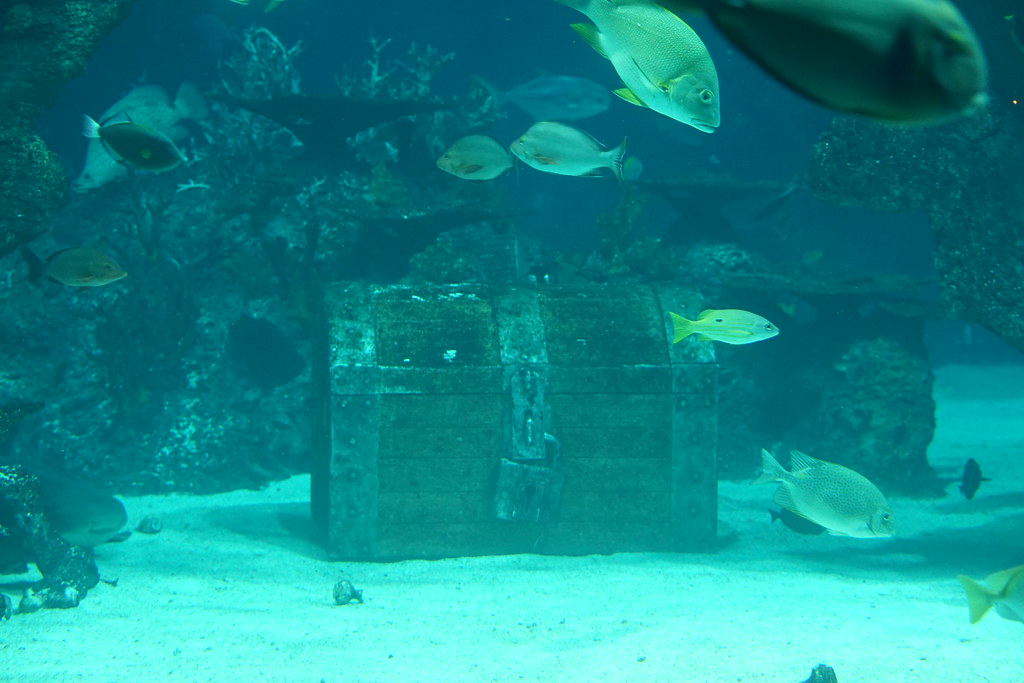
"Underwater-treasure-chest"-by-benhosg-is-licensed-under-CC-BY-NC-ND-2.0.

LitLinks: How to observe like a scientist and write like a poet

March 4, 2026 LitLinks, LitLinks-Grade 3-5, LitLinks-Grade 6-8, LitLinks-High School No Comments
LitLinks Logo-2022

GUEST BLOGGER MARY BOONE


When the first humans sailed across unknown oceans or descended deep beneath the water’s surface, they didn’t simply bring along compasses, cables, or extra oxygen tanks. They packed journals. It’s true. Because before scientists can share discoveries with the world, they have to describe them. They have to observe, record precisely, and make sense of what they see. In other words, they write.

Field notes, diagrams, labeled sketches, timelines and reflections are as essential to exploration as any piece of technology. Science doesn’t just happen in the lab or underwater. It happens on the page. Ocean explorers have long understood the connection between data and description.

Oceanographer and environmental advocate Jacques Cousteau kept detailed logs of his dives. After one of his earliest underwater explorations, he wrote about seeing “…rocks covered with green, brown and silver forests of algae and fishes unknown to me, swimming in crystalline water… I was in a jungle never seen by those who floated on the opaque roof.”

Notice what he’s doing: observing like a scientist and writing like a poet.

In 1979, Sylvia Earle set a world record for untethered diving by walking on the seabed 1,250 feet beneath the ocean’s surface. After spending hours in a place no human had visited before, she wrote that “the water… seemed to glow with internal light.” That single sentence captures both a scientific observation and the wonder of discovery.

Cousteau, Earle, and countless others show us something powerful: when they’re at their best, science and storytelling are intertwined.

Read and discuss
Unfathomable-cover

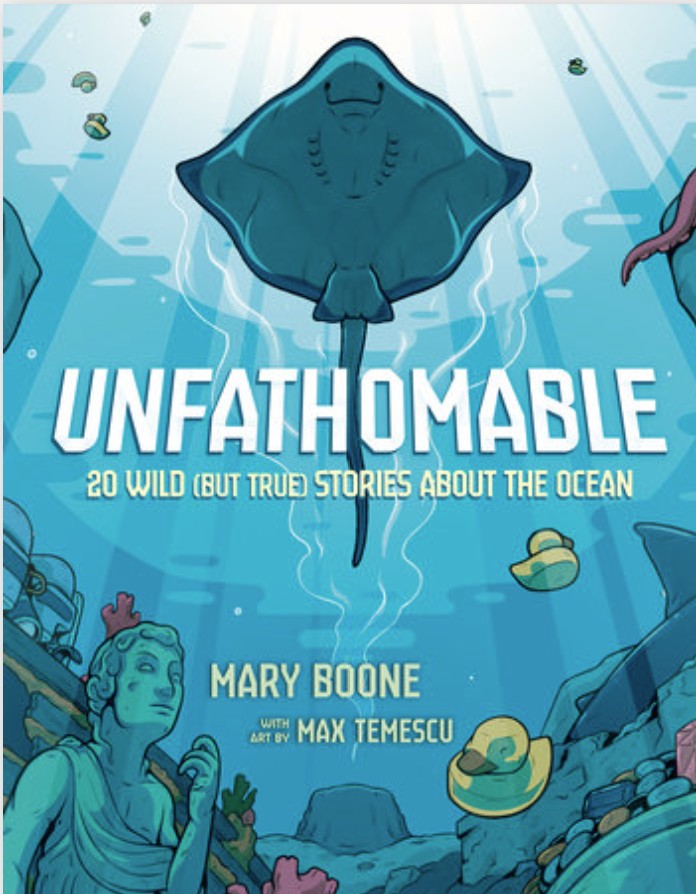
Ask students to read my latest book, Unfathomable: 20 Wild (But True) Stories of the Ocean, illustrated by Max Temescu (Bright Matter/Random House Kids, 2026). Focus on Chapter 17, “Eruptions.” Ask students about their impressions of ROVs and HOVs based on Kenna Rubin’s descriptions.

Divide students into groups of three students each. Ask each group to use masking tape to create a circular outline on the floor that’s six feet in diameter. That’s the size of a typical Human Occupied Vehicle. There’s no room to stand. How would the students arrange themselves, their diving gear, computers, and cameras into this space? How would they feel about being in this small space with their crewmates for 10 or more hours?

Now the dive begins

Remind students that much of the ocean is still unexplored. New species are discovered every year. Hydrothermal vents, submarine volcanoes, and bioluminescent creatures await.

During their imagined dive, each team must decide:

  • Where are they diving?
  • What conditions exist there?
  • What three to four organisms or phenomena do they observe?

Encourage students to ground their ideas in real science but leave room for imagination.

Write like a scientist

Assign each group the task of writing a Field Mission Report, as if their HOV has just completed a real dive. The report includes:

  • Vivid descriptions of plants, animals, and landscape.
  • Labeled diagrams or maps as well as drawings of newly discovered plants and animals.
  • A narrative dive log, including a timeline. What happened underwater?
  • A short personal reflection from each crew member, detailing their emotions as well as their biggest thrills or disappointments.

Encourage students to use vivid sensory details and precise vocabulary and remind them that often the most powerful tool on an expedition isn’t a robot or a submersible. It’s a journal.
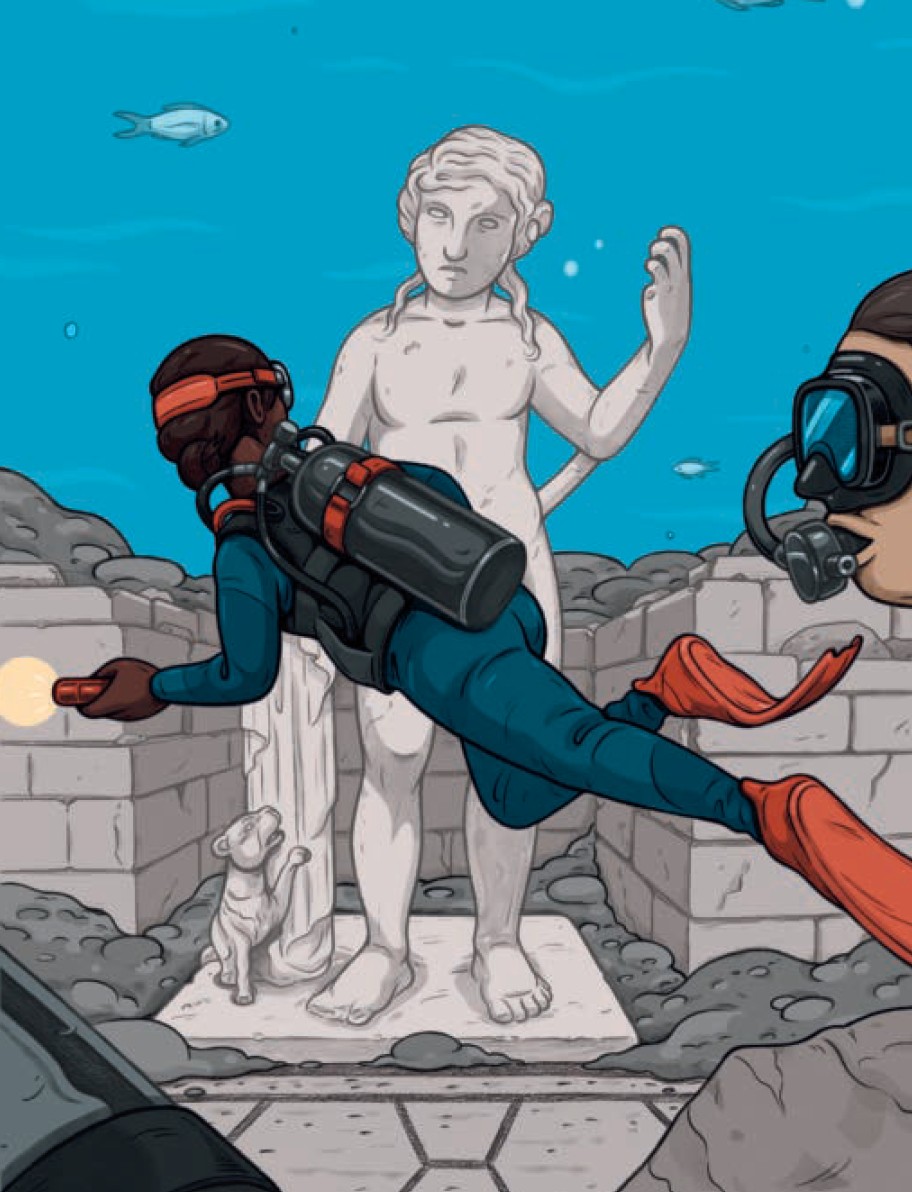
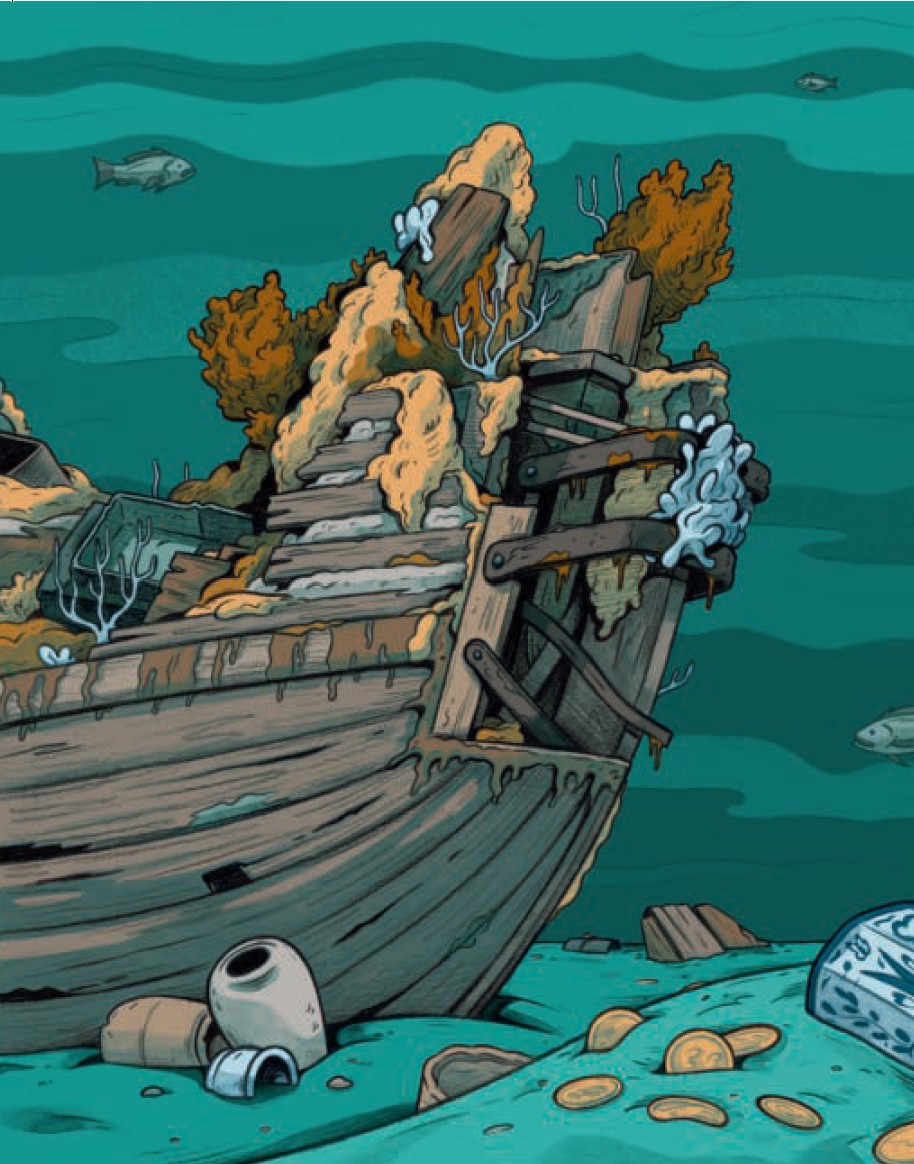
from-Unfathomable-underwater-cities
from-Unfathomable-underwater-treasure
From Unfathomable: 20 Wild (But True) Stories of the Ocean by Mary Boone, illustrated by Max Temescu (Bright Matter/Random House Kids, 2026)

Featured image credit: “Underwater treasure chest” by benhosg is licensed under CC BY-NC-ND 2.0.


Mary-Boone-headshot

Mary Boone has written 70+ nonfiction books for young readers, most recently Unfathomable: 20 (Wild But True) Stories of the Ocean (a Junior Library Gold selection), Flying Feminist, Pedal Pusher, School of Fish, and Bugs for Breakfast.  Prior to becoming an author, Mary wrote and edited for several Midwest daily newspapers. She now lives in Tacoma, Washington, with her husband, Mitch, and their very stubborn Airedale Terrier, Ruthie Bader. For more information, visit Mary’s website or follow her on social media: Instagram, Twitter/X, Threads: @boonewrites, Facebook: Mary Boone- Author
Click for more LITLINKS STEM + Literacy activities

Tags: STEM+LiteracySTEM+Literacy Natural ScienceSTEM+Literacy Physical Science
No Comments
Share
0

You also might be interested in

Best bird lessons

LitLinks: The BEST bird lessons integrating STEM and language arts

Jan 5, 2022

COMPILED BY PATRICIA NEWMAN Are you looking for the BEST[...]

Yellowstone River - photo credit: Patricia Newman

LitLinks: How to introduce students to your local river basin

Feb 22, 2023

BY PATRICIA NEWMAN We all live in a river basin[...]

Walruses

LitLinks: Surprise! Walruses can help you teach reading + phonics

Jan 11, 2023

GUEST BLOGGER JANET LAWLER Animals make sounds for many reasons,[...]

Leave a Reply

Your email is safe with me.
Cancel Reply

Click the logo to have LitLinks delivered to your inbox

LitLinks Logo-2022

Author Visits

https://youtu.be/zj6n-RFOcPA?si=8WCTnyXbTiwYumYo
https://youtu.be/ziN0UrqaDYI

Earth Day Every Day Newsletter Archive

Earth-Day-Every-Day-newsletter-banner

Post Categories:

Blog Archive

Top Posts

LitLinks: How to share our ocean connections with kids and teens

LitLinks: Let’s learn to decode photos in STEM nonfiction

LitLinks: How Elephants Can Make Your Sound Unit ROAR!

LitLinks: Easy ways to build students’ science communication skills

Proof that science connects kids to the larger world

Recent Comments

  • Margaret Quinlin on LitLinks: Exploring time and sequence in nature and narrative What a creative exercise for students!
  • Sue Heavenrich on LitLinks: Great ideas to help students practice the art of asking questions Great post, Jessica! I love the way the "I notice"…
  • Lisa L. Owens on LitLinks: 4 ways Pluto can supercharge imagination Thanks for hosting me, Patricia!
Empowering young readers to act

Latest Blog Posts

  • LitLinks: How to observe like a scientist and write like a poet
    LitLinks: How to observe like a scientist and write like a poet
  • LitLinks: 5 simple steps for comparing birdsong with instrumental music
    LitLinks: 5 simple steps for comparing birdsong with instrumental music
  • LitLinks: 3 easy ways to investigate how plants communicate
    LitLinks: 3 easy ways to investigate how plants communicate

Connect with me on social media

Action Shots

Check out the STEM Tuesday Blog

© 2026 — Patricia Newman

  • Home
  • Books
    • Beatrice and the Nightingale
    • Sharks Unhooked: The Adventures of Cristina Zenato, Underwater Ranger
    • Giant Rays of Hope: Protecting Manta Rays to Safeguard the Sea
    • A River’s Gifts: The Mighty Elwha River Reborn
    • Planet Ocean
    • Eavesdropping on Elephants
    • Neema’s Reason To Smile
    • Zoo Scientists to the Rescue
    • Sea Otter Heroes: The Predators That Saved an Ecosystem
    • Plastic, Ahoy! Investigating the Great Pacific Garbage Patch
    • Ebola: Fears and Facts
    • Jingle the Brass
    • Nugget on the Flight Deck
    • Surviving Animal Attacks
    • Elite Operations series
    • Energy Lab series
    • QuickReads Fluency Library
    • Books for English language-learners
    • Writers write all kinds of things
  • Author Visit Programs
    • FAQs
    • Calendar
  • Blog
  • Educator Resources
    • Teach the Hope
    • Earth Day Every Day newsletter archive
    • Teacher Guides
    • STEM + Literacy Activities
    • LitLinks
    • KidLit creators who make kids want to read
  • Writer Resources
    • Writing Classes
    • Manuscript or Proposal Critiques
    • How I got my start
  • Who is Patricia Newman?
  • Contact
    • Stay In Touch
    • Earth Day Every Day newsletter archive
Prev