
• Home
  • Books
    • Beatrice and the Nightingale
    • Sharks Unhooked: The Adventures of Cristina Zenato, Underwater Ranger
    • Giant Rays of Hope: Protecting Manta Rays to Safeguard the Sea
    • A River’s Gifts: The Mighty Elwha River Reborn
    • Planet Ocean
    • Eavesdropping on Elephants
    • Neema’s Reason To Smile
    • Zoo Scientists to the Rescue
    • Sea Otter Heroes: The Predators That Saved an Ecosystem
    • Plastic, Ahoy! Investigating the Great Pacific Garbage Patch
    • Ebola: Fears and Facts
    • Jingle the Brass
    • Nugget on the Flight Deck
    • Surviving Animal Attacks
    • Elite Operations series
    • Energy Lab series
    • QuickReads Fluency Library
    • Books for English language-learners
    • Writers write all kinds of things
  • Author Visit Programs
    • FAQs
    • Calendar
  • Blog
  • Educator Resources
    • Teach the Hope
    • Earth Day Every Day newsletter archive
    • Teacher Guides
    • STEM + Literacy Activities
    • LitLinks
    • KidLit creators who make kids want to read
  • Writer Resources
    • Writing Classes
    • Manuscript or Proposal Critiques
    • How I got my start
  • Who is Patricia Newman?
  • Contact
    • Stay In Touch
    • Earth Day Every Day newsletter archive
Patricia NewmanPatricia Newman
Sibert Honor Children's Book Author & Environmentalist
  • Home
  • Books
    • Beatrice and the Nightingale
    • Sharks Unhooked: The Adventures of Cristina Zenato, Underwater Ranger
    • Giant Rays of Hope: Protecting Manta Rays to Safeguard the Sea
    • A River’s Gifts: The Mighty Elwha River Reborn
    • Planet Ocean
    • Eavesdropping on Elephants
    • Neema’s Reason To Smile
    • Zoo Scientists to the Rescue
    • Sea Otter Heroes: The Predators That Saved an Ecosystem
    • Plastic, Ahoy! Investigating the Great Pacific Garbage Patch
    • Ebola: Fears and Facts
    • Jingle the Brass
    • Nugget on the Flight Deck
    • Surviving Animal Attacks
    • Elite Operations series
    • Energy Lab series
    • QuickReads Fluency Library
    • Books for English language-learners
    • Writers write all kinds of things
  • Author Visit Programs
    • FAQs
    • Calendar
  • Blog
  • Educator Resources
    • Teach the Hope
    • Earth Day Every Day newsletter archive
    • Teacher Guides
    • STEM + Literacy Activities
    • LitLinks
    • KidLit creators who make kids want to read
  • Writer Resources
    • Writing Classes
    • Manuscript or Proposal Critiques
    • How I got my start
  • Who is Patricia Newman?
  • Contact
    • Stay In Touch
    • Earth Day Every Day newsletter archive
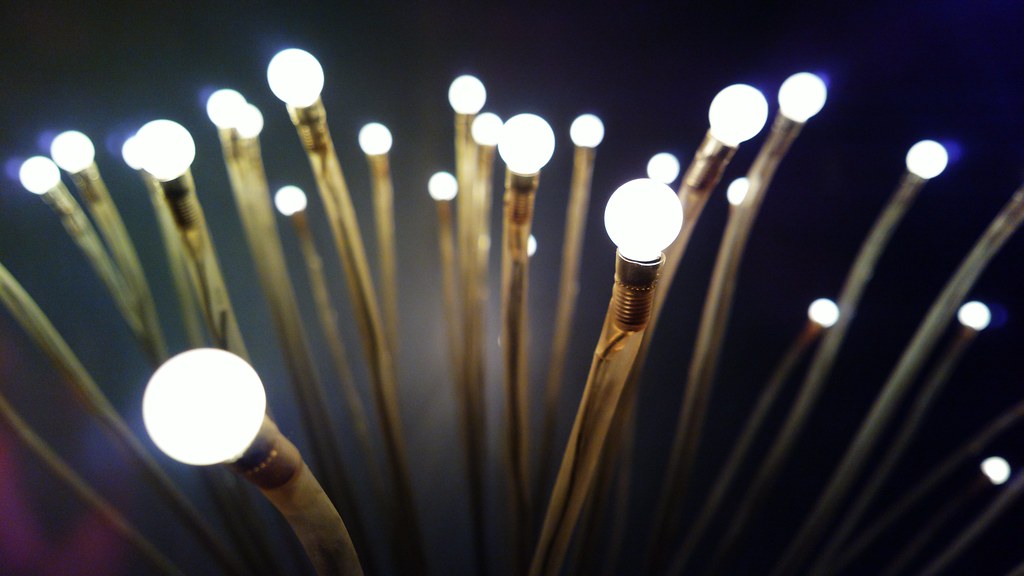
"Mini-light-bulbs"-by-Andrew.T@NN-is-licensed-under-CC-BY-NC-SA-2.0.

LitLinks: Have fun with light with 3 easy experiments

March 18, 2026 LitLinks, LitLinks-Grade 3-5, LitLinks-Grade 6-8 No Comments
LitLinks Logo-2022

GUEST BLOGGER HENRY HERZ
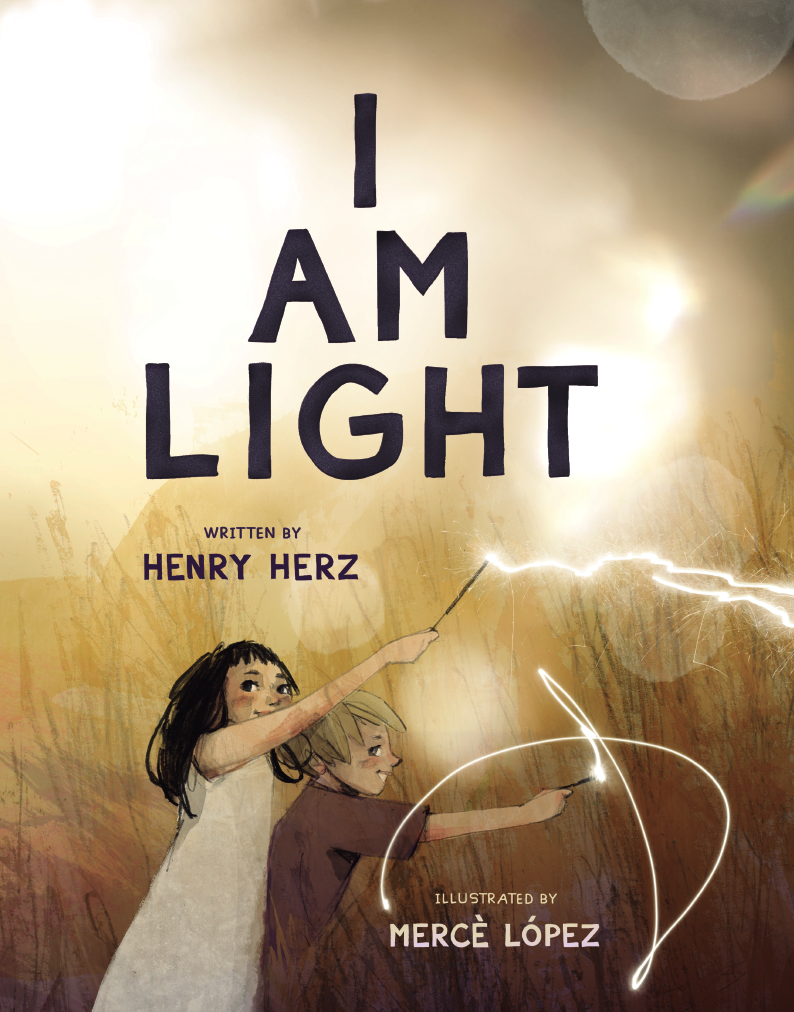

I-am-light-cover

Told in lyrical, riddling first-person narrative, Light boasts of its essential role in life as we know it. Back matter about the science of light and major historical discoveries enhances STEM learning.

Amazing light facts

  • Light weighs nothing and can travel as fast as 186,000 miles per second or about 671 million miles per hour. In a year, light travels 5.9 trillion miles. That’s called a light-year.
  • Visible light is part of a broader range of electromagnetic radiation that includes radio waves, microwaves, infrared radiation, ultraviolet (UV) light, x-rays, and gamma rays. Some animals can see UV light, including butterflies, reindeer, some birds, bees, sockeye salmon, and hedgehogs.
  • Photovoltaic cells convert light into electricity
  • Without the sun’s light (and heat, aka infrared radiation), life would not be possible on Earth. Plants, cyanobacteria, and algae need light to grow. Many animals need algae or plants to grow.
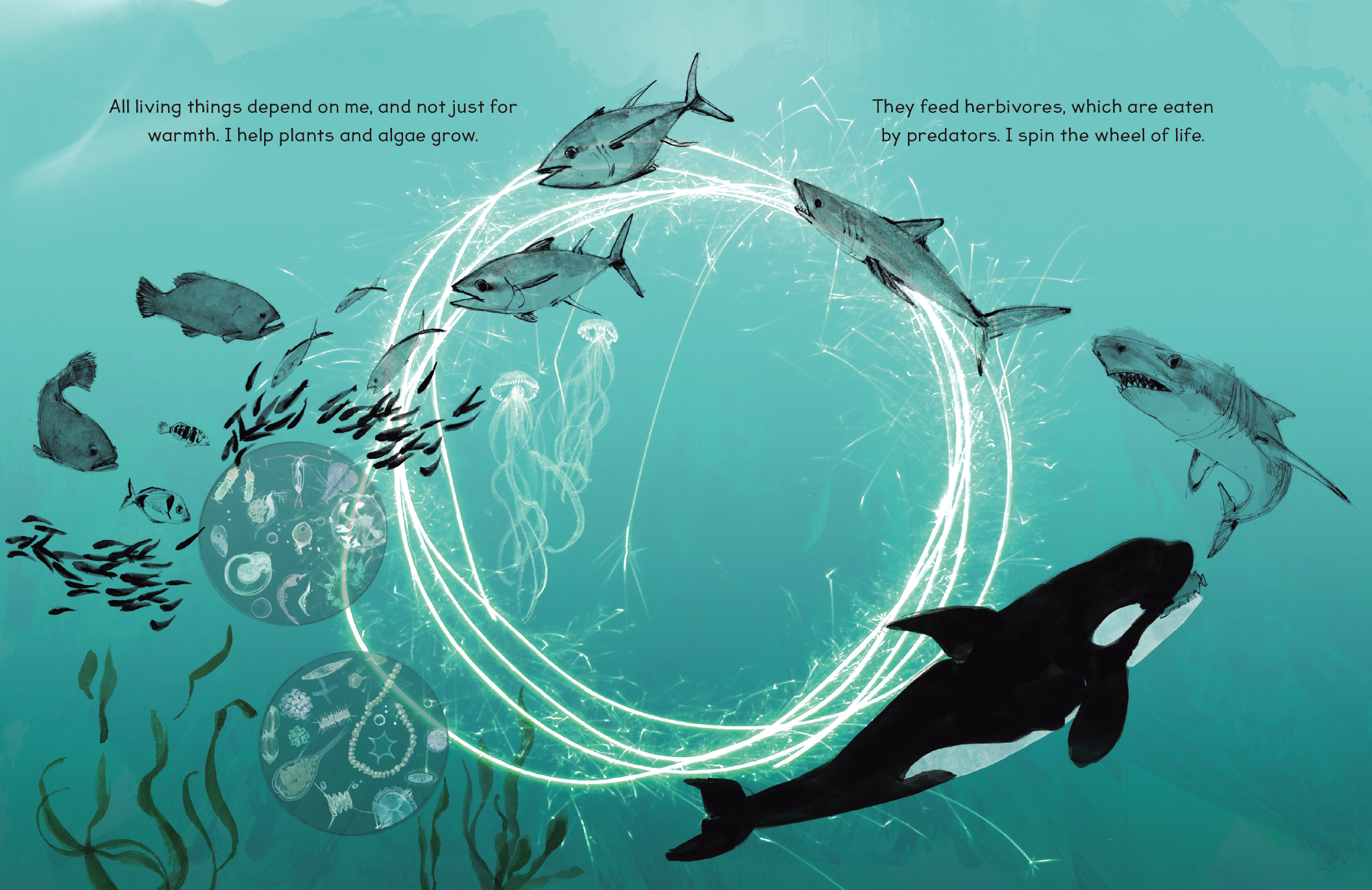
I-Am-Light-interior-wheel-of-life
From I Am Light by Henry Herz, illustrated by Mercè López (Tilbury House, 2026)
  • Plants use light to convert carbon dioxide and water into sugar and oxygen, which is how they grow. This is called photosynthesis.
  • Plants bend toward sources of light. This is called phototropism.
  • Some plants and animals, like fireflies and anglerfish, make their own light using chemicals inside their bodies. This is called bioluminescence.
    (bioluminescence image)
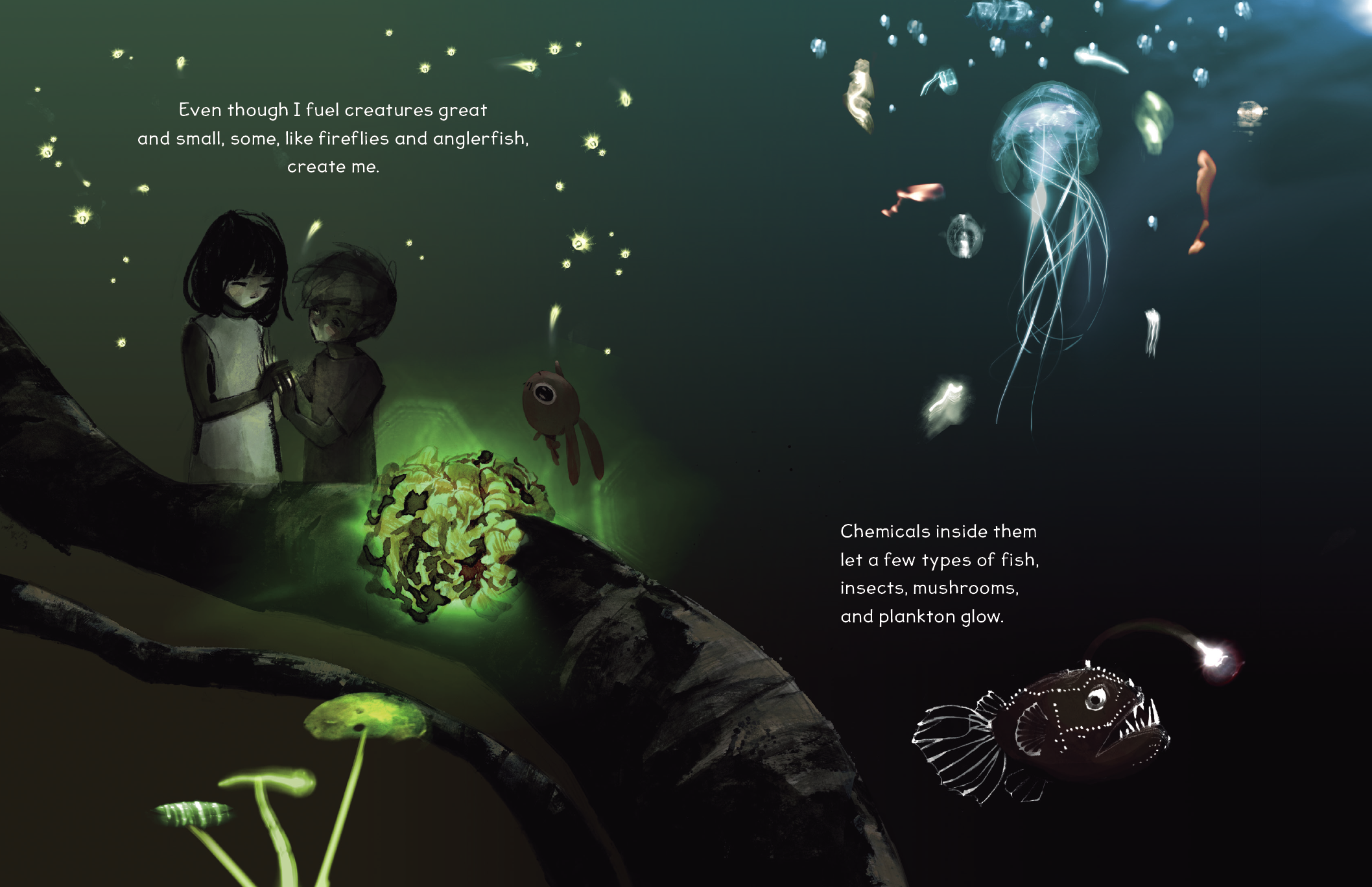
I-Am-Light-bioluminescence
From I Am Light by Henry Herz, illustrated by Mercè López (Tilbury House, 2026)
  • Sometimes, light behaves like a wave. Other times, it behaves like a particle.
  • Visible light is comprised of the colors red, orange, yellow, green, blue, indigo, and violet. Everything you see is because some colors are absorbed, while the others are reflected.
  • When light passes between two different materials, it bends or refracts. Rainbows are made from light refracted by water droplets.
    (refraction image)
  • Convex lenses squeeze light tighter for microscopes and telescopes. Concave lenses spread light out for movie projectors.
  • If we view a star that is one million light-years away, that means we’re seeing light that left the star one million years ago. So telescopes let us look into the past.

Fun with light: Convex lenses

Objective

Observe how convex lenses concentrate light.

Materials
  • balloon
  • tape
  • magnifying glass
Demo

Inflate the balloon. Go outside on a sunny day and tape the balloon to the ground so it won’t blow away. Explain that the convex lens of a magnifying glass concentrates the light energy into a small point as you use it to burst the balloon.

Fun with light: Refraction

Objective

Observe how water refracts light.

Materials
  • glass half full of water
  • pencil
  • bowl
  • coin
  • clear 64-ounce soda bottle with label removed
  • sheet of paper
  • pen
Demo
  • Experiment 1: Place the pencil in the glass and note how refraction causes the pencil to appear broken.
  • Experiment 2: Place the coin in the bowl such that the coin is not visible when viewed from a certain angle. Then, fill the bowl with water and note how refraction now makes the coin visible from the same viewing angle.
  • Experiment 3: In the center of the paper, draw an arrow pointing right. Fill the bottle with water and hold the paper right behind the bottle. Slowly move the paper away from the bottle to observe how the arrow seems to flip direction when viewed through the bottle.
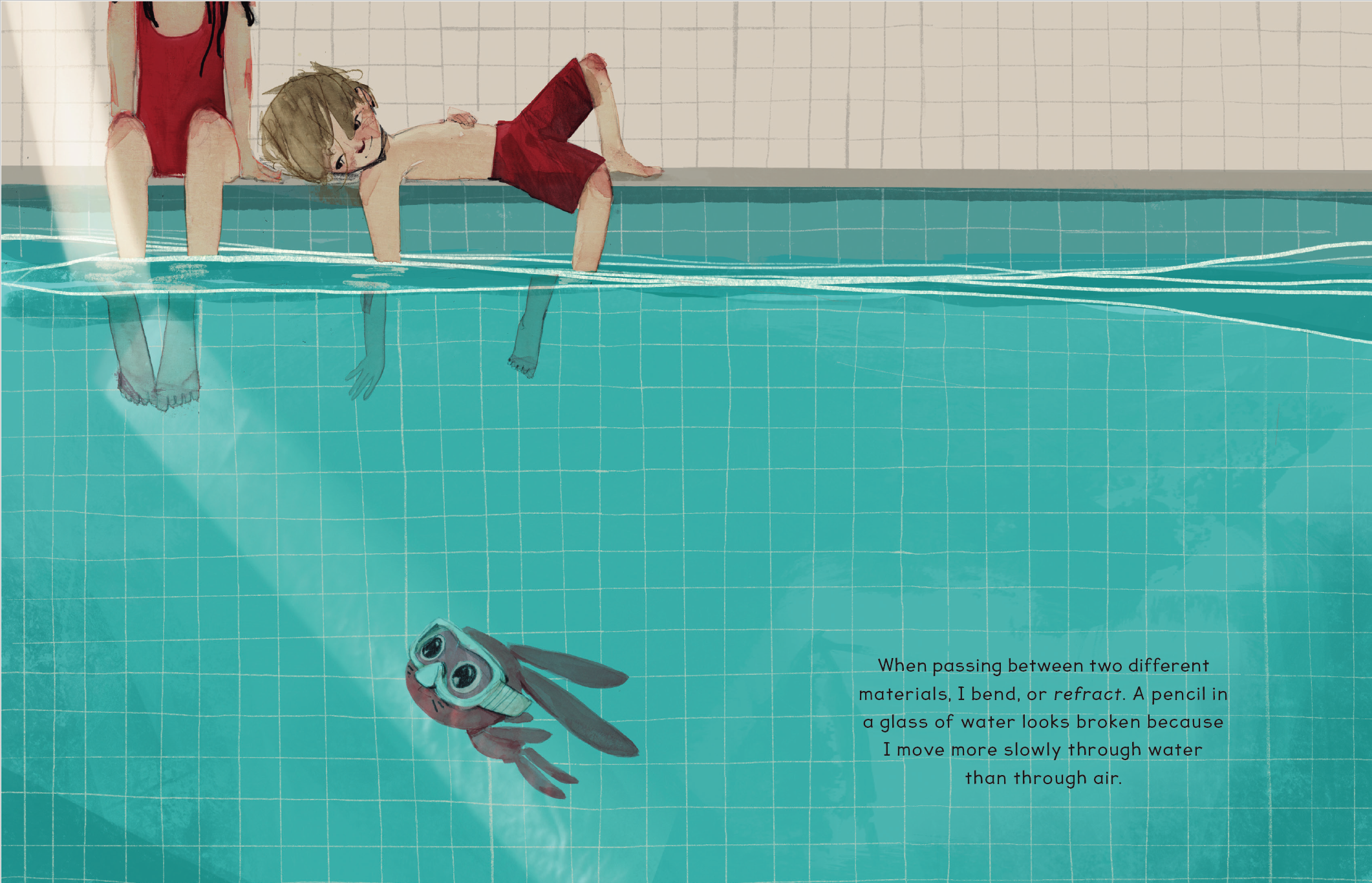
I-Am-Light-refraction
From I Am Light by Henry Herz, illustrated by Mercè López (Tilbury House, 2026)

Fun with light: Color spectrum

Objective

Observe how visible light is comprised of all the colors and how different colors absorb differing amounts of light energy.

Materials
  • a triangular glass prism
  • Infrared thermometer
  • Sheets of red, blue, white, and black paper
Demo

Hold the prism in sunlight and note how a rainbow of colors is made as refraction splits white light into its component colors: red, orange, yellow, green, blue, indigo, violet.

Next, set the sheets of paper in full sunlight (hold in place with rocks on the corners). After a few minutes, measure the temperature of the paper surfaces and note how the temperature varies from hottest to coolest (black, red, blue, white).

Featured image credit: “Mini light bulbs” by Andrew.T@NN is licensed under CC BY-NC-SA 2.0.


HenryHerz_headshot

Henry Herz is the author of fourteen picture books, including I Am Gravity and the award-winning I Am Smoke. Find him at henryherz.com, https://www.facebook.com/henryherzauthor, https://www.instagram.com/henry_herz/, and https://bsky.app/profile/henryherz.bsky.social
Click for more LITLINKS STEM + Literacy activities

Tags: STEM+LiteracySTEM+Literacy Natural ScienceSTEM+Literacy Physical Science
No Comments
Share
0

You also might be interested in

Children-coding

LitLinks: How to help grown-ups understand coding

Oct 18, 2023

GUEST BLOGGER RUTH SPIRO In How to Explain Coding to[...]

WIWA male Helena 2020_09_05_0709
Many Wilson's Warblers depend on shade-grown coffee plantations to make it through the winter.

LitLinks: 3 great ways to discover how complexity improves the habitats of migrating birds

May 11, 2022

GUEST BLOGGER SNEED B. COLLARD III Migrating birds need complexity[...]

Pointillisim-activity-example

LitLinks: Explore the STEAM in mixing colors in art projects

Mar 31, 2021

GUEST BLOGGER JENNIFER FOSBERRY In Isabella Artist Extraordinaire, the main[...]

Leave a Reply

Your email is safe with me.
Cancel Reply

Click the logo to have LitLinks delivered to your inbox

LitLinks Logo-2022

Author Visits

https://youtu.be/zj6n-RFOcPA?si=8WCTnyXbTiwYumYo
https://youtu.be/ziN0UrqaDYI

Earth Day Every Day Newsletter Archive

Earth-Day-Every-Day-newsletter-banner

Post Categories:

Blog Archive

Top Posts

LitLinks: How to share our ocean connections with kids and teens

LitLinks: Let’s learn to decode photos in STEM nonfiction

LitLinks: How Elephants Can Make Your Sound Unit ROAR!

LitLinks: Easy ways to build students’ science communication skills

Proof that science connects kids to the larger world

Recent Comments

  • Margaret Quinlin on LitLinks: Exploring time and sequence in nature and narrative What a creative exercise for students!
  • Sue Heavenrich on LitLinks: Great ideas to help students practice the art of asking questions Great post, Jessica! I love the way the "I notice"…
  • Lisa L. Owens on LitLinks: 4 ways Pluto can supercharge imagination Thanks for hosting me, Patricia!
Empowering young readers to act

Latest Blog Posts

  • LitLinks: Have fun with light with 3 easy experiments
    LitLinks: Have fun with light with 3 easy experiments
  • LitLinks: How to make a carousel, an engineering design lesson
    LitLinks: How to make a carousel, an engineering design lesson
  • LitLinks: How to observe like a scientist and write like a poet
    LitLinks: How to observe like a scientist and write like a poet

Connect with me on social media

Action Shots

Check out the STEM Tuesday Blog

© 2026 — Patricia Newman

  • Home
  • Books
    • Beatrice and the Nightingale
    • Sharks Unhooked: The Adventures of Cristina Zenato, Underwater Ranger
    • Giant Rays of Hope: Protecting Manta Rays to Safeguard the Sea
    • A River’s Gifts: The Mighty Elwha River Reborn
    • Planet Ocean
    • Eavesdropping on Elephants
    • Neema’s Reason To Smile
    • Zoo Scientists to the Rescue
    • Sea Otter Heroes: The Predators That Saved an Ecosystem
    • Plastic, Ahoy! Investigating the Great Pacific Garbage Patch
    • Ebola: Fears and Facts
    • Jingle the Brass
    • Nugget on the Flight Deck
    • Surviving Animal Attacks
    • Elite Operations series
    • Energy Lab series
    • QuickReads Fluency Library
    • Books for English language-learners
    • Writers write all kinds of things
  • Author Visit Programs
    • FAQs
    • Calendar
  • Blog
  • Educator Resources
    • Teach the Hope
    • Earth Day Every Day newsletter archive
    • Teacher Guides
    • STEM + Literacy Activities
    • LitLinks
    • KidLit creators who make kids want to read
  • Writer Resources
    • Writing Classes
    • Manuscript or Proposal Critiques
    • How I got my start
  • Who is Patricia Newman?
  • Contact
    • Stay In Touch
    • Earth Day Every Day newsletter archive
Prev