


GUEST BLOGGER ELIZABETH SHREEVE
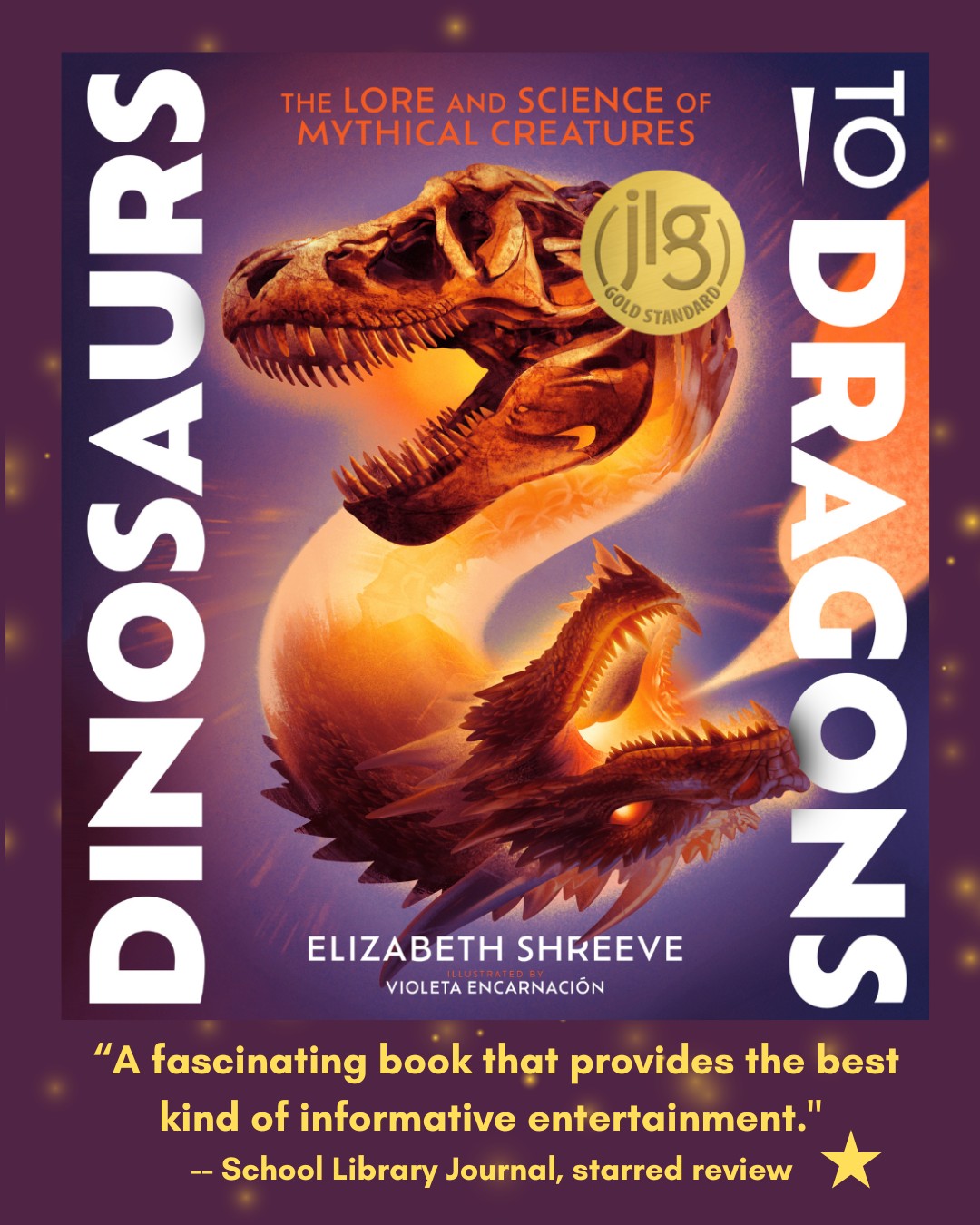
Dinosaurs! Dragons! Mermaids and unicorns! Dinosaurs to Dragons: The Lore and Science of Mythical Creatures (Atheneum/Simon & Schuster; July 21, 2026) explores how fossils and unusual wildlife may have inspired legendary monsters. The book’s browsable format blends fictional narratives with historical lore and analytical science sections. The free teacher guide harnesses these high-interest topics into language arts instruction.
Here’s a lesson on descriptive and persuasive writing. Be sure to explore the book before you begin! And visit the lesson’s webpage for related scoring rubrics, student checklists, exemplar responses, and multi-disciplinary standards alignment. Enjoy!
Descriptive writing exercise
“Pre-Science” discovery
Writing Prompt: Imagine you are a traveler from an ancient civilization exploring a remote valley. During your journey, you discover a massive, partially buried skull with a hooked beak and four legs.
Write a descriptive essay in which you describe the creature as if it were alive and standing before you. Use sensory details such as sight, sound, smell, and touch to help your reader imagine the scene.
Hidden habitat
Writing Prompt: Legends often describe mysterious creatures living deep in the ocean. Imagine a large, unknown sea creature with long tentacles living far below the surface.
Write a descriptive essay in which you describe the hidden habitat of this creature. Use vivid sensory details to help your reader imagine the setting and understand what makes it feel mysterious or dangerous.
Fossil field
Writing Prompt: Imagine yourself in a dry, rocky landscape, where you discover a field filled with large fossilized bones partially buried in the ground. The shapes are unfamiliar, and you imagine what kind of creature they once belonged to.
Write a descriptive essay in which you describe the creature as if it were alive and moving through its environment. Use sensory details such as sight, sound, smell, and touch to help your reader imagine the scene.
Mysterious swamp creature
Writing Prompt: In some parts of the world, people report seeing unknown creatures in swamps or wetlands. Imagine walking through a dense, foggy swamp when you sense that something large is nearby, hidden just out of view.
Write a descriptive essay in which you describe the setting and the creature you believe is there. Use vivid sensory details to help your reader imagine what makes this place feel mysterious or dangerous.
Persuasive writing exercise
Protect the myth
Writing Prompt: Some people believe that when science explains the origins of myths or legends, the stories lose their value. Others believe these stories remain important even after their scientific explanations are understood.
Write a persuasive essay in which you take a position on this issue. Use reasons and evidence to support your claim and persuade your audience that myths and legends should or should not continue to be valued.
Explorers
Writing Prompt: Throughout history, scientists have explored the natural world to discover new species and better understand life on Earth. Some people believe that searching for unproven or legendary creatures is not a good use of time and resources, while others believe it can lead to important discoveries.
Write a persuasive essay in which you take a position on whether scientists should spend time and resources searching for undiscovered or unproven creatures. Use reasons and evidence to support your claim and persuade your audience.
Science vs. stories in the classroom
Writing Prompt: Some educators believe that myths and legends are valuable tools for teaching science because they spark curiosity and imagination. Others believe science education should focus only on factual, evidence-based information.
Write a persuasive essay in which you take a position on this issue. Use reasons and evidence to support your claim and persuade your audience.
And there’s more!
A Teacher Guide produced by Generation Skeptics, a nonprofit program of the Center for Inquiry, builds on the book with a robust array of classroom activities. An Activity Packet offer writing prompts for each chapter. Stand-alone lessons dive deeper into writing skills, science, history, visual arts, and critical thinking.
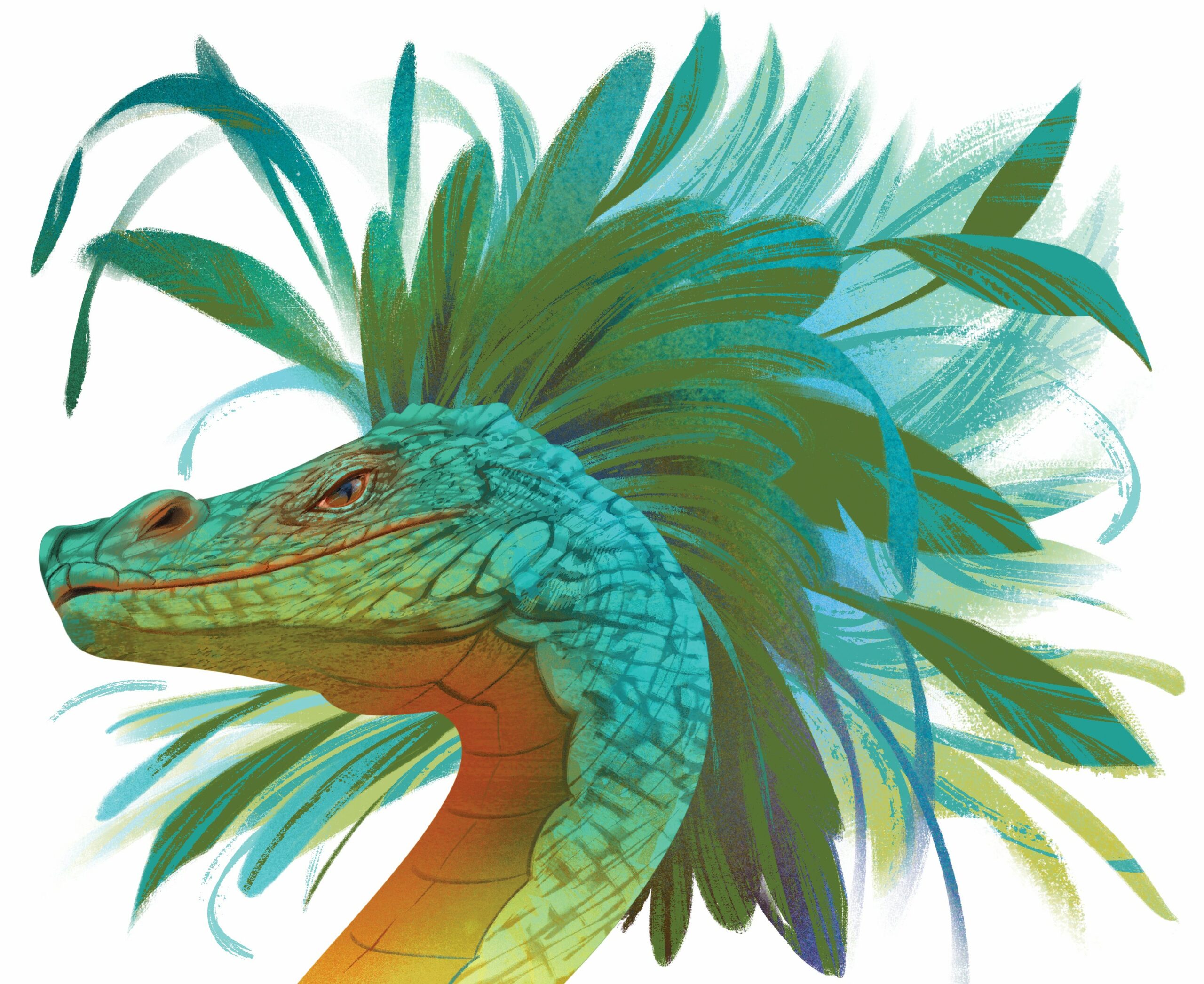
Featured image credit: Violeta Encarnación
Elizabeth Shreeve writes children’s books that spark curiosity about science and nature. When not gallivanting about for a new project, Elizabeth lives in northern California with her family. Recent books are Dinosaurs to Dragons (Atheneum/Simon & Schuster); On an Ocean Journey (Sasquatch), The Oddball Book of Armadillos and The Upside-Down Book of Sloths (Norton) and Out of the Blue (Candlewick). Upcoming titles include Germ Wars: When Diseases Ruled and Science Fought Back (Zest/Lerner, Fall 2027). For more resources and author events, please visit https://elizabethshreeve.com/educational-resources/. Website: https://elizabethshreeve.com/. Instagram: @ShreeveBooks. Facebook: Elizabeth Shreeve. Bluesky: @shreevebooks.bsky.social. YouTube: Elizabeth Shreeve Books.





Leave a Reply
Your email is safe with me.