


GUEST BLOGGER JOYCE MARKOVICS
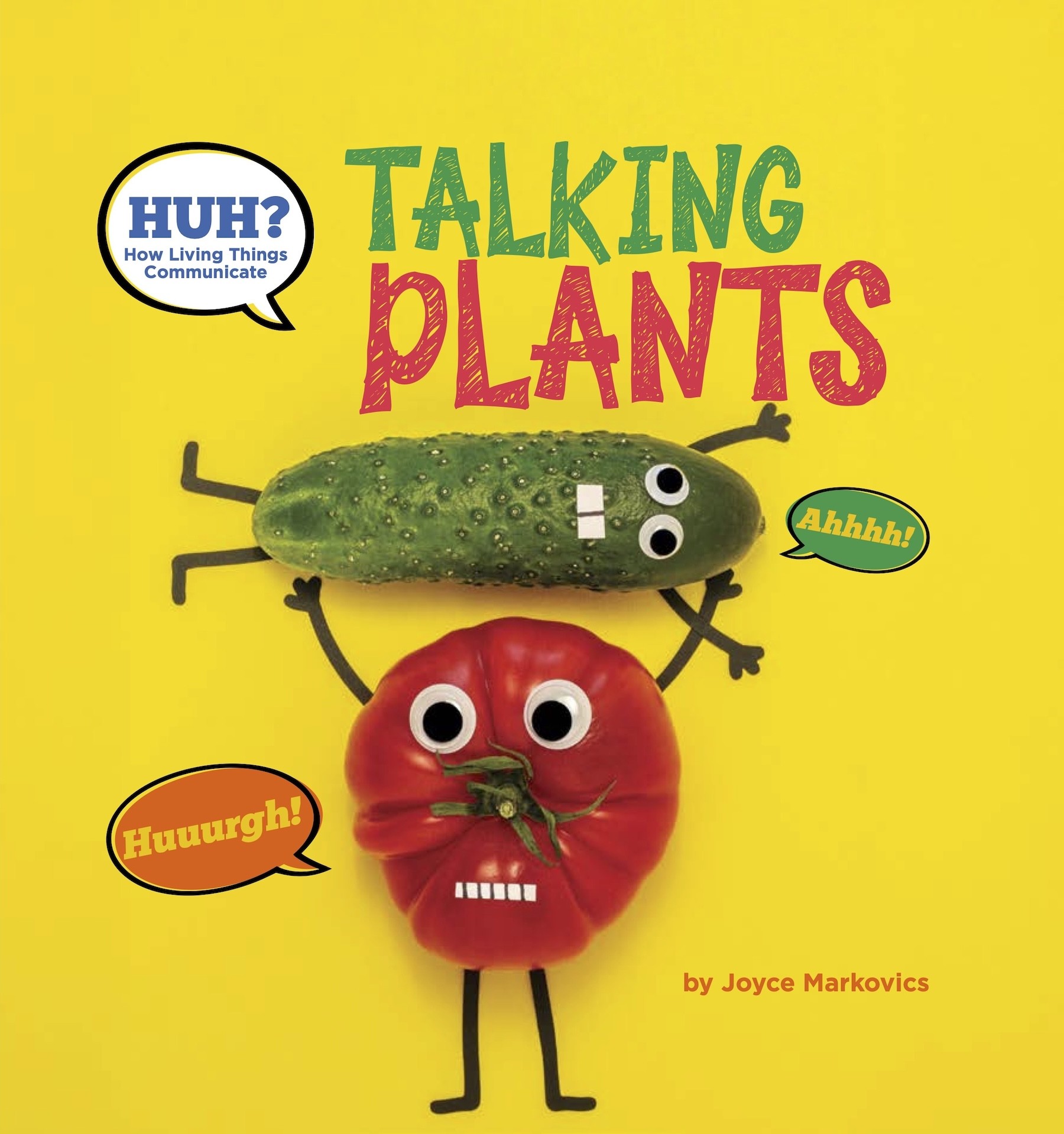
Did you know that tomato and other plants make noises? So, can plants “talk”? In a way, yes. But not exactly like us. Plants don’t have vocal cords or voices like humans do. However, they do share information using sound and vibrations. My latest nonfiction book, intended for upper-elementary and middle-school readers, is called Talking Plants. It explores this exciting topic and the broader subject of plant communication.
Critical thinking activity: Plant-human translator
Step 1: Discover What Plant Sounds Mean
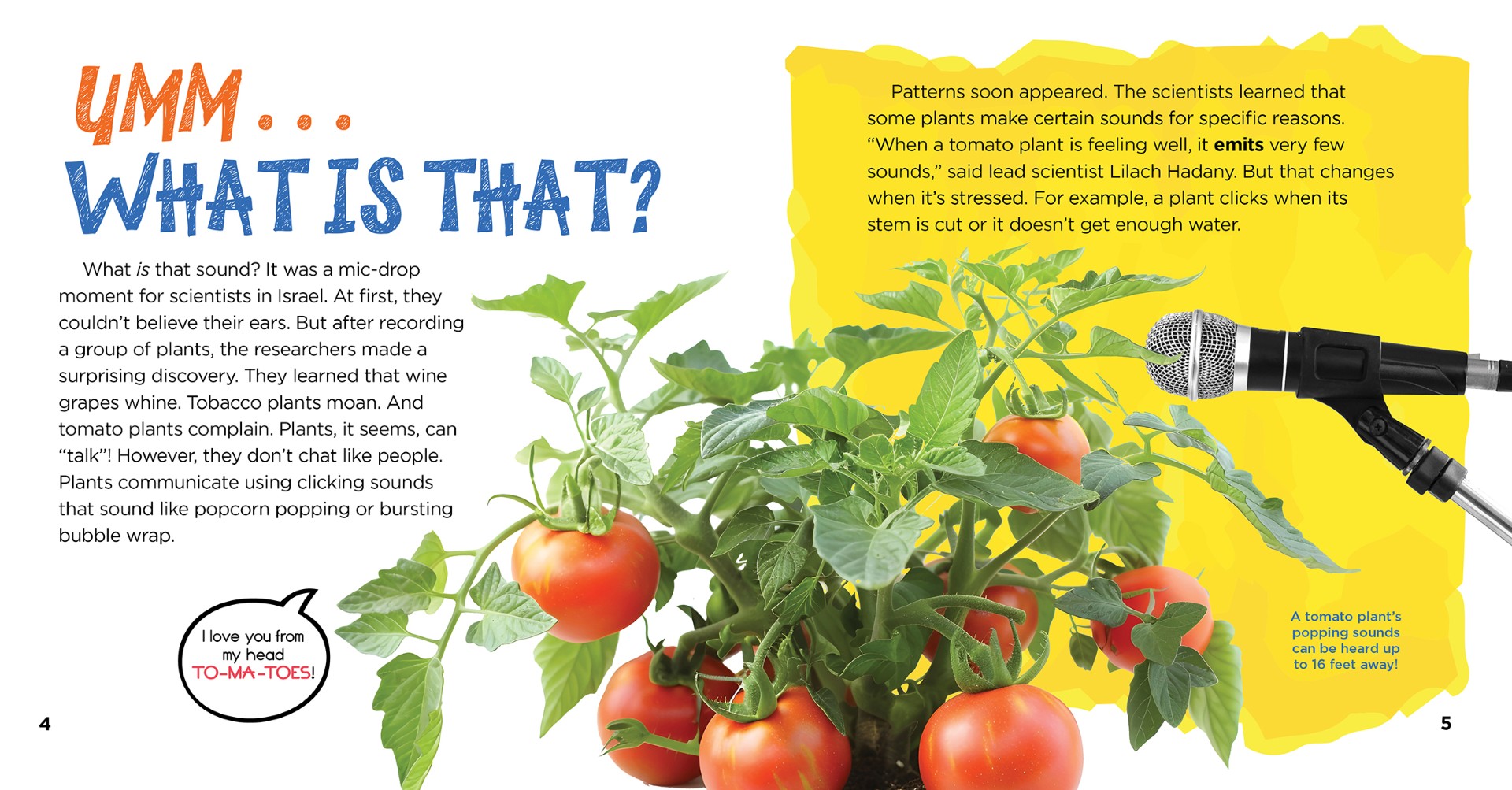
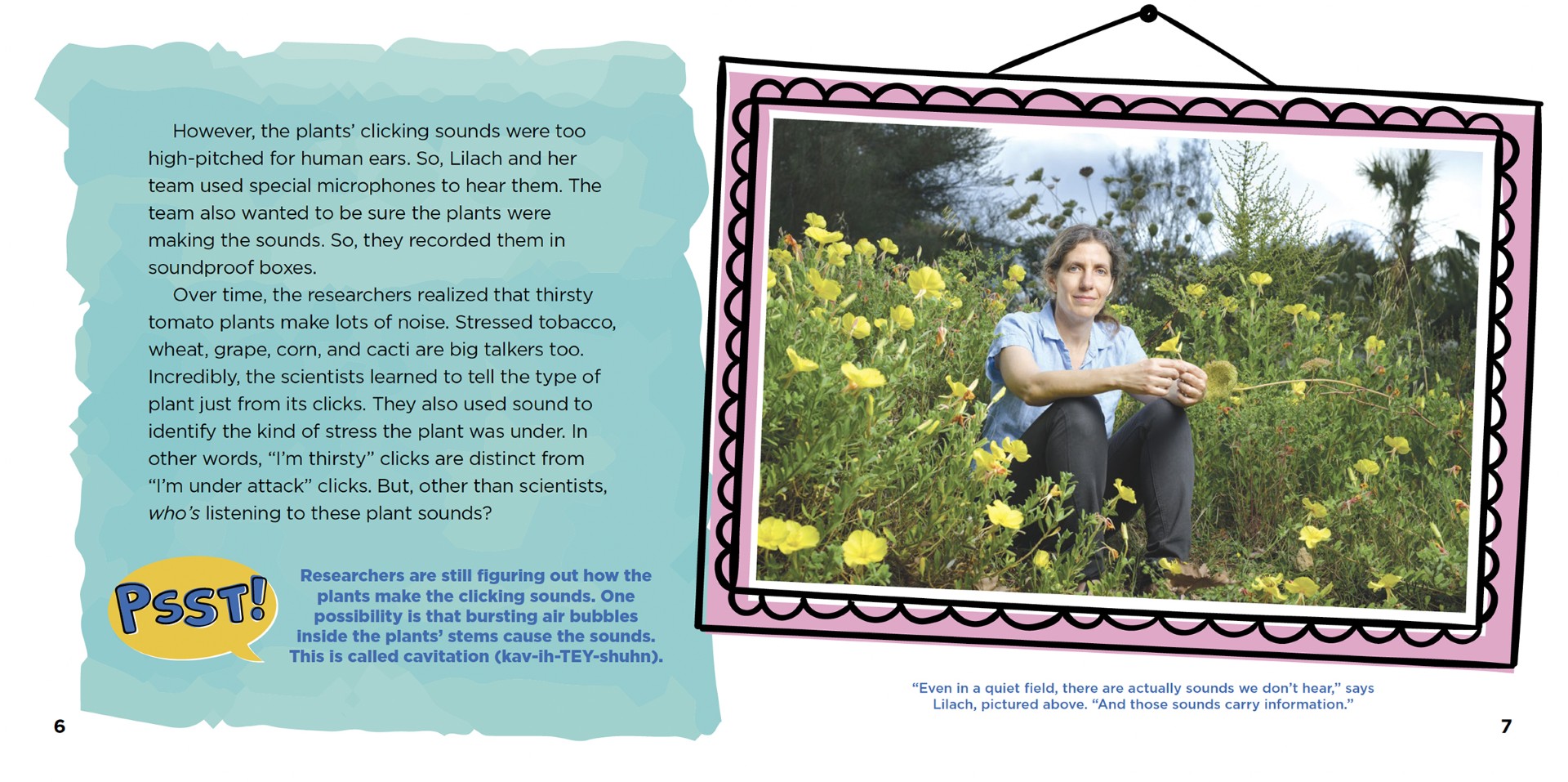
- Ask students to read pages 4 to 7 of Talking Plants.
- Discuss what they read. Explain that plants make specific clicking sounds when they’re under stress. Mention that not all sounds are detectable to human ears. For example, we cannot hear some very high- and low-pitched sounds. Sound signals created by plants fall into this category. So, scientists use listening devices to help them hear plant sounds.
- Ask students to imagine how plants create different clicking sounds. Describe cavitation, which is the formation and bursting of air bubbles in plant stems.
- Then explore with the class what the plant sounds mean. For example, plants click when they need water, their stems are being cut, or if they’re being attacked by insects. Ask students to imagine what else plants might be saying. For instance, could the clicks be a warning to other plants that danger is nearby?
Step 2: Design a translator
- Ask students to draw or describe a new device that could detect and interpret plant sounds. Have them explain the sensors, microphones, or other features it might use. Encourage them to think about how the device would translate plant sounds into messages people can understand. Students could also draw or describe engineered plants that communicate using visual or other signals.
- Share with students that scientists are currently developing “reporter plants” that change color or glow when they need water or detect pollutants.
Step 3: Identify benefits
- Pose the following question to students: If farmers could hear plants making different distress calls and understand what they mean, how would that help them? For example, farmers would know if crops need more or less water, leading to higher crop yields and less water use. Also, if farmers knew which plants were being attacked by insects, they could target those plants, thereby reducing pesticide use.
- Imagine if trees in a forest could tell us about poor air quality levels and how this might affect how we care for the environment.
- What can we learn about plants by listening to them—and what does this reveal about people and our behaviors? Understanding plant communication is critical for the future of environmental health and global food security.
Bonus
There’s a “Plant Talk Experiment” on pages 28 and 29 of Talking Plants. A classroom guide is also available on my website. If you use my book in your classroom, kindly let me know—thanks a bunch!
Featured image credit: Provided by Joyce Markovics

Joyce Markovics writes children’s nonfiction books on topics ranging from killer plants, animal mummies, and space junk to women writers, protest marches, and Black filmmakers, most recently through her book development company, Bowerbird Books. She has published more than 500 titles and has received starred reviews from Booklist as well as awards from the National Science Teaching Association. Several of her books have also been chosen as Junior Library Guild Gold Standard Selections. Her latest books are Talking Plants and a six-book series called “Fungi Power” about the many uses of fungi. When Joyce isn’t researching and writing, she cleans old gravestones, collects weird stuff, and serves on a placemaking committee. She lives in a historic house in Ossining, New York. Check out her work and what she’s up to at: bowerbirdbooks.com, IG @joyceiswriting, and Susan Schadt Press.





Leave a Reply
Your email is safe with me.