

GUEST BLOGGER KIRSTEN W. LARSON
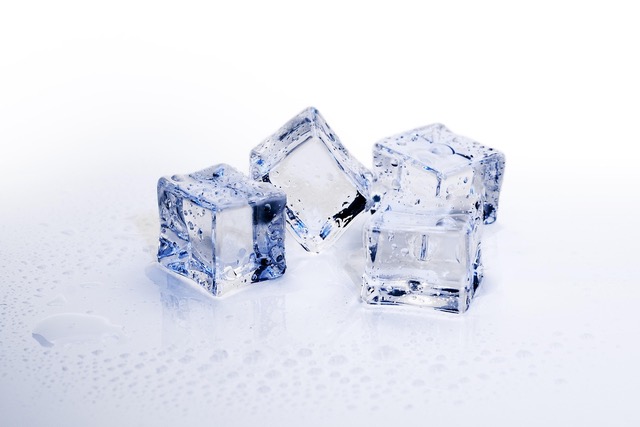
Engaging students in scientific observation can be as simple as exploring ice cubes. In my latest book, This Is How You Know, illustrated by Cornelia Li (Little, Brown Books for Young Readers, 2025), readers are invited to indulge their natural curiosity and become scientists. The book encourages kids to observe the world carefully, to notice behavior, patterns, and phenomena, to ask questions about what they notice, and to plan investigations. The lesson below reinforces this “notice and wonder” framework to help students connect careful observation with writing (in their science notebooks) and scientific thinking.

Materials
- Two ice cubes per group
- A black plate or piece of black construction paper (per group)
- A white plate or piece of white construction paper (per group)
- Science notebooks or journals (one per child)
- Pencils (one per child)
Procedure
- Explain the “Notice and Wonder” strategy to students:
- Notice: Record detailed observations using all senses
- Wonder: Write down questions inspired by those observations, starting with the words, “I wonder…”
- Outside, have each team of students place one ice cube on the black surface and one on the white surface, in direct sunlight. Allow students to observe both ice cubes over several minutes. Rather than stepping in to explain what’s happening, encourage them to notice any similarities and differences between the two ice cubes.
- Ask students to record their observations in their notebooks.
- Have them divide a page into two columns – Notice (on the left) and I wonder (on the right).
- In the Notice column, they might describe the ice cube’s size, shape, or melting pattern.
- In the Wonder column, they could ask questions like, “Why does the ice melt faster on the black surface?” or “Where dos the water go as the ice melts?”
- Facilitate a discussion in small groups or as a class. Invite students to share observations and questions, making connections between what they see and what they know about sunlight, heat absorption, and color.
Optional extensions
- Ask students to consider how they might test out some of their ideas, jotting these ideas at the bottom of the page. If you have time, let students pursue their experiments.
- To reinforce what students have learned, read This Is How You Know aloud, highlighting examples of noticing details and asking questions and wondering and using those wonderings to shape investigations and learn something new, which is what the students have just done.
STEM-language arts connection
This activity integrates STEM and language arts through the use of science notebooks. Communication is an important component of scientific inquiry, and notebooks encourage student to observe with all their senses, to frame their questions, and to explain their discoveries.
Conclusion
Using This Is How You Know as a model, students can see that noticing details and asking questions is the first step in both science and literacy. By observing ice cubes on black versus white surfaces, they not only engage in inquiry-based learning but also strengthen their writing skills, learning to communicate what they see and wonder.
Featured image credit: Image by Bruno from Pixabay

Kirsten W. Larson writes nonfiction for children, exploring science, history, and the natural world. Her latest picture book, This Is How You Know (Little, Brown Books for Young Readers, 2025), inspires young readers to notice and question the world around them. Learn more at www.kirstenwlarson.com and follow her on Instagram or sign up for her newsletter.




Leave a Reply
Your email is safe with me.