
• Home
  • Books
    • Beatrice and the Nightingale
    • Sharks Unhooked: The Adventures of Cristina Zenato, Underwater Ranger
    • Giant Rays of Hope: Protecting Manta Rays to Safeguard the Sea
    • A River’s Gifts: The Mighty Elwha River Reborn
    • Planet Ocean
    • Eavesdropping on Elephants
    • Neema’s Reason To Smile
    • Zoo Scientists to the Rescue
    • Sea Otter Heroes: The Predators That Saved an Ecosystem
    • Plastic, Ahoy! Investigating the Great Pacific Garbage Patch
    • Ebola: Fears and Facts
    • Jingle the Brass
    • Nugget on the Flight Deck
    • Surviving Animal Attacks
    • Elite Operations series
    • Energy Lab series
    • QuickReads Fluency Library
    • Books for English language-learners
    • Writers write all kinds of things
  • Author Visit Programs
    • FAQs
    • Calendar
  • Blog
  • Educator Resources
    • Teach the Hope
    • Earth Day Every Day newsletter archive
    • Teacher Guides
    • STEM + Literacy Activities
    • LitLinks
    • KidLit creators who make kids want to read
  • Writer Resources
    • Writing Classes
    • Manuscript or Proposal Critiques
    • How I got my start
  • Who is Patricia Newman?
  • Contact
    • Stay In Touch
    • Earth Day Every Day newsletter archive
Patricia NewmanPatricia Newman
Sibert Honor Children's Book Author & Environmentalist
  • Home
  • Books
    • Beatrice and the Nightingale
    • Sharks Unhooked: The Adventures of Cristina Zenato, Underwater Ranger
    • Giant Rays of Hope: Protecting Manta Rays to Safeguard the Sea
    • A River’s Gifts: The Mighty Elwha River Reborn
    • Planet Ocean
    • Eavesdropping on Elephants
    • Neema’s Reason To Smile
    • Zoo Scientists to the Rescue
    • Sea Otter Heroes: The Predators That Saved an Ecosystem
    • Plastic, Ahoy! Investigating the Great Pacific Garbage Patch
    • Ebola: Fears and Facts
    • Jingle the Brass
    • Nugget on the Flight Deck
    • Surviving Animal Attacks
    • Elite Operations series
    • Energy Lab series
    • QuickReads Fluency Library
    • Books for English language-learners
    • Writers write all kinds of things
  • Author Visit Programs
    • FAQs
    • Calendar
  • Blog
  • Educator Resources
    • Teach the Hope
    • Earth Day Every Day newsletter archive
    • Teacher Guides
    • STEM + Literacy Activities
    • LitLinks
    • KidLit creators who make kids want to read
  • Writer Resources
    • Writing Classes
    • Manuscript or Proposal Critiques
    • How I got my start
  • Who is Patricia Newman?
  • Contact
    • Stay In Touch
    • Earth Day Every Day newsletter archive
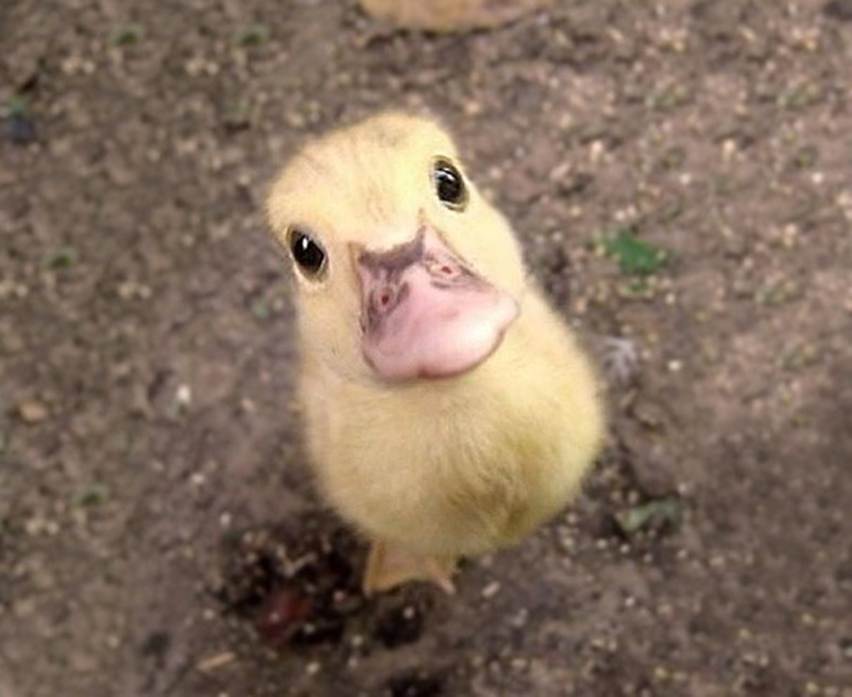
Duckling-License:-CC-BY-NC-SA-2.0-Ellery Chen

LitLinks: How to move students from general to specific vocabulary

January 14, 2026 LitLinks, LitLinks-Grade 3-5, LitLinks-Grade 6-8, LitLinks-High School No Comments
LitLinks Logo-2022

GUEST BLOGGER CARRIE A. PEARSON


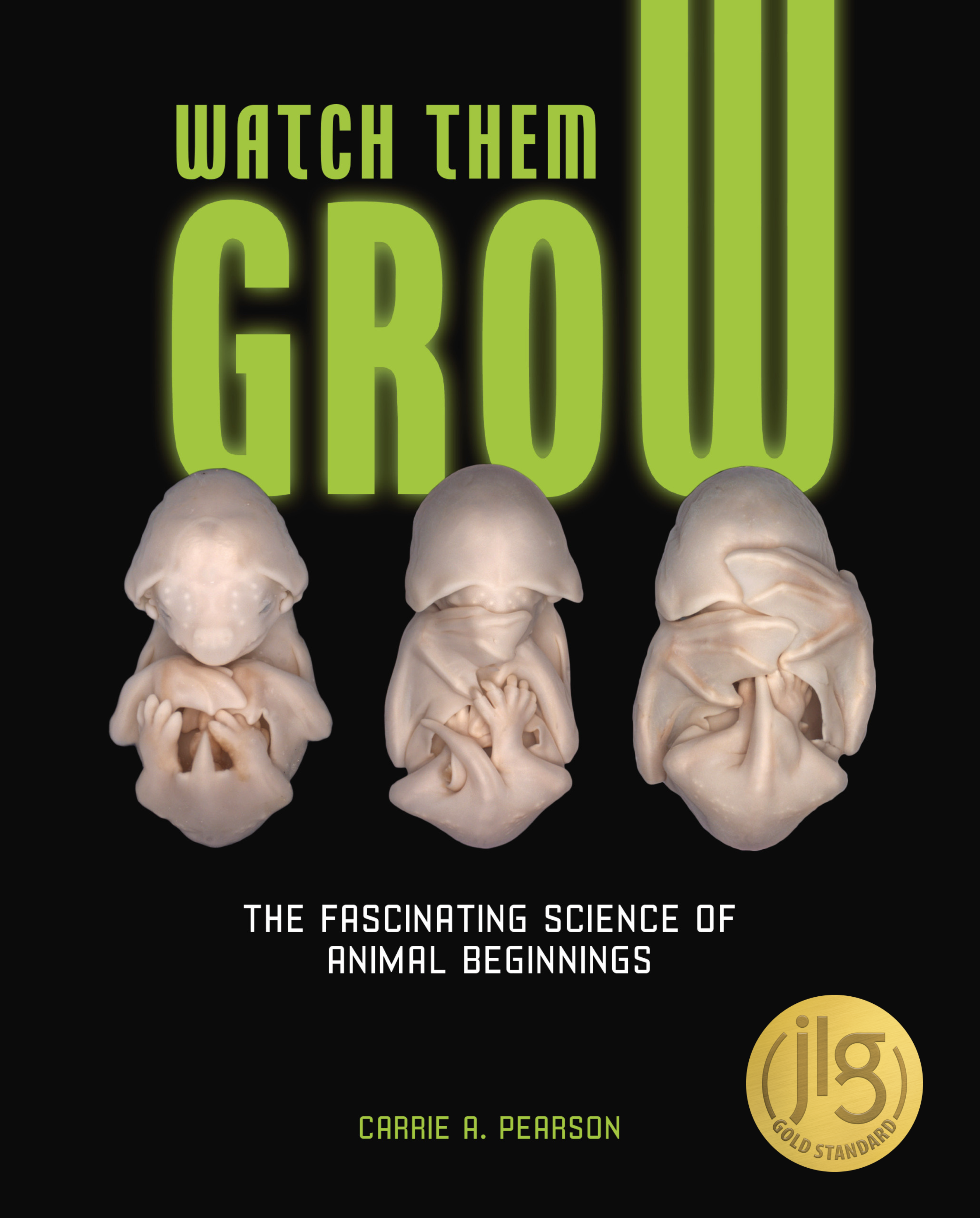
Growing up, I was teased for using ‘big words.’ To me, certain words just fit my purpose better, and yes, sometimes my choices were superior. This is especially true in science. A small shift in language can change meaning, accuracy, and understanding. Watch Them Grow: The Fascinating Science of Animal Beginnings, my latest authored nonfiction book, gives students repeated, meaningful exposure to biology vocabulary. This helps students move from general terms to specificity, a foundational skill in both STEM and language arts.
WATCH-THEM-GROW-cover

Domain-specific vocabulary

Watch Them Grow, a middle-grade photographic nonfiction book, introduces and reinforces developmentally accurate biology terms, including:

  • embryo
  • fetus
  • gestation
  • nourishment

Readers of the book see that different subjects require different kinds of words. Just as poetry uses imagery and math uses symbols, science relies on specific terminology to communicate ideas clearly. This concept builds content-area literacy and confidence in reading nonfiction texts.

Everyday language vs. scientific language exercise

In this exercise, students explore how casual phrases are often imprecise, whereas scientific terms are particular.

  • Create a two-column vocabulary chart with just the bold headings shown in the example below
  • Read Watch Them Grow aloud, noting precise language.
  • Facilitate as students add examples in the chart, such as:
Everyday LanguageScientific Language
Baby growingGestation
Baby inside momEmbryo
Safe place to growEgg / uterus / pouch
Gets foodNourished
Comes outHatches / is born

Then present two sentences describing the same event, such as:

  • “The baby grows inside its mom.”
  • “The embryo develops during gestation inside the uterus.”

Students can discuss:

  • Which sentence is more precise?
  • What information is added by the scientific words?
  • In what context might each sentence be appropriate to use?

Side benefit: this exercise also builds metalinguistic awareness, since students think about language, not just use it.

Follow-up activity: Build a precision ladder

Create a “word ladder” from general to precise:

  • animal → baby animal → embryo → embryo during gestation → embryo during gestation inside the uterus

This activity visually demonstrates how precision builds understanding step by step.

Takeaways

These activities help students understand why scientists choose specific words, how meaning becomes more precise, and that “big words” often replace many smaller, vaguer ones—just as I suspected while growing up. Vocabulary isn’t about harder words; it’s about clarity.

Featured image credit: CC BY-NC-SA 2.0 Ellery Chen

Carrie-A.-Pearson-headshot
Credit: PC Daniele Carol Photography

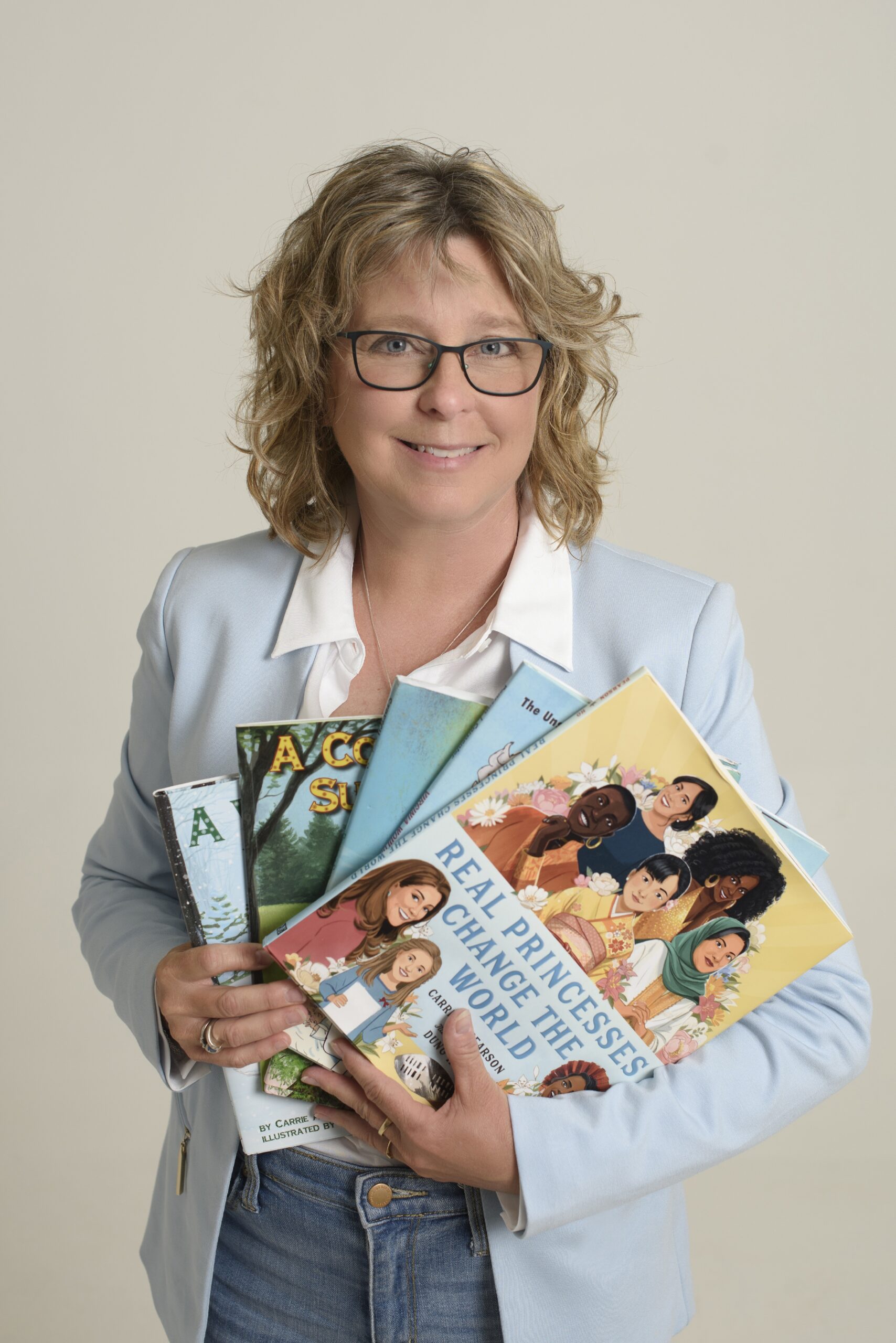
Carrie A. Pearson writes nonfiction for young readers, connecting them with science, nature, and hidden histories. Her latest authored book, Watch Them Grow: The Fascinating Science of Animal Beginnings (Millbrook Press/Lerner Books 2025), offers a window into what happens before animals are born and how they grow what they need to survive on their own. Find out more about Carrie and her work at www.carriepearsonbooks.com. For additional classroom extensions and activities, visit her on Pinterest.
Click for more LITLINKS STEM + Literacy activities

Tags: STEM+LiteracySTEM+Literacy Natural Science
No Comments
Share
0

You also might be interested in

Krill-experiment-with-rice

LitLinks: An easy way to find out how baleen whales eat

Apr 17, 2024

GUEST BLOGGER CAROLINE ARNOLD In a few days, on April[...]

"Arctic-Tern-on-Farne"-by-LindsayRs-is-licensed-under-CC-BY-SA-2.0

LitLinks: How to study geography with tern migration

Jan 8, 2025

GUEST BLOGGER DONNA McKINNEY In Tiny Tern Takes Flight, readers[...]

LitLinks: Measure twice, cut once–measurement as a math and science skill

LitLinks: Measure twice, cut once–measurement as a math and science skill

Oct 13, 2021

GUEST BLOGGER LAURA PURDIE SALAS In my picture book If[...]

Leave a Reply

Your email is safe with me.
Cancel Reply

Click the logo to have LitLinks delivered to your inbox

LitLinks Logo-2022

Author Visits

https://youtu.be/zj6n-RFOcPA?si=8WCTnyXbTiwYumYo
https://youtu.be/ziN0UrqaDYI

Earth Day Every Day Newsletter Archive

Earth-Day-Every-Day-newsletter-banner

Post Categories:

Blog Archive

Top Posts

LitLinks: How to share our ocean connections with kids and teens

LitLinks: Let’s learn to decode photos in STEM nonfiction

LitLinks: How Elephants Can Make Your Sound Unit ROAR!

LitLinks: Easy ways to build students’ science communication skills

Proof that science connects kids to the larger world

Recent Comments

  • Margaret Quinlin on LitLinks: Exploring time and sequence in nature and narrative What a creative exercise for students!
  • Sue Heavenrich on LitLinks: Great ideas to help students practice the art of asking questions Great post, Jessica! I love the way the "I notice"…
  • Lisa L. Owens on LitLinks: 4 ways Pluto can supercharge imagination Thanks for hosting me, Patricia!
Empowering young readers to act

Latest Blog Posts

  • LitLinks: How to move students from general to specific vocabulary
    LitLinks: How to move students from general to specific vocabulary
  • LitLinks: How poetry helps students ‘see’ the ocean deep
    LitLinks: How poetry helps students ‘see’ the ocean deep
  • LitLinks: How a real-world challenge can help build informational writing skills
    LitLinks: How a real-world challenge can help build informational writing skills

Connect with me on social media

Action Shots

Check out the STEM Tuesday Blog

© 2026 — Patricia Newman

  • Home
  • Books
    • Beatrice and the Nightingale
    • Sharks Unhooked: The Adventures of Cristina Zenato, Underwater Ranger
    • Giant Rays of Hope: Protecting Manta Rays to Safeguard the Sea
    • A River’s Gifts: The Mighty Elwha River Reborn
    • Planet Ocean
    • Eavesdropping on Elephants
    • Neema’s Reason To Smile
    • Zoo Scientists to the Rescue
    • Sea Otter Heroes: The Predators That Saved an Ecosystem
    • Plastic, Ahoy! Investigating the Great Pacific Garbage Patch
    • Ebola: Fears and Facts
    • Jingle the Brass
    • Nugget on the Flight Deck
    • Surviving Animal Attacks
    • Elite Operations series
    • Energy Lab series
    • QuickReads Fluency Library
    • Books for English language-learners
    • Writers write all kinds of things
  • Author Visit Programs
    • FAQs
    • Calendar
  • Blog
  • Educator Resources
    • Teach the Hope
    • Earth Day Every Day newsletter archive
    • Teacher Guides
    • STEM + Literacy Activities
    • LitLinks
    • KidLit creators who make kids want to read
  • Writer Resources
    • Writing Classes
    • Manuscript or Proposal Critiques
    • How I got my start
  • Who is Patricia Newman?
  • Contact
    • Stay In Touch
    • Earth Day Every Day newsletter archive
Prev