


GUEST BLOGGER MARSHA DIANE ARNOLD
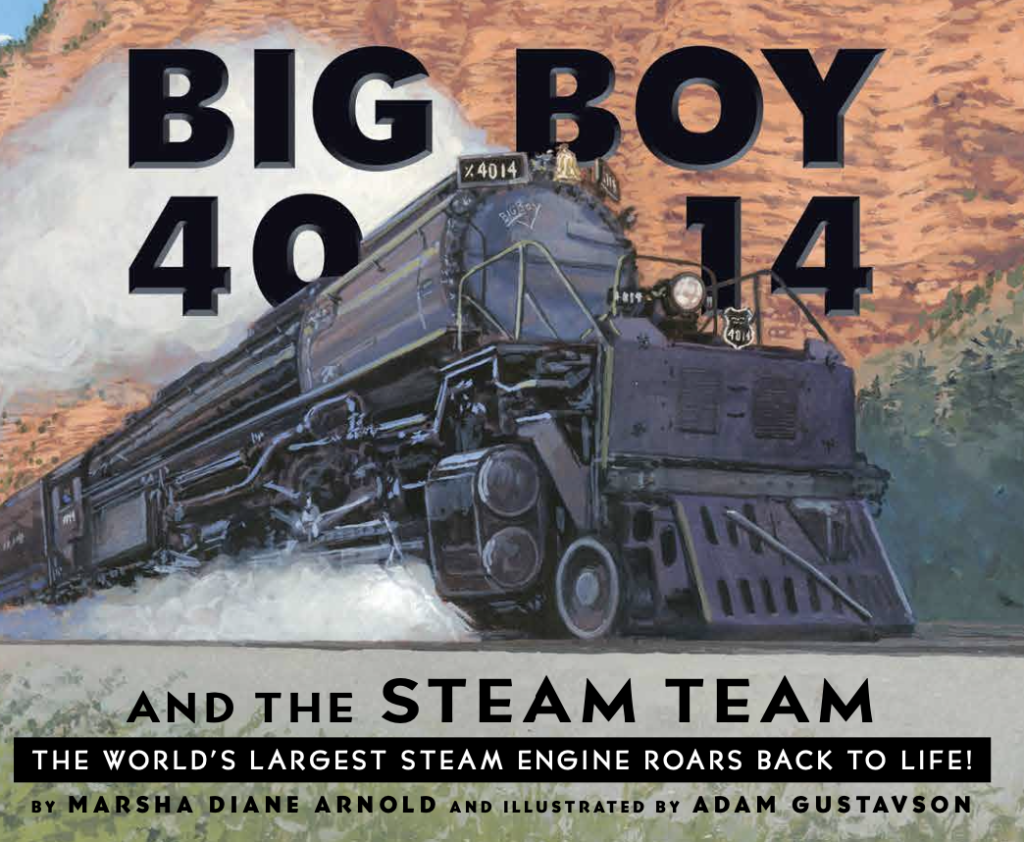
When I was a child I loved hearing the train’s whistle across the fields. I was always fascinated by trains so when I heard the story of how Big Boy 4014 was rescued, restored, and put back on railroad tracks, I wanted to share it with young readers in a narrative nonfiction picture book. This project-based lesson invites students in grades 3–5 to explore real-world engineering challenges while practicing informational writing skills. Students examine how teamwork, planning, and step-by-step problem-solving made the “impossible” possible—and then write to explain that process to others.
Materials
- Big Boy 4014 and the Steam Team
- Chart paper or whiteboard and markers
- Drawing paper or notebooks
- Pencils and colored pencils
- One sheet of large poster paper per student
Step 1: Read and focus
Read Big Boy 4014 And The Steam Team aloud.
Define restoration: Restoration means repairing and rebuilding something old so it can work again.
Ask the students to listen for:
- Problems the Steam Team faced.
- Steps they took to solve them.
Tell students they will write a short explanation showing how Big Boy 4014 was restored, using sequencing and cause-and-effect language.
Step 2: Discuss the challenge of restoration
Ask students the following questions and record responses for all to see, under the heading Why Restoration Seemed Impossible:
- Where was Big Boy 4014 when the story begins?
- What condition was she in?
- Why did people believe she would never run again?
- What details show how difficult the task would be?
Explain that problem-solvers begin by identifying challenges before creating solutions.
Guide students to identify the problems/challenges such as:
- No nearby train tracks
- Big Boy’s enormous size and weight
- Worn-out or missing parts
- Outdated technology
- A deadline for the Golden Spike Celebration
Step 3: Sequence the restoration
Explain that restoring Big Boy required many steps completed in the correct order.
Work together to identify and sequence the major restoration steps. Record these on chart paper:
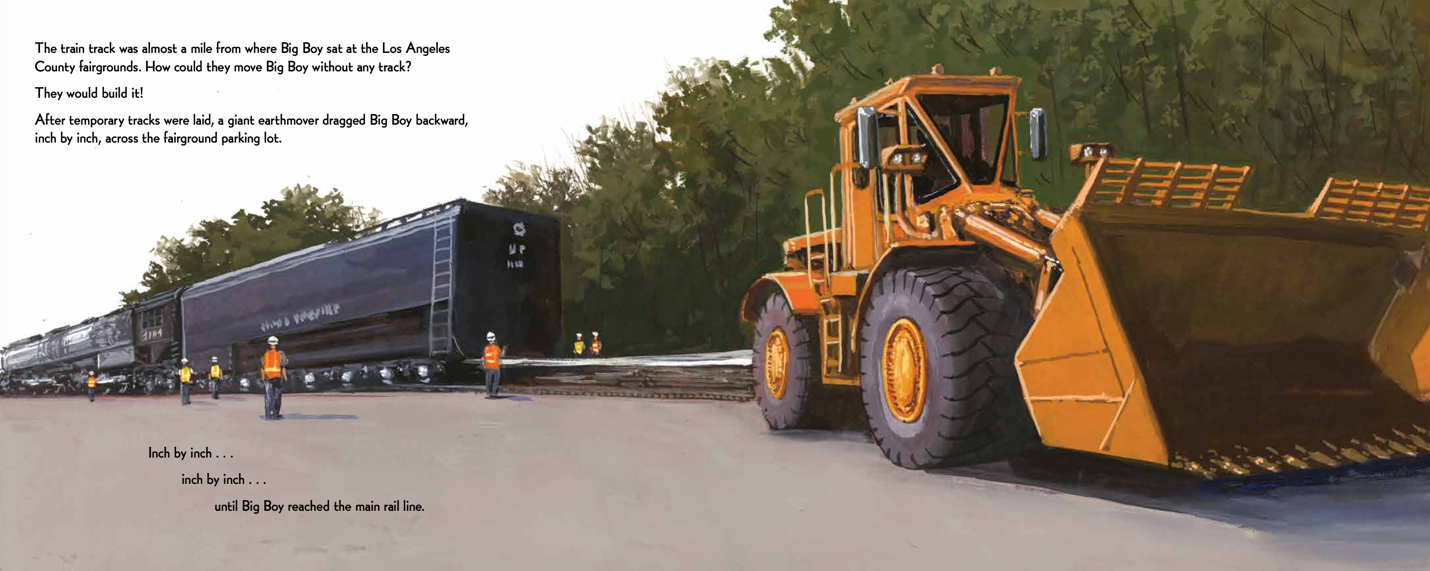
- Laying temporary track in order to move Big Boy
- Moving Big Boy inch by inch to the main rail line
- Transporting her to Cheyenne, Wyoming
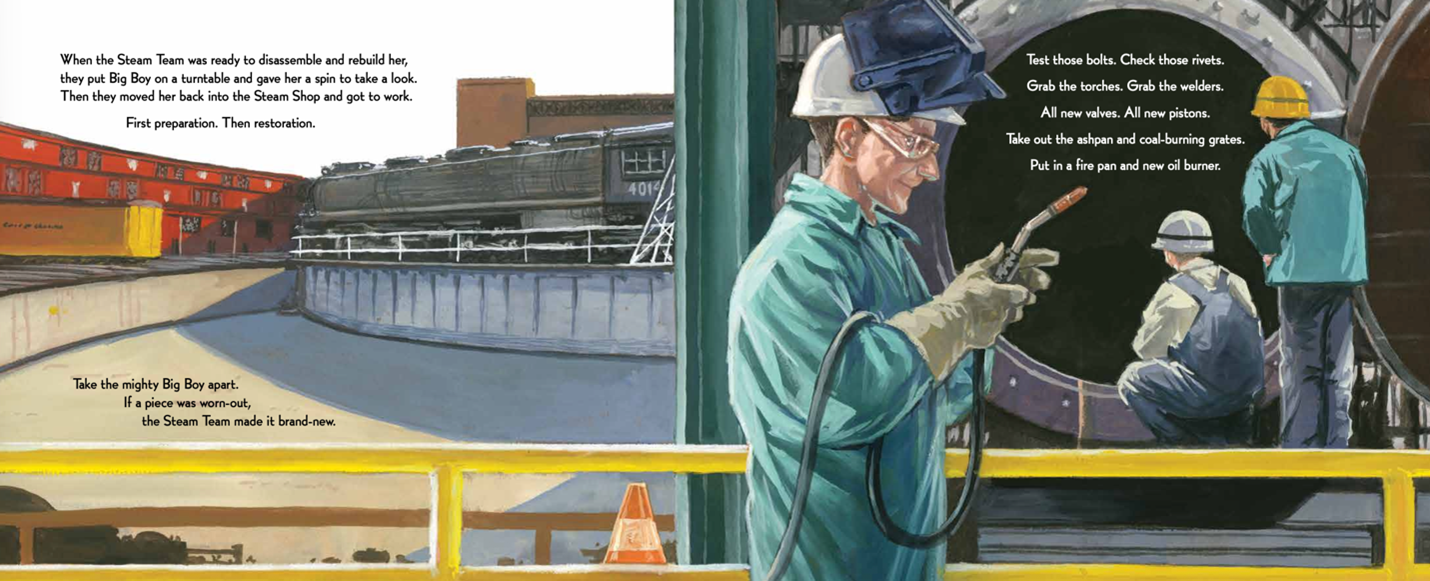
- Taking the locomotive apart
- Repairing or rebuilding worn parts
- Reassembling and testing the locomotive
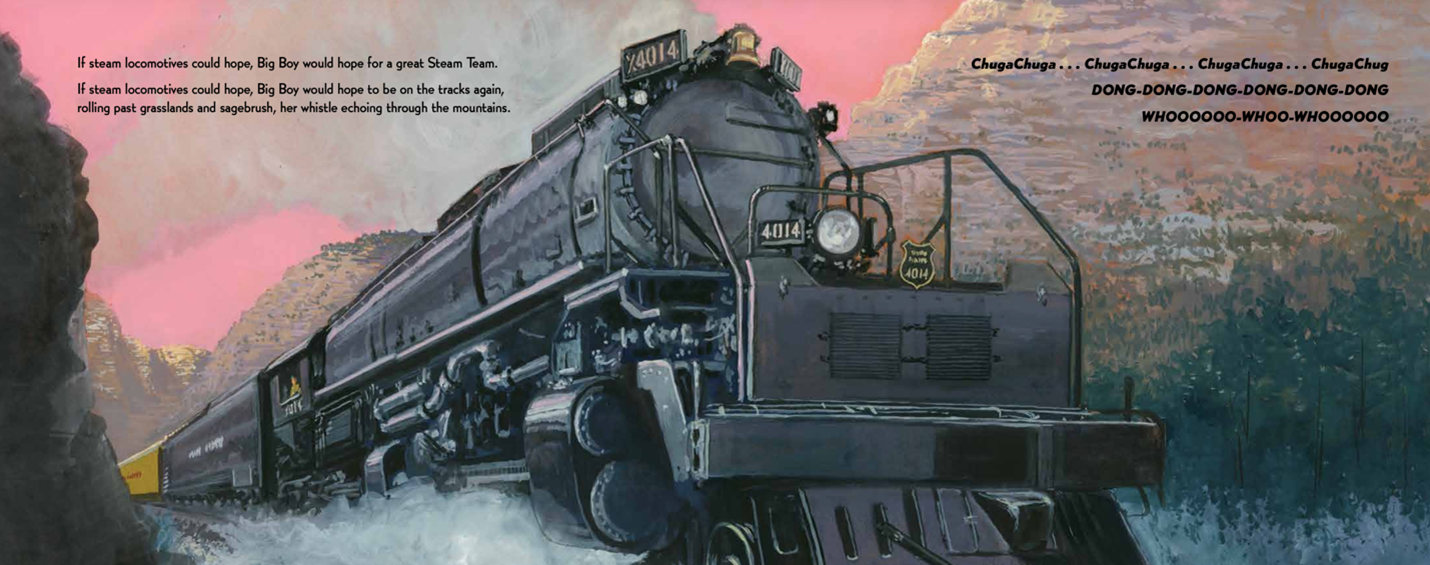
- Running Big Boy under her own power again
Ask:
- Why did the team need to move Big Boy before restoring her?
- Why couldn’t steps be skipped?
- What might happen if a step was rushed or ignored?
Step 4: How STEM and Teamwork work together
Explain that restoring Big Boy required science, technology, engineering, math—and teamwork across all of them.
Discuss:
- Science: Heart turns water into steam. Steam creates pressure that moves the train.
- Technology: Tools and systems needed to repair and test parts.
- Engineering: Parts had to be designed, repaired, and tested.
- Math: Measurements helped make sure parts moved at the right time and with the right amount of pressure. Ed Dickens, the engineer, used math to determine if Big Boy could run on tracks and under bridges built for smaller trains.
Explain that no one person could solve all these problems. Different people worked on different parts of Big Boy. Big Boy was restored because they worked together.
Ask students to complete this sentence orally or in writing:
Restoring Big Boy required teamwork because…
Step 5: Write and create
Ask students to create a “Big Boy 4014 Restoration Display” that teaches others how the locomotive was restored.
The display should include:
- A title
- A numbered sequence of restoration steps
- At least one cause-and-effect sentence (using words like because, so, or as a result)
- One sentence explaining why teamwork was essential
Step 6: Share and reflect
Invite students to share their displays.
Ask students to respond to classmates’ work using these prompts:
- One thing you learned
- One thing that surprised you
- One place where the explanation was especially clear
Close with discussion:
- How did writing help you understand the restoration better?
- Why was teamwork as important as engineering knowledge?
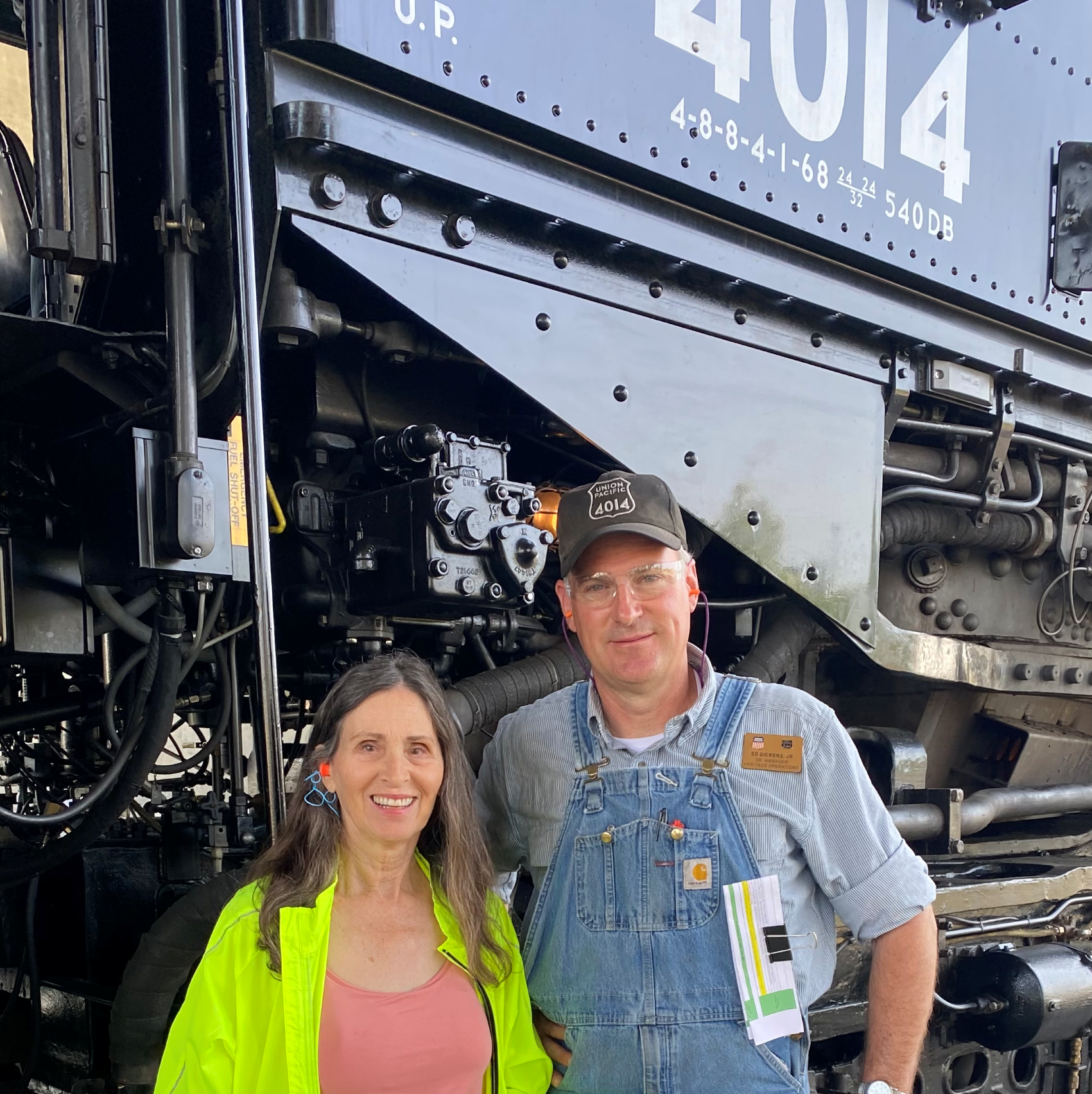
Marsha Diane Arnold is the award-winning author of twenty-four picture books with over one million books sold. Her books include Big Boy 4014 and the Steam Team, Lights Out, Galápagos Girl, and Badger’s Perfect Garden. Her work has received honors such as Smithsonian Notable, the Green Prize for Sustainable Literature, John Burroughs Award for Nature Writing, and inclusion in Dolly Parton’s Imagination Library. Marsha enjoys sharing her love of story through school visits, manuscript consultations, and reading to her four grandchildren. Website Instagram Facebook







Leave a Reply
Your email is safe with me.