


GUEST BLOGGER ALISHA GABRIEL
Are you ready to craft concrete poems? This lesson is for you!
Did you know that there’s more to fungi than mushrooms? All mushrooms are fungi, but not all fungi produce mushrooms. About 20,000 species of mushrooms have been discovered and named, but scientists estimate that there are at least 1.5 million species of fungi, probably more. So even though mushrooms are highly visible, they probably represent less than 1% of the fungi on our planet!
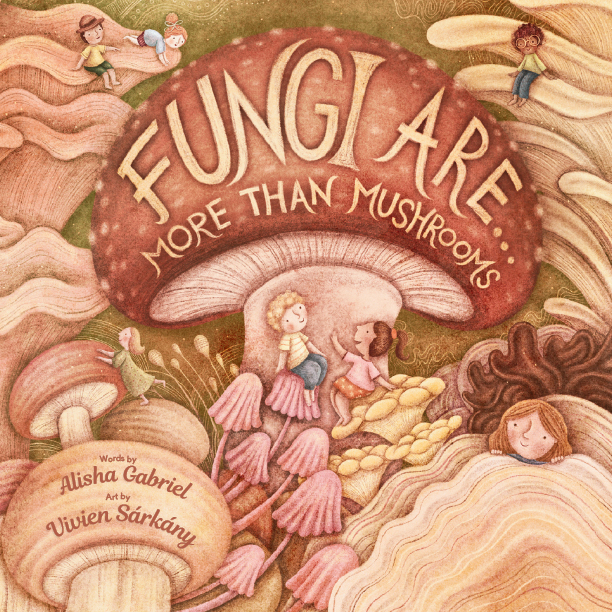
My picture book, Fungi are…More Than Mushrooms, uses a layered approach to introduce different aspects of fungi, including how spores disperse, fungi grow, animals find food, bees heal themselves, and trees talk to one another, all because of this fascinating Kingdom of organisms. That leads us to the first activity.
Sentence stem writing prompt
Fungi are…More Than Mushrooms introduces a unique text structure in the first, simple layer. It begins, “Fungi are travelers. They burst, fling, and grab.” I started this way to plant the idea that fungi may look rooted in place, but different species spread their spores to new places in unique ways. The first layer continues with this structure of making a statement followed by three examples, and the second layer delves deeper into the topic.
Since some students may be more successful in their writing when using sentence stems, you may wish to use this text structure as a writing prompt. Encourage students to choose a topic they know well and focus on a narrow aspect of the topic. Ask them to make a statement and to come up with three related words about it. All three words could be verbs, such as the first example from the book, or they might use nouns. Notice in the example below that adding the word “need” makes a big difference!
Sentence stem: ___ are/is ___. They ___, ___, and ___.
Ex. Fungi are travelers. They burst, fling, and grab.
Sentence stem: ___ are/is ___. They need ___, ___, and ___.
Ex. Plants are alive. They need water, sunlight, and oxygen.
Shape poems, also known as concrete poems
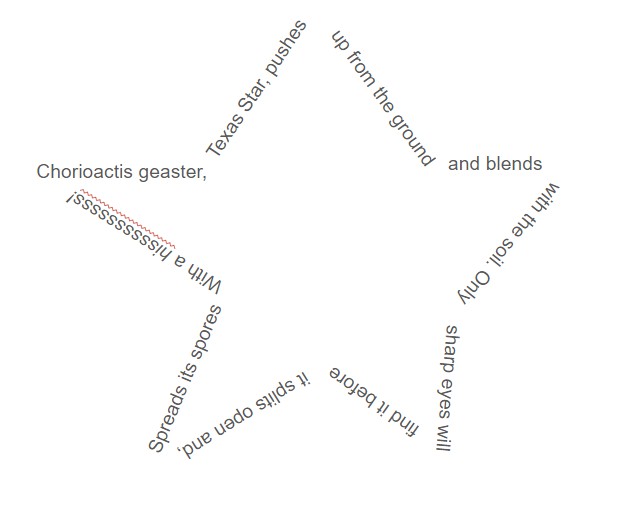
Show students a shape poem and read it aloud. Shape poems can be free verse, which means that they don’t have to rhyme, and the meter does not need to be perfectly paced. It’s more important to use vivid language to describe the topic, and those words should be used to form a specific shape. The shape can outline an object, leaving the center blank, or the words can fill the space within the shape.
Ask students to brainstorm the shape they will use. Since fungi are integral to our world, the shapes could be a loaf of bread, a home, a tree, a nest, and so much more. Encourage students to focus their words on the fungi that fits the shape they’ve chosen. When finished, post the poems and allow the students to do a gallery walk to view the finished products.
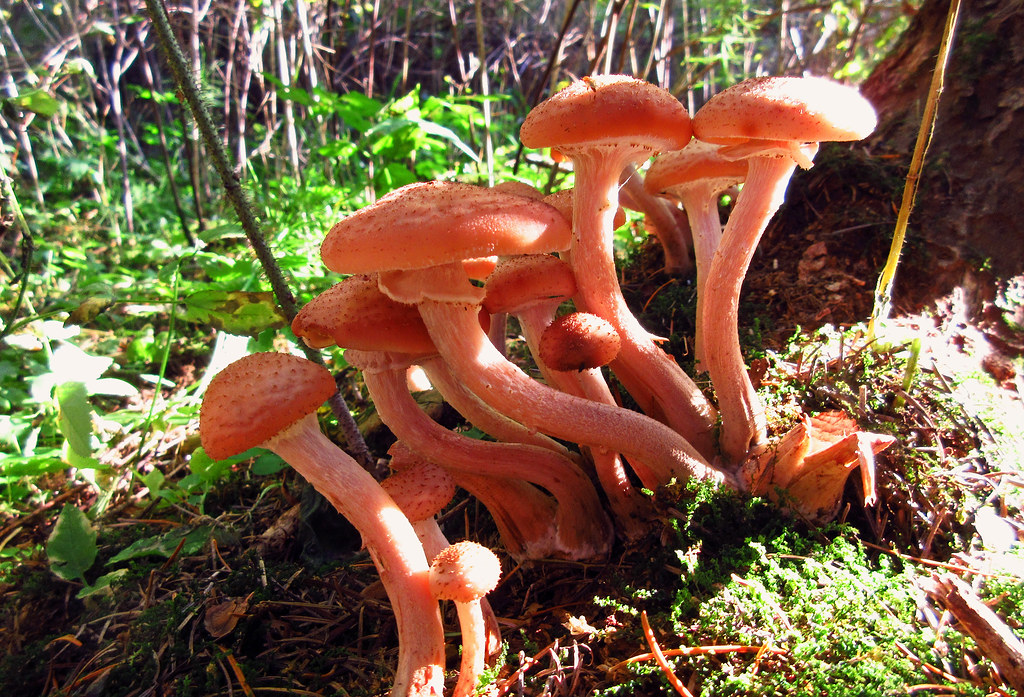
Featured image credit: “Honey fungi study” by AzIbiss is licensed under CC BY-NC 2.0.
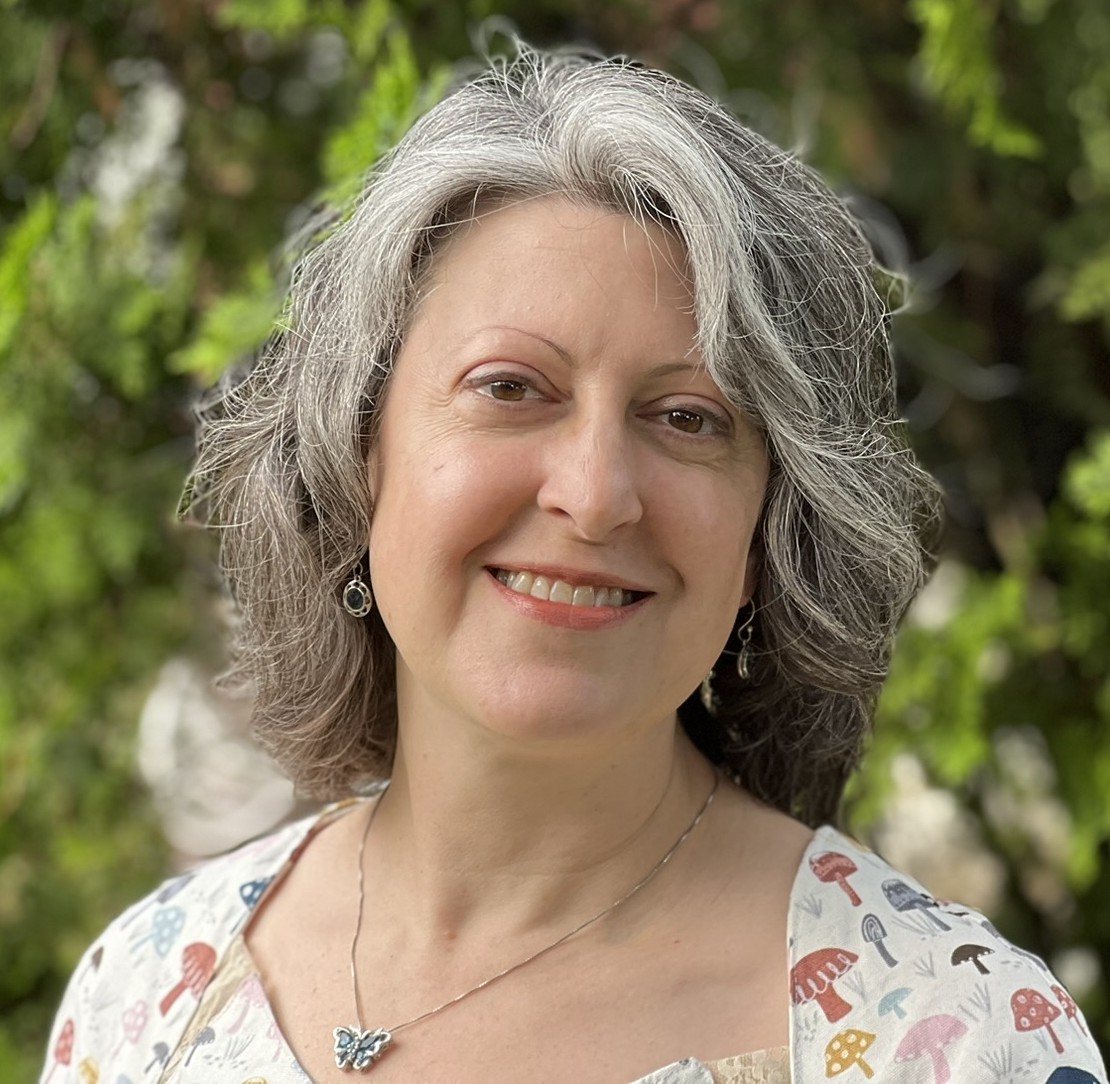
Alisha Gabriel is an award-winning children’s book author who loves talking about science and nature! Her co-authored middle grade book, Funky Fungi: 30 Activities for Exploring Molds, Mushrooms, Lichens, and More, won the 2023 AAAS/Subaru SB&F Book Prize for Excellence in Science Books. Her newest picture book, Fungi are…More Than Mushrooms, was a finalist in the 2025 Next Generation Indie Book Awards.
When she’s not teaching, you might find Alisha curled up on the couch with a book, fiddling around in her craft room, or chasing ideas down rabbit holes. With twenty-eight years of teaching under her belt, Alisha provides hands-on presentations for schools, libraries, homeschool groups, and museums. Learn more about Alisha at www.alishagabriel.com. Invite her to speak at your school, library, or event, by reaching out to her booking agent, Authors & More: https://authorsandmore.com/Home.html
Illustrator Vivien Sárkány is an artist based in Budapest, Hungary. She has illustrated several other books for children, including Lovey and Me: Do Everything Together and Paco the Octopus: A Tale of Perseverance.



Leave a Reply
Your email is safe with me.