

• Home
  • Books
    • Beatrice and the Nightingale
    • Sharks Unhooked: The Adventures of Cristina Zenato, Underwater Ranger
    • Giant Rays of Hope: Protecting Manta Rays to Safeguard the Sea
    • A River’s Gifts: The Mighty Elwha River Reborn
    • Planet Ocean
    • Eavesdropping on Elephants
    • Neema’s Reason To Smile
    • Zoo Scientists to the Rescue
    • Sea Otter Heroes: The Predators That Saved an Ecosystem
    • Plastic, Ahoy! Investigating the Great Pacific Garbage Patch
    • Ebola: Fears and Facts
    • Jingle the Brass
    • Nugget on the Flight Deck
    • Surviving Animal Attacks
    • Elite Operations series
    • Energy Lab series
    • QuickReads Fluency Library
    • Books for English language-learners
    • Writers write all kinds of things
  • Author Visit Programs
    • FAQs
    • Calendar
  • Blog
  • Educator Resources
    • Teach the Hope
    • Earth Day Every Day newsletter archive
    • Teacher Guides
    • STEM + Literacy Activities
    • LitLinks
    • KidLit creators who make kids want to read
  • Writer Resources
    • Writing Classes
    • Manuscript or Proposal Critiques
    • How I got my start
  • Who is Patricia Newman?
  • Contact
    • Stay In Touch
    • Earth Day Every Day newsletter archive
Patricia NewmanPatricia Newman
Sibert Honor Children's Book Author & Environmentalist
  • Home
  • Books
    • Beatrice and the Nightingale
    • Sharks Unhooked: The Adventures of Cristina Zenato, Underwater Ranger
    • Giant Rays of Hope: Protecting Manta Rays to Safeguard the Sea
    • A River’s Gifts: The Mighty Elwha River Reborn
    • Planet Ocean
    • Eavesdropping on Elephants
    • Neema’s Reason To Smile
    • Zoo Scientists to the Rescue
    • Sea Otter Heroes: The Predators That Saved an Ecosystem
    • Plastic, Ahoy! Investigating the Great Pacific Garbage Patch
    • Ebola: Fears and Facts
    • Jingle the Brass
    • Nugget on the Flight Deck
    • Surviving Animal Attacks
    • Elite Operations series
    • Energy Lab series
    • QuickReads Fluency Library
    • Books for English language-learners
    • Writers write all kinds of things
  • Author Visit Programs
    • FAQs
    • Calendar
  • Blog
  • Educator Resources
    • Teach the Hope
    • Earth Day Every Day newsletter archive
    • Teacher Guides
    • STEM + Literacy Activities
    • LitLinks
    • KidLit creators who make kids want to read
  • Writer Resources
    • Writing Classes
    • Manuscript or Proposal Critiques
    • How I got my start
  • Who is Patricia Newman?
  • Contact
    • Stay In Touch
    • Earth Day Every Day newsletter archive
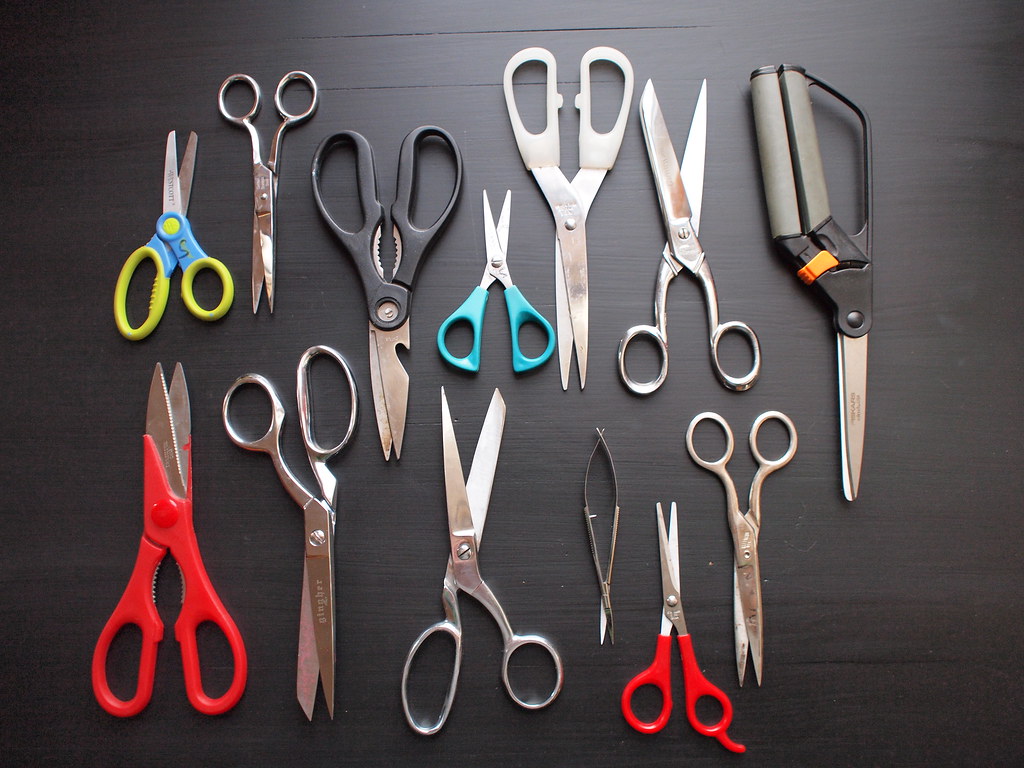
"My-scissor-collection"-by-Bekathwia-is-licensed-under-CC-BY-SA-2.0.

LitLinks: An easy way to explore levers using STEM kidlit

January 21, 2026 LitLinks, LitLinks-Grade 3-5, LitLinks-Grade 6-8, LitLinks-Grade K-2 No Comments
LitLinks Logo-2022

GUEST BLOGGER CHRISTINE VAN ZANDT

Legendary-Life-Story-of-the-Lever-cover

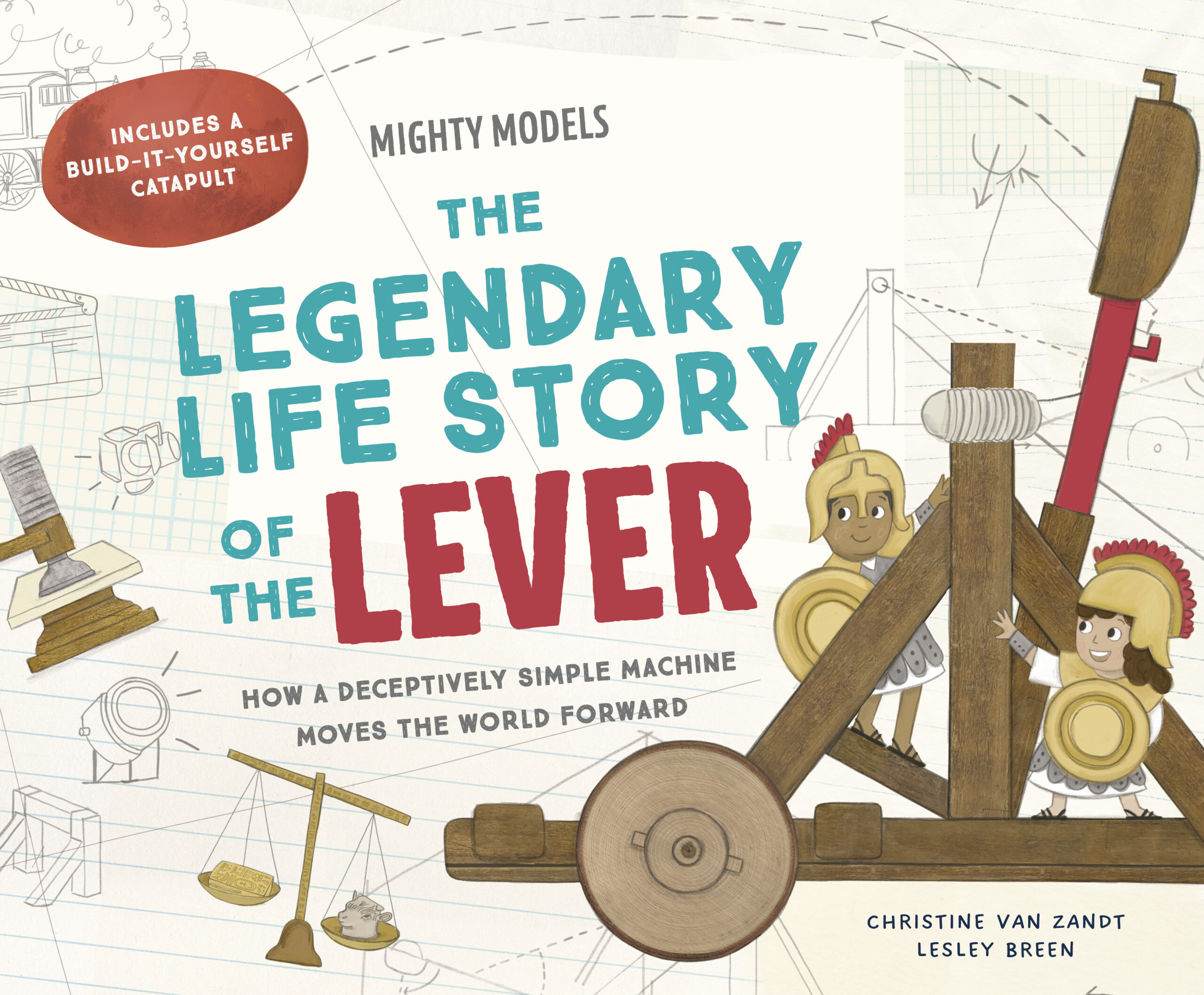
To help make tasks easier, people use simple machines such as levers. My book, The Legendary Life Story of the Lever: How a Deceptively Simple Machine Moves the World Forward, features levers used throughout history. For example:

  • Ice Age: Levers propelled spear thrower farther and faster.
  • Ancient Egypt: As a beam on a balance scale, levers helped weigh items at marketplaces.
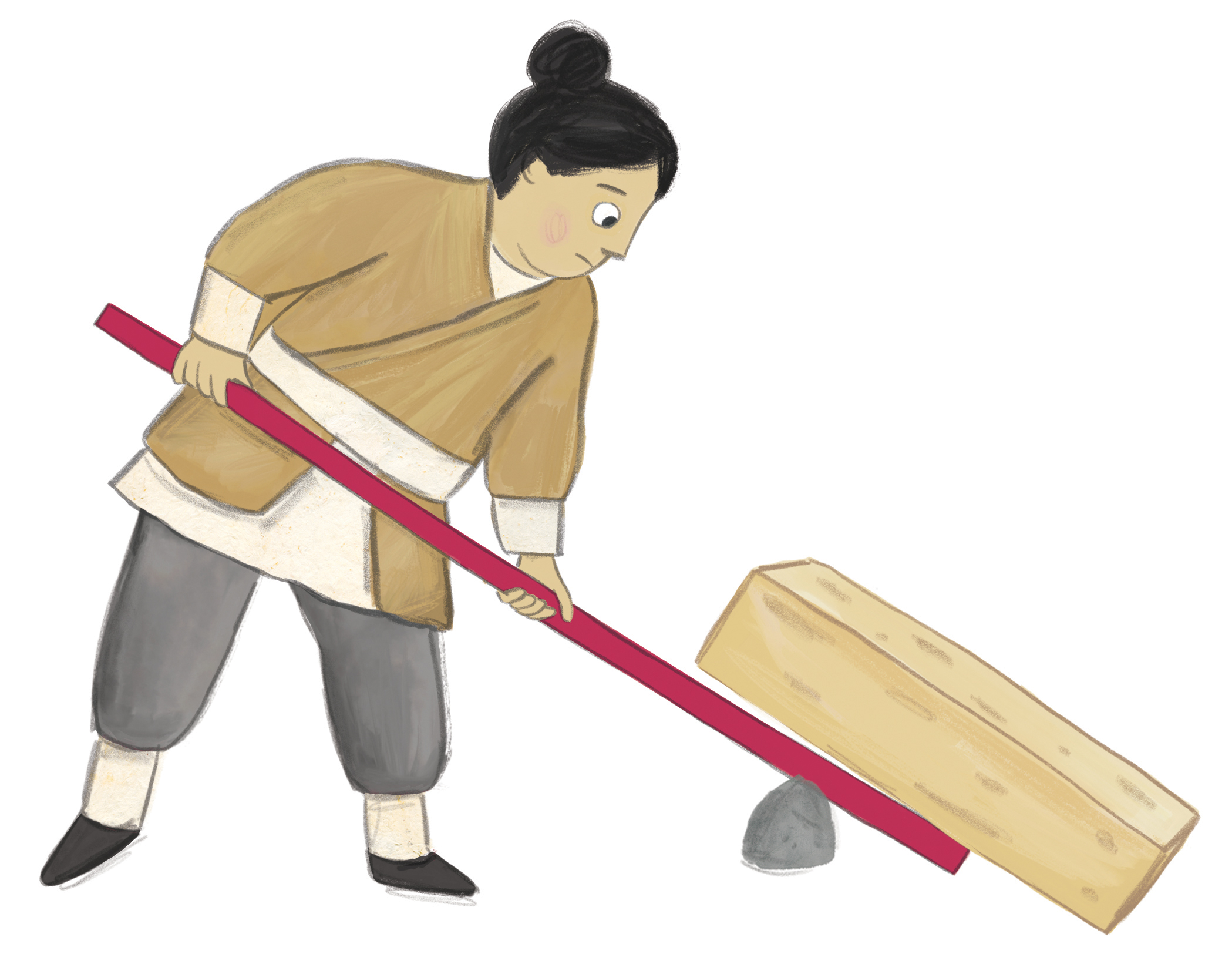
  • Ancient China: As a pole, levers helped move rocks to build the Great Wall of China.
  • Ancient Greece: As the throwing arm of a catapult, levers were used in battles. An easy-to-build model of a catapult is included in my book.
  • The Renaissance: In the printing press, cranking lever turned a screw that then inked the paper.
  • The Tudor Period: A drawbridge, also known as a “bascule bridge” (the French word meaning “seesaw”). Heavy spans are moved by placing counterweights on one side of the pivot point (fulcrum).
  • The Industrial Revolution: Trains used levers as connecting rods to make the wheels turn.
  • World War II: A fighter plane’s throttle was a lever..
  • Golden Age of Hollywood: The hinged clapper stick on a clapperboard is a lever.
  • Space Age: The Space Shuttle Atlantis used a lever as a robotic arm.

There are three kinds of levers. For our Project-Based Learning (PBL) exercise, we will use a first-class lever.

Driving question

How can you use a lever to move a heavy object?
Great-Wall-lever

Let the students review this image to the right. Explain that the lever functions as a pole to help move heavy objects. To do this, an object such as a small rock is positioned under the pole. The rock is the pivot point or fulcrum. The pole is wedged under the heavy object (the load). When a person applies pressure to the end of the pole, this force lifts the load.

Project objective

Use a ruler and a rectangular eraser to move or tilt up (onto its end) a heavy textbook.

Activity

Ask students to figure out how to position the eraser as the pivot point or fulcrum, then use the ruler to move the heavy object. Ask them to record their observations after each trial.

Extension

Individual or group project using a ruler as a lever. Change the eraser for a larger pivot point such as a ball of Playdough (which can change shape and size). Ask students to vary where they place the fulcrum on the ruler. Talk about or write down which combination works best.

Vocabulary

Have the students heard the word “leverage”?

  • Definition as a noun (from Merriam-Webster): the action of a lever or the mechanical advantage gained by it. Example: Use a pole for leverage to move a rock.
  • Definition as a verb: to use (something such as skills or influence) to achieve or enhance a desired result. Example: The star leveraged her popularity to sell her line of clothing.
Simple machines

A lever is a simple machine. There are six kinds of simple machines:

  • Lever
  • Inclined plane
  • Wedge
  • Wheel and axle
  • Screw
  • Pulley

Other first-class levers

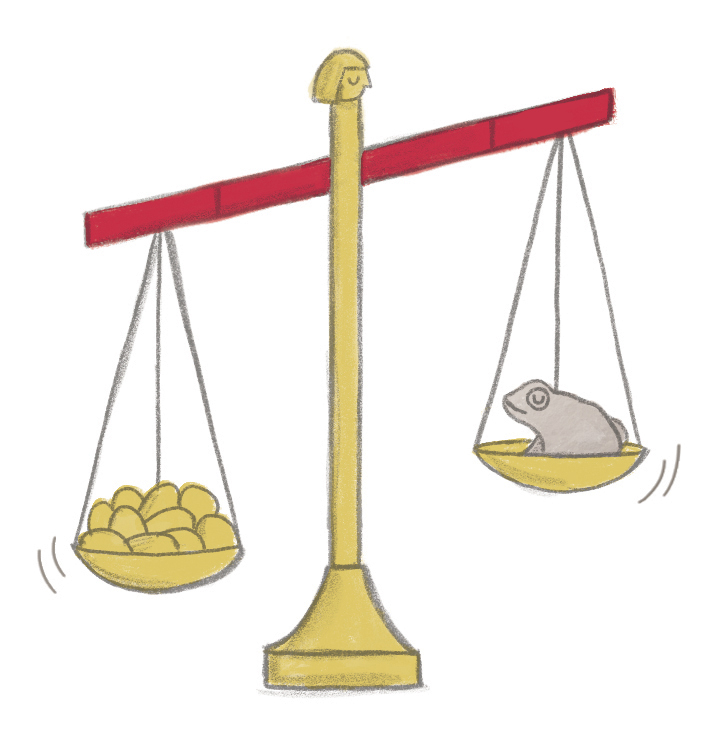
balance-scale-lever
  • A balance scale. The load is placed in one pan and the effort is placed in the other pan. The fulcrum, or the central pivot point, supports the beam. A weight placed on one pan (the effort) lifts what is in the other pan (the load). When both sides are equal, the beam’s arms are level.
  • Seesaws (teeter-totters). The fulcrum is the part beneath the middle of the seesaw, a pivot point where the beam rests and rotates. When someone sits on one end of the seesaw, this pushing down applied force is called the effort. The person on the other side of the seesaw (the load) is lifted due to the rotational motion around the fulcrum.

Bonus question

Ask students, are scissors levers?

Yes! The two blades of the scissors pivot around the screw (fulcrum) that holds the scissors together. When you place your fingers in a pair of scissors and squeeze, you are applying the effort that will cut the load.

Featured image credit: “My scissor collection” by Bekathwia. Licensed under CC BY-SA 2.0.

Christine-Van-Zandt-headshot

Christine Van Zandt is a freelance editor, writer, and award-winning author of five nonfiction picture books. You can also find her stories and poems in anthologies and magazines. She lives in Los Angeles with her family. Find her online at christinevanzandt.com, X/Twitter, LinkedIn, Facebook, Instagram, and Bluesky.
Click for more LITLINKS STEM + Literacy activities

Tags: STEM+LiteracySTEM+Literacy Physical Science
No Comments
Share
0

You also might be interested in

magnet-with-iron-filings

LitLinks: Getting back to the basics of magnetism

Jul 31, 2024

GUEST BLOGGER DARCY PATTISON The Moments in Science nonfiction book[...]

American alligator - Everglades National Park

LitLinks: Using the Everglades to develop a love of nature

Sep 30, 2020

GUEST BLOGGER ROBERTA GIBSON Marjory Saves the Everglades: The Story[...]

Lit Links - growing pattern

LitLinks: Making and recognizing patterns – a math skill

Aug 4, 2021

GUEST BLOGGER RAJANI LAROCCA In my picture book Bracelets for[...]

Leave a Reply

Your email is safe with me.
Cancel Reply

Click the logo to have LitLinks delivered to your inbox

LitLinks Logo-2022

Author Visits

https://youtu.be/zj6n-RFOcPA?si=8WCTnyXbTiwYumYo
https://youtu.be/ziN0UrqaDYI

Earth Day Every Day Newsletter Archive

Earth-Day-Every-Day-newsletter-banner

Post Categories:

Blog Archive

Top Posts

LitLinks: How to share our ocean connections with kids and teens

LitLinks: Let’s learn to decode photos in STEM nonfiction

LitLinks: How Elephants Can Make Your Sound Unit ROAR!

LitLinks: Easy ways to build students’ science communication skills

Proof that science connects kids to the larger world

Recent Comments

  • Margaret Quinlin on LitLinks: Exploring time and sequence in nature and narrative What a creative exercise for students!
  • Sue Heavenrich on LitLinks: Great ideas to help students practice the art of asking questions Great post, Jessica! I love the way the "I notice"…
  • Lisa L. Owens on LitLinks: 4 ways Pluto can supercharge imagination Thanks for hosting me, Patricia!
Empowering young readers to act

Latest Blog Posts

  • LitLinks: An easy way to explore levers using STEM kidlit
    LitLinks: An easy way to explore levers using STEM kidlit
  • LitLinks: How to move students from general to specific vocabulary
    LitLinks: How to move students from general to specific vocabulary
  • LitLinks: How poetry helps students ‘see’ the ocean deep
    LitLinks: How poetry helps students ‘see’ the ocean deep

Connect with me on social media

Action Shots

Check out the STEM Tuesday Blog

© 2026 — Patricia Newman

  • Home
  • Books
    • Beatrice and the Nightingale
    • Sharks Unhooked: The Adventures of Cristina Zenato, Underwater Ranger
    • Giant Rays of Hope: Protecting Manta Rays to Safeguard the Sea
    • A River’s Gifts: The Mighty Elwha River Reborn
    • Planet Ocean
    • Eavesdropping on Elephants
    • Neema’s Reason To Smile
    • Zoo Scientists to the Rescue
    • Sea Otter Heroes: The Predators That Saved an Ecosystem
    • Plastic, Ahoy! Investigating the Great Pacific Garbage Patch
    • Ebola: Fears and Facts
    • Jingle the Brass
    • Nugget on the Flight Deck
    • Surviving Animal Attacks
    • Elite Operations series
    • Energy Lab series
    • QuickReads Fluency Library
    • Books for English language-learners
    • Writers write all kinds of things
  • Author Visit Programs
    • FAQs
    • Calendar
  • Blog
  • Educator Resources
    • Teach the Hope
    • Earth Day Every Day newsletter archive
    • Teacher Guides
    • STEM + Literacy Activities
    • LitLinks
    • KidLit creators who make kids want to read
  • Writer Resources
    • Writing Classes
    • Manuscript or Proposal Critiques
    • How I got my start
  • Who is Patricia Newman?
  • Contact
    • Stay In Touch
    • Earth Day Every Day newsletter archive
Prev