
• Home
  • Books
    • Beatrice and the Nightingale
    • Sharks Unhooked: The Adventures of Cristina Zenato, Underwater Ranger
    • Giant Rays of Hope: Protecting Manta Rays to Safeguard the Sea
    • A River’s Gifts: The Mighty Elwha River Reborn
    • Planet Ocean
    • Eavesdropping on Elephants
    • Neema’s Reason To Smile
    • Zoo Scientists to the Rescue
    • Sea Otter Heroes: The Predators That Saved an Ecosystem
    • Plastic, Ahoy! Investigating the Great Pacific Garbage Patch
    • Ebola: Fears and Facts
    • Jingle the Brass
    • Nugget on the Flight Deck
    • Surviving Animal Attacks
    • Elite Operations series
    • Energy Lab series
    • QuickReads Fluency Library
    • Books for English language-learners
    • Writers write all kinds of things
  • Author Visit Programs
    • FAQs
    • Calendar
  • Blog
  • Educator Resources
    • Teach the Hope
    • Earth Day Every Day newsletter archive
    • Teacher Guides
    • STEM + Literacy Activities
    • LitLinks
    • KidLit creators who make kids want to read
  • Writer Resources
    • Writing Classes
    • Manuscript or Proposal Critiques
    • How I got my start
  • Who is Patricia Newman?
  • Contact
    • Stay In Touch
    • Earth Day Every Day newsletter archive
Patricia NewmanPatricia Newman
Sibert Honor Children's Book Author & Environmentalist
  • Home
  • Books
    • Beatrice and the Nightingale
    • Sharks Unhooked: The Adventures of Cristina Zenato, Underwater Ranger
    • Giant Rays of Hope: Protecting Manta Rays to Safeguard the Sea
    • A River’s Gifts: The Mighty Elwha River Reborn
    • Planet Ocean
    • Eavesdropping on Elephants
    • Neema’s Reason To Smile
    • Zoo Scientists to the Rescue
    • Sea Otter Heroes: The Predators That Saved an Ecosystem
    • Plastic, Ahoy! Investigating the Great Pacific Garbage Patch
    • Ebola: Fears and Facts
    • Jingle the Brass
    • Nugget on the Flight Deck
    • Surviving Animal Attacks
    • Elite Operations series
    • Energy Lab series
    • QuickReads Fluency Library
    • Books for English language-learners
    • Writers write all kinds of things
  • Author Visit Programs
    • FAQs
    • Calendar
  • Blog
  • Educator Resources
    • Teach the Hope
    • Earth Day Every Day newsletter archive
    • Teacher Guides
    • STEM + Literacy Activities
    • LitLinks
    • KidLit creators who make kids want to read
  • Writer Resources
    • Writing Classes
    • Manuscript or Proposal Critiques
    • How I got my start
  • Who is Patricia Newman?
  • Contact
    • Stay In Touch
    • Earth Day Every Day newsletter archive
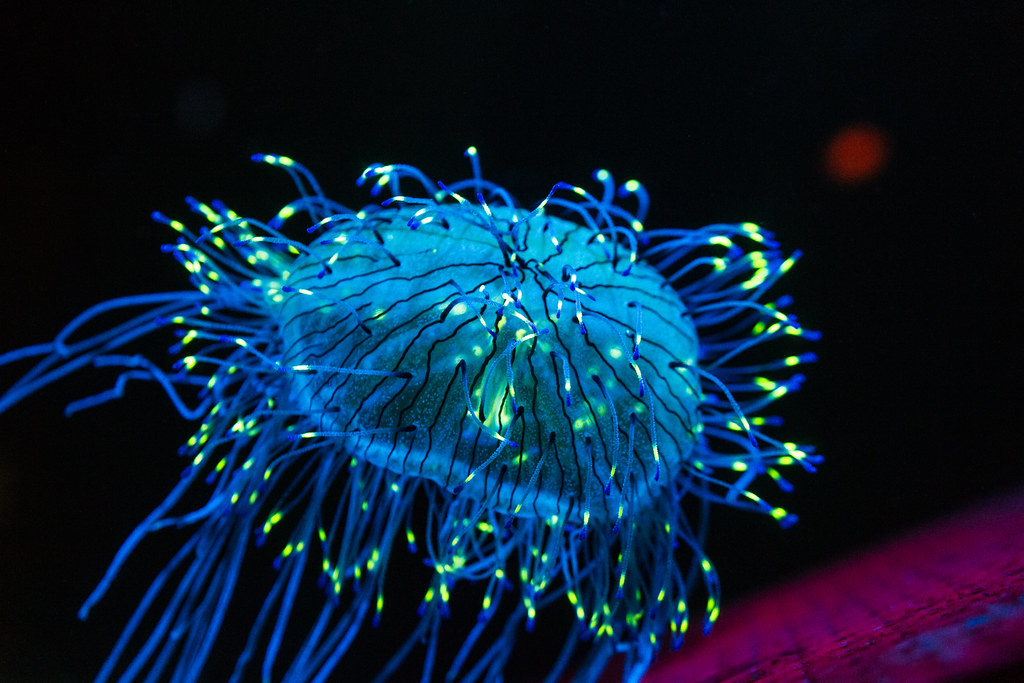
"bioluminescent-jellyfish-Monterrey-Bay-Aquarium"-by-chris-favero-is-licensed-under-CC-BY-SA-2.0.

LitLinks: How to design a bioluminescent deep-sea creature

February 5, 2025 LitLinks, LitLinks-Grade 3-5, LitLinks-Grade 6-8, LitLinks-Grade K-2 No Comments
LitLinks Logo-2022

GUEST BLOGGER JEANNE WALKER HARVEY


Ask your students to close their eyes and imagine being down in the deep dark sea – icy cold, pitch black, with incredible water pressure, and bioluminescent creatures.  What are their reactions to this environment?  Yes! As humans, we certainly couldn’t live in this environment!  But we know that deep-sea creatures have evolved ways to survive. And one adaptation of deep-sea organisms is with the wonderful phenomenon of bioluminescence – the ability to create their own light. 

What and why – bioluminescence
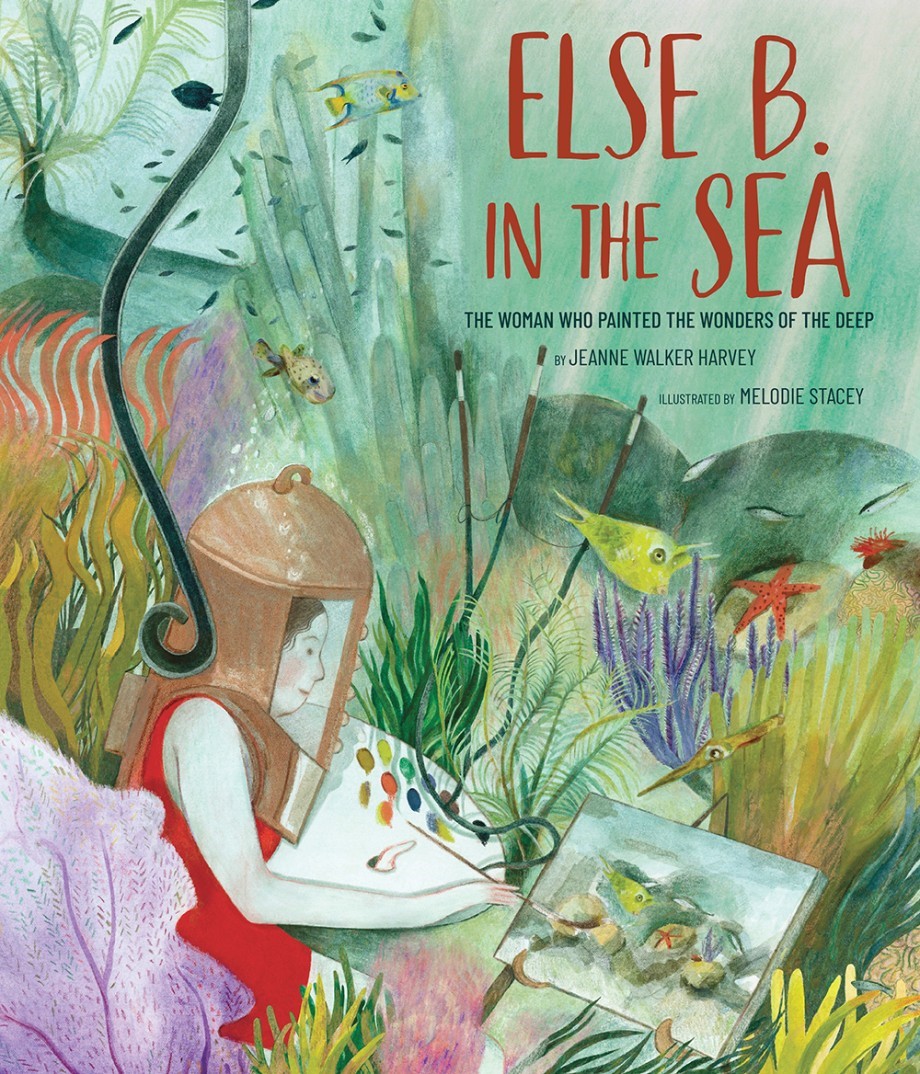
Else-B-in-the-sea-book-cover

Ask your student to read the picture book biography, ELSE B. IN THE SEA – THE WOMAN WHO PAINTED THE WONDERS OF THE DEEP.

“Creatures living in the great depths of the ocean produce light to hunt, confuse predators, and communicate. This amazing phenomenon, called bioluminescence, occurs through a chemical reaction that happens when luciferin, a light-emitting compound, reacts with luciferase, a kind of enzyme, in an organism’s body.

Bioluminescence mostly appears as blue-green, probably because the short wavelengths of blue and green light travel longer distances in the sea and were therefore favored by natural selection. A few animals emit red light, which they can see but other dep-sea dwellers cannot, allowing them to use their bioluminescence to hunt.”

As explained in the back matter of ELSE B. IN THE SEA

Red light, with the longest wavelength, is quickly filtered from water as depth increases. Red light effectively never reaches the deep ocean.

Discovery of bioluminescent creatures

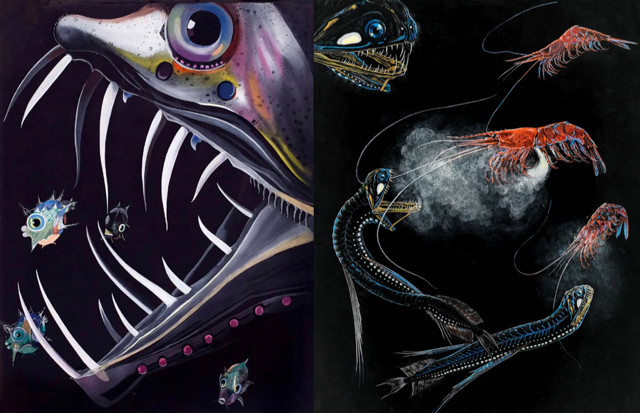
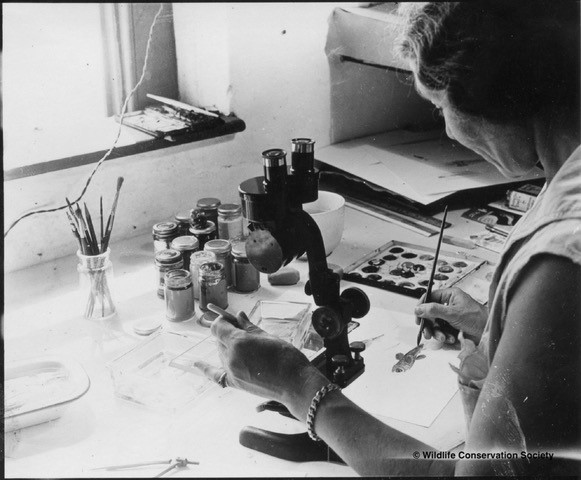
Else Bostelmann, featured in ELSE B. IN THE SEA, painted never-before-seen bioluminescent creatures from the deep sea that were observed by the scientist William Beebe as part of the momentous 1930s bathysphere expedition for the New York Zoological Society’s Department of Tropicl Research. National Geographic first published Else’s detailed paintings of these amazing creatures. People throughout the world could experience this new, unfathomable underwater world.
lantern-fish
Else Bostelmann’s paintings published in National Geographic
Else-B-at-work
Else B. at work

Since that time, “scientists have used what they’ve learned about ocean bioluminescence to help study diseases. For example, green flourescent protein, first obtained from a jellyfish, is used to light up and track diseased cells, such as cancer, in humans.”

Design your deep sea bioluminescent creature

“An estimated 76 percent of all ocean animals luminesce, and in fish alone, there are about 1,500 known bioluminescent species. Who knows how many others are waiting to be discovered in the deep dark sea?”

As explained in the back matter of ELSE B. IN THE SEA

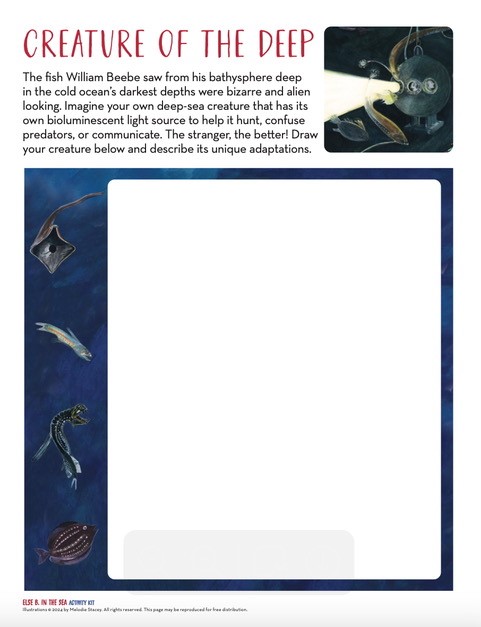
Challenge your students to imagine an undiscovered deep-sea creature that has its own bioluminescent light source to help it hunt, confuse predators, or communicate.  Remind the students of features that such a creature might need:
creature-of-the-deep-organizer
Download this free “Creature of the Deep” organizer to share with students.
  • Bioluminescence
  • Large eyes to maximize light
  • Jelly-like body to withstand pressure of the deep ocean
  • Long tentacles to sense prey and navigate
  • Deep red or black color or transparent to appear nearly invisible in the deep sea.

Now write…

Ask the students to draw their creatures and then describe in writing the unique adaptations. And they can then choose to label their drawings with a creative name, perhaps emphasizing the quality of luminescence. Some of the names of the creatures painted by Else Bostelmann included “Lanternfish, Three-Starred Anglerfish, Swivel-Toothed Dragonfish, Exploding Scarlet Shrimp, and Five-Lined Constellation Fish.” 

Let their lights shine bright!

And for the final touch, display the students’ finished drawings together as a group with the title of “Gallery of Deep-Sea Creatures – Let Their Lights Shine Bright.”  Ask the students to compare the drawings and note which ones have similar or different features. Maybe one of these creatures will be discovered in the future?

Featured image credit: “bioluminescence in jellyfish Monterrey Bay Aquarium” by chris favero is licensed under CC BY-SA 2.0.

Jeanne-Walker-Harvey-headshot

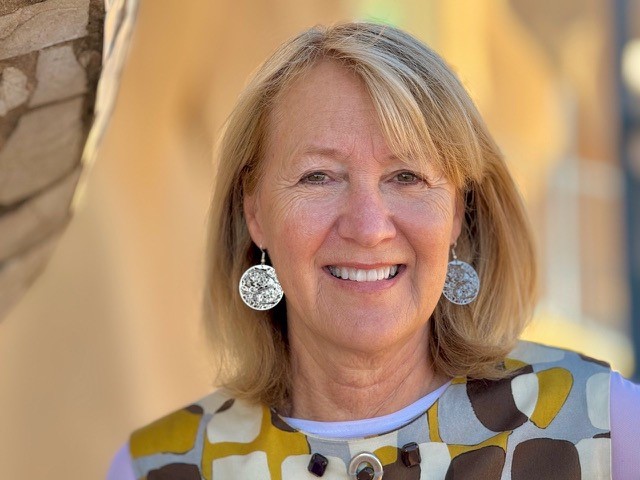
Jeanne Walker Harvey is the author of several award–winning books for young readers, including these picture book biographies of creative people — Else B. in the Sea: The Woman Who Painted the Wonders of the Deep (recently chosen by NSTA as a 2025 Best STEM book for Children K-12) ; Dressing Up the Stars: The Story of Movie Costume Designer Edith Head; Ablaze with Color: A Story of Painter Alma Thomas; Maya Lin: Artist-Architect of Light and Lines; and the upcoming The Glass Pyramid: A Story of the Louvre Museum and Architect I.M. Pei.

Jeanne studied literature and psychology at Stanford University and has worn many job hats, including a roller-coaster ride operator, a software licensing attorney, a middle school language arts teacher, and a long-time docent for school groups at the San Francisco Museum of Modern Art.  Jeanne lives in Northern California, and her cat, Allie, keeps her company while she writes.

  • Website: https://www.jeanneharvey.com
  • Instagram: @jeannewharvey
  • Twitter: @JeanneWHarvey
  • Bluesky: @jeannewharvey.bsky.social
  • Pinterest: @JeanneWalkerHarvey

Click for more LITLINKS STEM + Literacy activities

Tags: STEM+LiteracySTEM+Literacy Natural ScienceSTEM+Literacy Physical Science
No Comments
Share
0

You also might be interested in

stars-moon-palms

LitLinks: How to shine a light on LIGHT with art and literature

May 31, 2023

GUEST BLOGGERS CHRISTINE LAYTON AND LUCIANA NAVARRO POWELL Around the[...]

Zits-comic-10.5.2015-Scott-and-Borgman

LitLinks: 3 easy ways to talk plastic trash with me

Mar 27, 2024

BY PATRICIA NEWMAN Since Annie Crawley and I created Plastic,[...]

image from Strange But True

LitLinks: Are ghosts, zombies, and UFOs real? How to investigate like a scientist

Nov 4, 2020

GUEST BLOGGER KATHRYN HULICK Do you think ghosts are real? [...]

Leave a Reply

Your email is safe with me.
Cancel Reply

Click the logo to have LitLinks delivered to your inbox

LitLinks Logo-2022

Author Visits

https://youtu.be/oEZiUVKmt2k
https://youtu.be/ziN0UrqaDYI

Earth Day Every Day Newsletter Archive

Earth-Day-Every-Day-newsletter-banner

Post Categories:

Blog Archive

Top Posts

LitLinks: How to share our ocean connections with kids and teens

LitLinks: Let’s learn to decode photos in STEM nonfiction

LitLinks: How Elephants Can Make Your Sound Unit ROAR!

LitLinks: Easy ways to build students’ science communication skills

Proof that science connects kids to the larger world

Recent Comments

  • Patricia Newman on LitLinks: 3 easy sustainable food activities for the classroom Thank YOU, Kari!
  • Kari Ann Gonzalez on LitLinks: 3 easy sustainable food activities for the classroom Thank you so much for having me on your blog,…
  • Cynthia Argentine on LitLinks: 5 simple steps for comparing birdsong with instrumental music Wonderful integration of music and science and nature! I'm a…
Empowering young readers to act

Latest Blog Posts

  • LitLinks: How to connect the American Revolution to STEM with 3 activities
    LitLinks: How to connect the American Revolution to STEM with 3 activities
  • LitLinks: 3 easy sustainable food activities for the classroom
    LitLinks: 3 easy sustainable food activities for the classroom
  • LitLinks: Help students write well. The magic is in the details.
    LitLinks: Help students write well. The magic is in the details.

Connect with me on social media

Action Shots

Check out the STEM Tuesday Blog

© 2026 — Patricia Newman

  • Home
  • Books
    • Beatrice and the Nightingale
    • Sharks Unhooked: The Adventures of Cristina Zenato, Underwater Ranger
    • Giant Rays of Hope: Protecting Manta Rays to Safeguard the Sea
    • A River’s Gifts: The Mighty Elwha River Reborn
    • Planet Ocean
    • Eavesdropping on Elephants
    • Neema’s Reason To Smile
    • Zoo Scientists to the Rescue
    • Sea Otter Heroes: The Predators That Saved an Ecosystem
    • Plastic, Ahoy! Investigating the Great Pacific Garbage Patch
    • Ebola: Fears and Facts
    • Jingle the Brass
    • Nugget on the Flight Deck
    • Surviving Animal Attacks
    • Elite Operations series
    • Energy Lab series
    • QuickReads Fluency Library
    • Books for English language-learners
    • Writers write all kinds of things
  • Author Visit Programs
    • FAQs
    • Calendar
  • Blog
  • Educator Resources
    • Teach the Hope
    • Earth Day Every Day newsletter archive
    • Teacher Guides
    • STEM + Literacy Activities
    • LitLinks
    • KidLit creators who make kids want to read
  • Writer Resources
    • Writing Classes
    • Manuscript or Proposal Critiques
    • How I got my start
  • Who is Patricia Newman?
  • Contact
    • Stay In Touch
    • Earth Day Every Day newsletter archive
Prev Next